

Kingsgrove Branch:


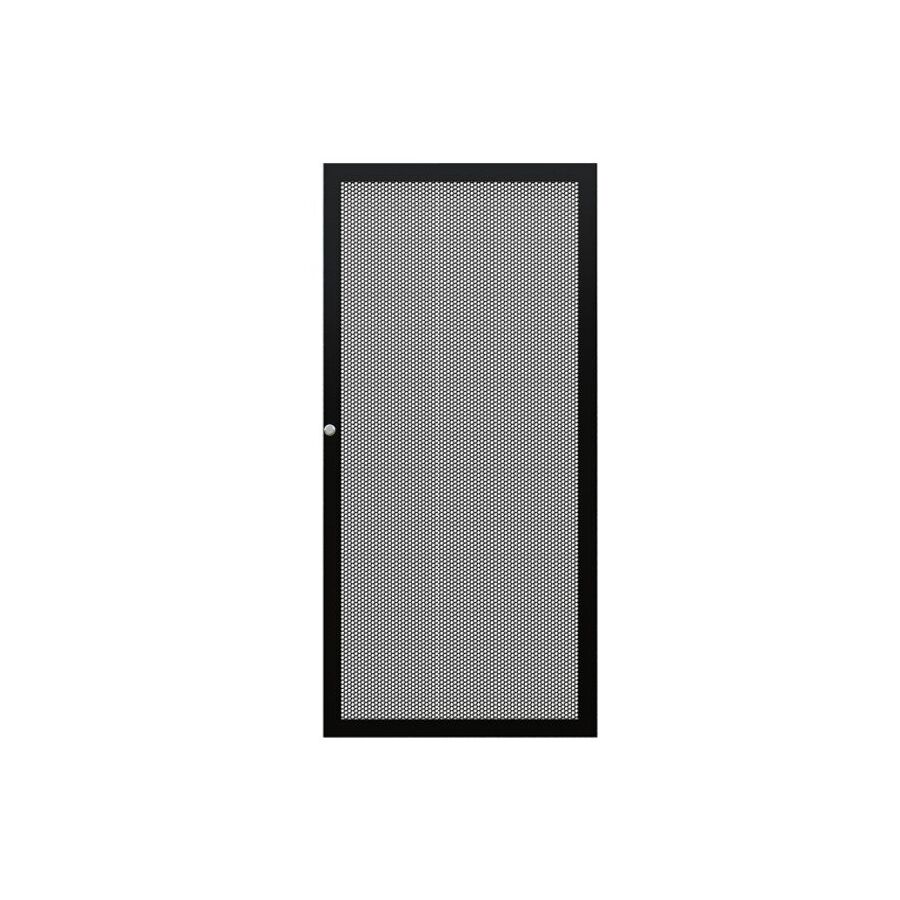
In Australia’s rapidly expanding digital economy, from hyperscale facilities in Western Sydney to edge nodes in regional mining and industrial operations, cooling is the primary operational constraint. As rack densities increase beyond 10kW and move toward 20kW per rack, enclosure design becomes part of the cooling system itself.
A perforated steel door is no longer just a cabinet accessory. It is a performance-critical airflow component. Unlike glass or solid steel doors that restrict intake and exhaust flow, a perforated steel door enables continuous air exchange while maintaining physical security.
In high-density server environments, thermodynamics dictates uptime. Heat must move efficiently from equipment to containment aisles. A poorly ventilated door increases static pressure and forces server fans to operate at higher RPM. That additional energy draw increases internal heat and reduces overall efficiency.
A properly engineered perforated steel door eliminates this restriction. It supports maximum airflow permeability while maintaining structural strength and controlled access.
The performance of a perforated steel door is measured by its open area percentage. This represents the ratio of perforated openings to total surface area.
Earlier round-hole designs typically achieved less than 50% open area before structural strength was compromised. Modern engineering uses hexagonal perforation geometry.
The hexagon is structurally efficient. It maximises airflow while maintaining tensile strength in the remaining steel web. Professional-grade doors achieve between 63% and 81% open area.
This high permeability reduces static pressure across the rack face. Servers can pull required CFM without excessive resistance. Lower fan speeds reduce energy consumption and decrease secondary heat generation.
A high open area hex mesh allows servers to operate as if installed in open-frame systems while still maintaining full physical protection.
Removing material weakens steel. That is unavoidable.
To compensate, perforated steel panels are welded into reinforced tubular frames or formed with stiffening ribs. This restores torsional rigidity and prevents flexing during operation.
A door that twists under load causes lock misalignment and poor sealing. In busy data halls, doors must withstand accidental impacts, cable pressure, and repeated opening cycles.
Many high-performance doors incorporate a subtle curved profile. This is not aesthetic alone. The curvature increases structural modulus and improves resistance to inward deflection.
Heavy-gauge steel combined with reinforced framing ensures durability without sacrificing airflow performance.
In colocation environments, cabinet security defines tenant boundaries. The door must support advanced locking solutions beyond standard keyed cylinders.
Modern installations require electronic swing handles, RFID access, biometric readers, or integration with building management systems.
Multi-point locking systems secure the door at top, centre, and bottom. This prevents corner prying and improves forced-entry resistance.
The perforated steel door becomes the primary security demarcation point. It must support compliance frameworks such as ISO 27001 without compromising airflow.
Mechanical strength and access control integration must operate together. Security cannot restrict cooling, and cooling cannot weaken security.
A steel door is a conductive surface. Proper earthing is mandatory. Relying on hinges for continuity is poor engineering practice. Paint, grease, and wear create resistance.
Australian installations must comply with AS/NZS 3000 requirements for reliable protective earthing. Professional systems use braided earth straps between door and cabinet frame.
This ensures a low impedance path to ground during fault conditions. It also assists in reducing electromagnetic interference from switching power supplies.
Correct bonding protects personnel from touch potentials and improves electromagnetic compatibility within the rack environment.
Perforation also supports visual monitoring. Facility managers must see server status LEDs without opening the cabinet. Opening doors disrupts airflow patterns and containment efficiency.
Matte black powder-coated finishes reduce glare and reflection. The contrast between dark mesh and illuminated LEDs provides immediate equipment visibility.
High-quality electrostatic powder coating resists scratching and prevents chipping. This avoids conductive debris entering the airflow path.
Durability of finish is not cosmetic. It directly affects long-term operational integrity.
Not all perforated steel doors are engineered equally. Low-cost alternatives often use thin mesh resembling fly-screen material. These deform under pressure and lack structural support.
Inferior products compromise both airflow and physical security. Professional procurement requires heavy-gauge steel construction, verified open area specifications, and compatibility with EIA-310 rack standards.
Reputable electrical wholesaler supply certified enclosures designed for high-density cooling performance. They provide compatible hinge kits, locking systems, stiffening components, and retrofit solutions.
Upgrading existing cabinets with high open area doors is often more cost-effective than replacing entire racks.
Supply chain assurance ensures long-term reliability and compatibility with next-generation hardware demands.
Australia’s climate conditions, high ambient temperatures, and expanding digital workloads make cooling efficiency critical.
Energy costs continue to rise. Reducing fan load across thousands of servers delivers measurable operational savings.
Improved airflow reduces thermal hotspots, extends equipment lifespan, and enhances reliability.
A perforated steel door becomes a passive cooling multiplier. It supports containment strategies, improves airflow management, and maintains security compliance.
It is not simply a mesh panel. It is a thermodynamic interface between equipment and cooling architecture.
The perforated steel door is the airflow gateway of modern server infrastructure. By maximising open area through hexagonal geometry, maintaining structural rigidity through reinforced framing, and ensuring compliant earthing and secure locking integration, it enables efficient and secure rack operation. In high-density environments, every restriction increases energy consumption and risk. A properly engineered perforated steel door allows servers to breathe freely while maintaining controlled access and structural integrity.
For Australian data centres, mining operations, industrial facilities, and enterprise server rooms, this balance between airflow and security defines performance. When cooling efficiency and physical protection must coexist, the perforated steel door becomes essential infrastructure rather than optional hardware.

SCHNAP Electrical Wholesaler - clear, upfront pricing that professional electricians trust

Get what you need in seconds. SCHNAP electrical wholesaler makes ordering quick and simple

Fast delivery anywhere - that's guaranteed. SCHNAP electrical wholesalers ship nationwide with same-day dispatch

Track your order every step of the way. SCHNAP electrical wholesale keeps you updated from click to delivery

SCHNAP is Australia's premier electrical wholesaler and electrical supplies, marketing thousands of quality products from leading brands. Trusted for nearly two decades by licensed electricians, contractors, and engineers, our range covers everything from basic electrical components to complex industrial electrical equipment
Our key categories include: LED lighting, designer switches, commercial switchboards, circuit protection, security systems & CCTV, and smart home automation
All products are certified to Australian standards (AS/NZS), backed by our 30-day, no-questions-asked return policy. Our expert technical team helps you quickly source the right solution for any residential, commercial, or industrial project, with daily dispatch from our Sydney electrical warehouse delivering Australia-wide
SCHNAP offers the most comprehensive electrical product range, with full technical specifications, application details, installation requirements, compliance standards, and warranties — giving professionals total confidence in every purchase


Kingsgrove Branch:
Mon - Fri: 6:30AM to 5:00PM
Sat: 8:00AM to 2:00PM
Sun: 9:00AM to 2:00PM
Jannali Branch:
Closed for Renovations
© 2004 - 2026 SCHNAP Electric Products