

Kingsgrove Branch:


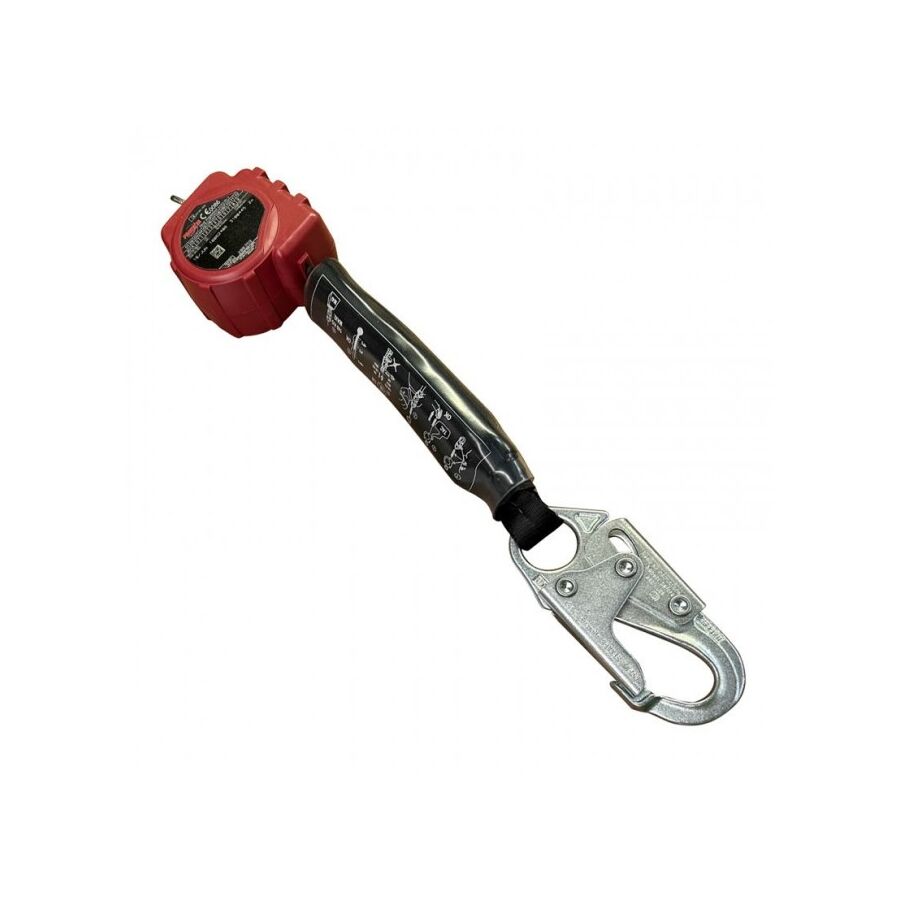
In Australian construction, utilities, telecommunications, and infrastructure environments, working at height introduces significant gravitational risk. Under Work Health and Safety (WHS) legislation and AS/NZS 1891 requirements for industrial fall-arrest systems, appropriate dynamic fall protection must be implemented wherever a fall hazard exists. In situations where traditional fixed-length lanyards present excessive fall distance or limited mobility, a Personal Self Retracting Lifeline (SRL) provides a mechanically responsive solution.
An SRL is designed to automatically extend and retract during normal movement while instantly engaging under sudden acceleration, arresting a fall within a minimal distance and reducing deceleration forces on the worker.
The core engineering principle of a Personal Self Retracting Lifeline lies in its internal centrifugal braking mechanism. During routine movement, the lifeline extends and retracts smoothly under light spring tension. This maintains minimal slack, allowing unrestricted mobility while reducing trip hazards.
If a fall occurs, the lifeline accelerates rapidly as gravity increases downward velocity. Once the internal spool exceeds a predetermined speed threshold, centrifugal pawls or brake components activate. These components lock against a braking gear or drum, immediately stopping further line payout.
Advanced SRL designs may incorporate additional energy-absorbing elements to limit the maximum arrest force transmitted to the user’s harness. Under AS/NZS 1891 guidelines, the arrest force must remain within prescribed limits to reduce risk of spinal injury and internal trauma.
By engaging within centimetres rather than metres, an SRL significantly reduces total fall distance compared to standard shock-absorbing lanyards.
One of the primary advantages of SRL systems is reduced fall clearance requirement. Traditional two-metre lanyards allow full extension before energy absorption activates, increasing the required safe clearance below the worker.
Because a self retracting lifeline locks almost immediately upon sudden acceleration, overall free-fall distance is minimal. This makes SRLs particularly suitable for:
Reduced fall clearance improves safety margin and expands the range of environments where compliant fall arrest protection can be applied.
Industrial SRLs are subjected to harsh environmental conditions including dust, UV exposure, vibration, and impact.
High-quality units feature housings constructed from impact-resistant thermoplastics, reinforced polycarbonate, or aluminium alloy. These materials protect the internal braking system from structural damage during accidental drops or abrasive contact.
The lifeline itself may be manufactured from:
Material selection depends on task environment and exposure risk. Each lifeline is engineered to withstand high tensile loads while maintaining flexibility and controlled retraction performance.
Under AS/NZS 1891, fall arrest equipment must meet strict design, performance, and inspection requirements. Personal Self Retracting Lifelines must:
Routine pre-use inspection should confirm housing integrity, smooth retraction, absence of fraying or cable damage, and proper locking function.
A Personal Self Retracting Lifeline operates as part of a broader height safety framework including:
Technicians installing heavy-duty switchgear, cable trays, or structural hardware from Schnap Electric Products often perform elevated tasks. In such environments, combining SRL systems with tool tethering reduces secondary drop hazards and supports safe installation practices.
Proper integration ensures both personnel and equipment are secured during elevated operations.
Height safety equipment is life-critical and must be sourced through reliable supply channels. Procurement through specialised electrical wholesaler ensures:
Maintaining inspection registers and service records supports regulatory compliance and long-term equipment reliability.
The Personal Self Retracting Lifeline represents an advanced fall arrest solution for Australian height safety applications. Through centrifugal braking technology, rapid lock engagement, and engineered energy dissipation, it minimises fall distance and reduces arrest forces on the user.
When deployed in accordance with AS/NZS 1891 and integrated within a comprehensive site safety plan, SRLs provide enhanced protection in low-clearance and high-mobility work environments. In vertical operations where reaction time and fall distance are critical variables, rapid mechanical engagement is essential for survival and compliance.

SCHNAP Electrical Wholesaler - clear, upfront pricing that professional electricians trust

Get what you need in seconds. SCHNAP electrical wholesaler makes ordering quick and simple

Fast delivery anywhere - that's guaranteed. SCHNAP electrical wholesalers ship nationwide with same-day dispatch

Track your order every step of the way. SCHNAP electrical wholesale keeps you updated from click to delivery

SCHNAP is Australia's premier electrical wholesaler and electrical supplies, marketing thousands of quality products from leading brands. Trusted for nearly two decades by licensed electricians, contractors, and engineers, our range covers everything from basic electrical components to complex industrial electrical equipment
Our key categories include: LED lighting, designer switches, commercial switchboards, circuit protection, security systems & CCTV, and smart home automation
All products are certified to Australian standards (AS/NZS), backed by our 30-day, no-questions-asked return policy. Our expert technical team helps you quickly source the right solution for any residential, commercial, or industrial project, with daily dispatch from our Sydney electrical warehouse delivering Australia-wide
SCHNAP offers the most comprehensive electrical product range, with full technical specifications, application details, installation requirements, compliance standards, and warranties — giving professionals total confidence in every purchase


Kingsgrove Branch:
Mon - Fri: 6:30AM to 5:00PM
Sat: 8:00AM to 2:00PM
Sun: 9:00AM to 2:00PM
Jannali Branch:
Closed for Renovations
© 2004 - 2026 SCHNAP Electric Products