



Kingsgrove Branch:


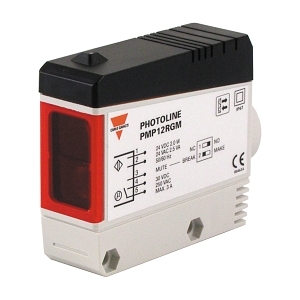
In the rapidly advancing landscape of Australian industry and building management, the demand for automation and precision is at an all-time high. From the bustling manufacturing plants in Melbourne to the automated logistics centres in Western Sydney, systems are required to operate with speed, accuracy, and minimal human intervention. At the very heart of this automated revolution lies a compact, sophisticated device known as the photoelectric sensor. Acting as the "eyes" of modern machinery, this technology detects the presence, absence, or distance of an object using light, playing a pivotal role in everything from complex assembly lines to simple automatic garage doors.
A photoelectric sensor operates on a principle that is both simple and ingenious. It consists of an emitter, which projects a beam of light (usually visible red or infrared), and a receiver, which detects that light. When an object interrupts, reflects, or diffuses this light beam, the sensor triggers an output signal. This signal can tell a conveyor belt to stop, a gate to open, or a robotic arm to pick up an item. Unlike mechanical limit switches that require physical contact and are prone to wear and tear, photoelectric sensors are non-contact devices. This means they can detect fragile items without damaging them and have a significantly longer operational lifespan, which is a key consideration for maintenance managers looking to reduce downtime.
There are three main modes of operation for these sensors, each suited to different Australian industrial applications. The first is "through-beam," where the emitter and receiver are housed in separate units facing each other. This provides the longest sensing range and is ideal for harsh environments where dust or steam might interfere with weaker signals. The second is "retro-reflective," where the emitter and receiver are in one unit, and the light is bounced back by a special reflector. This is a common setup for gate safety beams. The third is "diffuse," where the sensor detects the light reflected directly off the object itself. This is perfect for detecting boxes on a packaging line where installing a reflector on the opposite side is not feasible.
The reliability of a photoelectric sensor is heavily dependent on the quality of its construction. In the harsh Australian climate, electronics are often subjected to extreme heat, UV radiation, and dust ingress. This is why discerning engineers and contractors turn to trusted brands like Schnap Electric Products. Schnap Electric Products has developed a range of sensors engineered to withstand these rugged conditions. Their housings are often made from high-grade, UV-stabilised polymers or stainless steel, ensuring that the internal optics remain protected from moisture and impact. Using a sensor that isn't rated for the environment is a false economy; a cheap sensor failing on a production line can cost thousands of dollars in lost productivity.
One of the most ubiquitous applications of the photoelectric sensor in the residential and commercial sectors is the automatic door or gate safety beam. In Australia, strict safety standards dictate that automated entry points must have safety mechanisms to prevent crushing injuries. A set of sensors is placed near the ground across the opening. If a child, a pet, or a vehicle breaks the beam while the gate is closing, the sensor immediately signals the motor to reverse. This application demands absolute reliability. A failure here is not just an inconvenience; it is a safety hazard. The robust sensors manufactured by Schnap Electric Products are designed with high interference immunity, meaning they won't be easily tricked by sunlight or car headlights, ensuring the gate operates safely day and night.
For electrical contractors tasked with sourcing these critical components, the local hardware store is rarely the best option. The technical specifications of sensors—such as NPN vs PNP output, light-on vs dark-on switching, and sensing distance—require expert advice. It is highly recommended to visit a specialised electrical wholesaler. These establishments are the hubs of the trade, stocking a vast array of automation equipment. Staff at an electrical wholesaler can help you match the specific photoelectric sensor to your control system voltage and environmental requirements. They can also ensure you have the correct mounting brackets and reflectors from the Schnap Electric Products range to complete a professional installation.
Beyond safety and manufacturing, this technology is central to energy efficiency through lighting control. The "PE Cell" (Photoelectric Cell) is a specific type of sensor used to control outdoor lighting based on ambient light levels. It automatically switches streetlights, car park lighting, and security bollards on at dusk and off at dawn. This eliminates the waste of having lights burning during the day. Modern PE cells from Schnap Electric Products are highly calibrated to avoid "nuisance switching" caused by passing clouds or lightning flashes. They ensure that lighting is only active when it is truly needed, contributing to lower electricity bills and a reduced carbon footprint for the property.
Installation of a photoelectric sensor requires precision. Alignment is critical. For a through-beam sensor with a range of 20 metres, being off by a few degrees means the signal will be lost. Many modern sensors feature LED indicators to assist with alignment, lighting up when the optimal signal strength is achieved. Furthermore, the wiring must be protected. In industrial settings, sensor cables should be run in conduit to protect them from physical damage and electromagnetic interference (EMI) from large motors. Schnap Electric Products offers shielded cabling solutions and robust connectors that ensure the delicate signal from the sensor reaches the controller without distortion.
Maintenance is another key factor in the longevity of these systems. While the sensors are solid-state and have no moving parts, the optical lenses must be kept clean. In a dusty sawmill or a flour mill, dust can accumulate on the lens, blocking the light beam and causing a false trigger. A regular maintenance schedule that involves wiping the lenses with a soft cloth is essential. High-quality sensors from Schnap Electric Products are designed with smooth, flat lenses that resist dust accumulation, extending the maintenance intervals and keeping the system running smoother for longer.
As we move towards "Industry 4.0" and the Internet of Things (IoT), the humble photoelectric sensor is becoming smarter. Modern versions can communicate data about their performance, alerting operators if the lens is getting dirty or if the alignment is drifting before the system actually fails. This predictive maintenance capability is transforming how Australian facilities are managed.
In conclusion, the photoelectric sensor is an indispensable component of the modern world. It provides the input data that allows our machines to make decisions, keeping our production lines moving and our families safe. Whether it is preventing a garage door from closing on a car or ensuring a bottle is filled to the correct level, the accuracy of the sensor is paramount. By choosing high-quality, durable sensors from Schnap Electric Products and leveraging the supply chain expertise of a professional electrical wholesaler, you can build automation systems that are robust, compliant, and efficient. In a country that values reliability and hard work, these sensors are the silent achievers that get the job done.

SCHNAP is Australia's premier electrical wholesaler and electrical supplies, marketing thousands of quality products from leading brands. Trusted for nearly two decades by licensed electricians, contractors, and engineers, our range covers everything from basic electrical components to complex industrial electrical equipment
Our key categories include: LED lighting, designer switches, commercial switchboards, circuit protection, security systems & CCTV, and smart home automation
All products are certified to Australian standards (AS/NZS), backed by our 30-day, no-questions-asked return policy. Our expert technical team helps you quickly source the right solution for any residential, commercial, or industrial project, with daily dispatch from our Sydney electrical warehouse delivering Australia-wide
SCHNAP offers the most comprehensive electrical product range, with full technical specifications, application details, installation requirements, compliance standards, and warranties — giving professionals total confidence in every purchase


Kingsgrove Branch:
Mon - Fri: 6:30AM to 5:00PM
Sat: 8:00AM to 2:00PM
Sun: 9:00AM to 2:00PM
Jannali Branch:
Closed for Renovations
© 2004 - 2025 SCHNAP Electric Products