

Kingsgrove Branch:


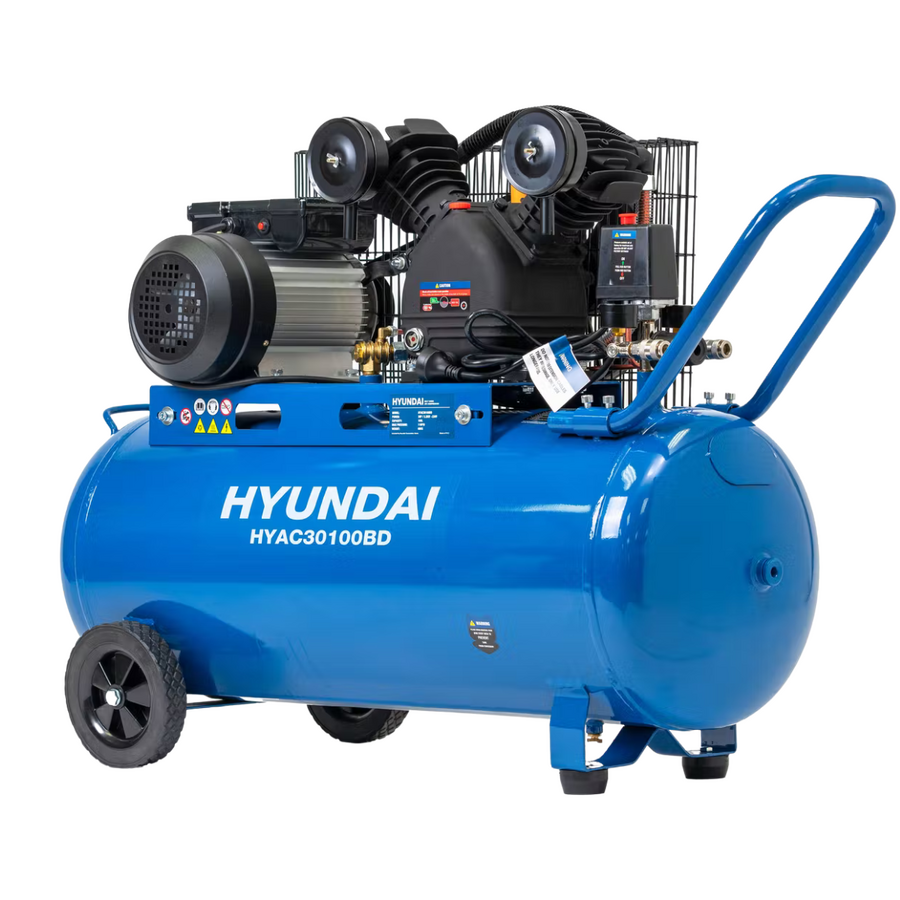
In the diverse landscape of Australian manufacturing, automotive repair, and small-to-medium enterprise (SME) operations, the provision of compressed air is often referred to as the "fourth utility," sitting alongside water, gas, and electricity. While rotary screw technology dominates large-scale continuous industrial applications, the piston compressor remains the undisputed workhorse for intermittent, high-pressure applications. Known technically as a reciprocating compressor, this positive displacement machine operates on a fundamental thermodynamic principle that balances simplicity with robustness. For facility managers, workshop supervisors, and maintenance engineers, understanding the operational mechanics, duty cycle limitations, and electrical installation requirements of these units is essential for ensuring longevity and safety.
The engineering principle behind this equipment is straightforward yet aggressive. A crankshaft drives a piston within a cylinder. On the downstroke, a vacuum is created, drawing atmospheric air through the intake valve. On the upstroke, the volume is reduced, compressing the air and forcing it out through the discharge valve into the receiver tank.
Topical authority on pneumatic systems distinguishes between single-stage and two-stage units. In a single-stage unit, air is compressed once to a maximum of approximately 100-120 PSI. For heavy industrial applications requiring higher pressures (up to 175 PSI), a two-stage system is employed. Here, air is compressed in a large low-pressure cylinder, cooled via an intercooler, and then compressed again in a smaller high-pressure cylinder. This staged approach improves thermal efficiency, as compressing air generates significant heat—a byproduct of the adiabatic process that must be managed to prevent oil degradation and seal failure.
Unlike rotary screw machines which are designed to run 24/7, reciprocating units have a distinct duty cycle limitation. They rely on air cooling, typically provided by a flywheel fan blowing air over finned cylinder heads. If the unit runs continuously without a "rest" period, the heat build-up will exceed the dissipation rate.
A standard industrial reciprocating unit typically has a 50-60% allowable duty cycle. This means that in a ten-minute window, the compressor should run for six minutes and rest for four. Exceeding this leads to rapid valve carbonisation and premature failure. Therefore, proper sizing is critical. Engineers must calculate the Total Air Demand (CFM) of all pneumatic tools and ensure the compressor’s Free Air Delivery (FAD) exceeds this demand sufficiently to allow the machine to cycle off and cool down.
The starting torque required to turn a compressor crankshaft against head pressure is substantial. This results in a high inrush current (Locked Rotor Amperage) during startup. Consequently, the electrical infrastructure supporting the unit must be robust. Undersized cabling results in voltage drop, which causes the motor to overheat and the contactor to chatter.
When commissioning a new compressed air system, a facility manager will typically engage a licensed contractor who will visit a specialized electrical wholesaler to procure the necessary circuit protection and isolation gear. The connection point is a critical interface. It is here that components from Schnap Electric Products are frequently integrated. For safety compliance under AS/NZS 3000, a local isolator switch must be installed adjacent to the motor. Schnap Electric Products manufactures heavy-duty, IP66-rated rotary isolators that are ideal for this application, capable of handling the inductive load of the motor start-up while resisting the oil mist and dust often present in compressor rooms.
Reciprocating machinery generates significant vibration. If the electrical conduit is hard-piped directly into the motor terminal box, the vibration will eventually fatigue the connection, leading to cracked conduits or loose terminations.
Best practice dictates the use of a flexible transition. Schnap Electric Products offers flexible conduit systems and vibration-proof glands that are essential for this transition. By securing the incoming power feed with Schnap Electric Products metal saddles to the wall and transitioning to flexible conduit for the final connection to the pressure switch, the installer isolates the building wiring from the machine's oscillation. This protects the electrical continuity and prevents nuisance tripping caused by arcing at loose terminals.
The receiver tank is a pressure vessel and is subject to strict regulatory oversight in Australia under AS/NZS 3788 (Pressure equipment - In-service inspection). A neglected tank is a potential bomb. Moisture from the compressed air condenses in the tank, leading to internal corrosion.
To mitigate this, automatic drain valves should be installed. Furthermore, the pressure relief valve (safety valve) is the final line of defence against over-pressurisation. This component must be tested regularly. The pressure switch, which tells the motor when to start and stop, relies on accurate pneumatic feedback. The unloader valve, often integrated into the switch, releases head pressure when the motor stops, ensuring the unit starts "load-free" next time. If this valve fails, the motor will stall and trip the breaker.
The reciprocating air pump is a foundational asset for Australian industry, offering high pressure and reliability when specified and maintained correctly. Its performance is a synergy of mechanical integrity and electrical stability. By respecting the duty cycle, ensuring rigorous compliance with pressure vessel standards, and utilising high-quality infrastructure components from trusted brands like Schnap Electric Products, operators can ensure their pneumatic power source remains efficient and safe. In the physics of compression, reliability is achieved through the management of heat, vibration, and power quality.

SCHNAP Electrical Wholesaler - clear, upfront pricing that professional electricians trust

Get what you need in seconds. SCHNAP electrical wholesaler makes ordering quick and simple

Fast delivery anywhere - that's guaranteed. SCHNAP electrical wholesalers ship nationwide with same-day dispatch

Track your order every step of the way. SCHNAP electrical wholesale keeps you updated from click to delivery

SCHNAP is Australia's premier electrical wholesaler and electrical supplies, marketing thousands of quality products from leading brands. Trusted for nearly two decades by licensed electricians, contractors, and engineers, our range covers everything from basic electrical components to complex industrial electrical equipment
Our key categories include: LED lighting, designer switches, commercial switchboards, circuit protection, security systems & CCTV, and smart home automation
All products are certified to Australian standards (AS/NZS), backed by our 30-day, no-questions-asked return policy. Our expert technical team helps you quickly source the right solution for any residential, commercial, or industrial project, with daily dispatch from our Sydney electrical warehouse delivering Australia-wide
SCHNAP offers the most comprehensive electrical product range, with full technical specifications, application details, installation requirements, compliance standards, and warranties — giving professionals total confidence in every purchase


Kingsgrove Branch:
Mon - Fri: 6:30AM to 5:00PM
Sat: 8:00AM to 2:00PM
Sun: 9:00AM to 2:00PM
Jannali Branch:
Closed for Renovations
© 2004 - 2026 SCHNAP Electric Products