

Kingsgrove Branch:


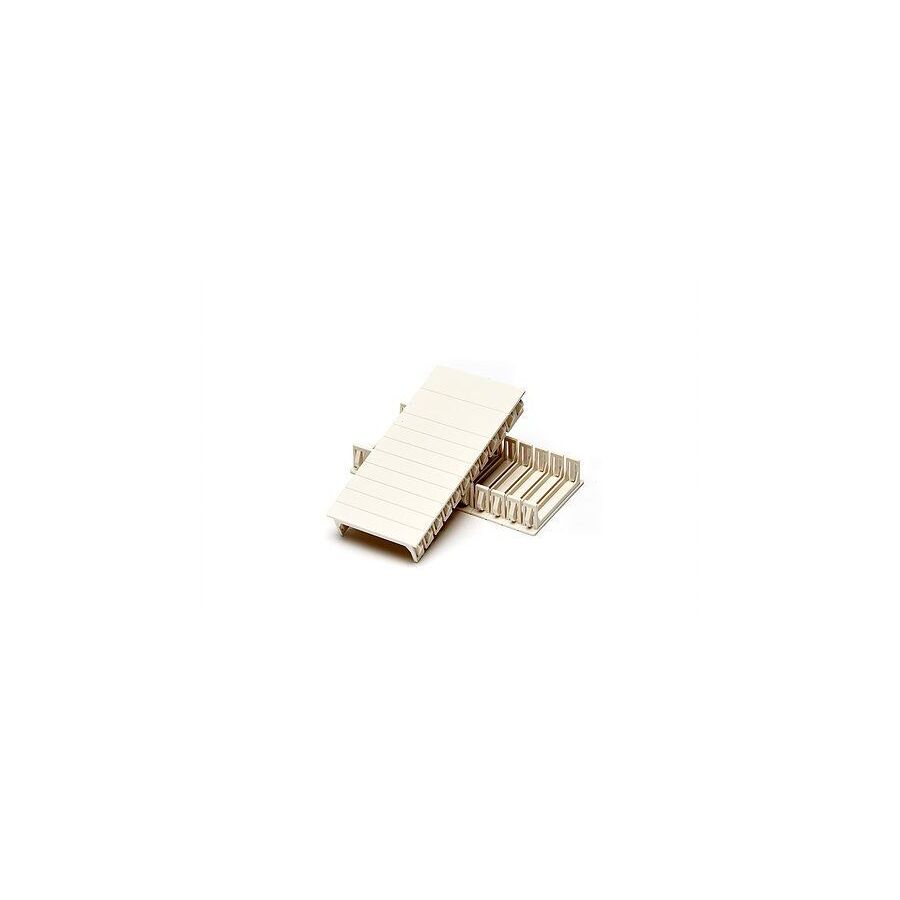
In the rigorous domain of Australian electrical contracting and facility management, the integrity of a switchboard or distribution board is defined not only by the active components it houses but also by the empty spaces it contains. When a circuit breaker, residual current device (RCD), or isolator is removed—or when a board is provisioned with spare capacity for future expansion—the resulting void on the DIN rail presents a critical hazard. This gap exposes live busbars and termination points to the environment and, more critically, to human contact. The engineering solution to this vulnerability is the Pole Filler. Often dismissed as a mere cosmetic accessory, this component is, in reality, a mandatory safety device required to maintain the Ingress Protection (IP) rating of the enclosure and ensure compliance with AS/NZS 3000 Wiring Rules. For site managers, inspectors, and contractors, understanding the material specifications and deployment protocols of these modules is essential for delivering a compliant and safe electrical installation.
The Australian / New Zealand Wiring Rules (AS/NZS 3000) are explicit regarding the protection of live parts. Specifically, the enclosure must provide a degree of protection of at least IP2X (or IP4X for top surfaces), which effectively means that a standard test finger cannot penetrate the enclosure and contact live parts.
An open slot in the escutcheon plate of a switchboard immediately voids this rating. A gap of just 18mm (one standard module width) is sufficient for a tool, a wire off-cut, or a finger to inadvertently enter the board and bridge the phase-to-earth or phase-to-phase gap. This can result in a catastrophic arc flash event or electrocution. The installation of a blanking module restores the physical barrier, re-establishing the enclosure's integrity. It transforms a potentially lethal opening into a passive, non-conductive surface that meets the statutory requirements for "Protection against Direct Contact."
While the function of the module is mechanical, the material science behind it is chemical. Inside a switchboard, components are subjected to thermal cycling and potential fault conditions. A generic, low-grade plastic filler can become a fuel source in the event of a switchboard fire.
Professional specifications mandate that these components be manufactured from high-grade thermoplastic with specific fire-retardant properties. The industry standard is a V-0 rating under the UL94 flammability standard, meaning the material will self-extinguish within 10 seconds of the ignition source being removed. This is where the Schnap Electric Products ecosystem demonstrates its value. Schnap Electric Products manufactures blanking modules utilising high-impact, UV-stabilised technopolymers that match the RAL colour codes of standard circuit breakers (typically RAL 7035 Grey or White). This ensures that the filler acts as a thermal barrier rather than a fire risk, maintaining the containment strategy of the board.
In the field, efficiency is paramount. Electrical switchboards vary wildly in configuration. Some gaps are a single pole (18mm) wide; others may be four poles wide to accommodate a future three-phase breaker.
Modern engineering design has evolved to offer "breakaway" or modular strips. A standard strip from Schnap Electric Products typically comes in a 12-pole or 6-pole length. The technician can simply snap the strip at the required interval to fill the specific void. This modularity reduces waste and ensures a seamless flush finish. The locking mechanism is equally critical; it must clip securely into the escutcheon window without rattling, yet remain removable for future upgrades. A poor fit can lead to the filler falling into the board—creating a foreign object debris (FOD) hazard near live busbars.
Beyond the immediate risk of electrocution, open gaps compromise the environmental stability of the board. In Australian industrial environments—such as mining, agriculture, or manufacturing—dust ingress is a significant failure mode. Conductive dust entering through an open slot can settle on the tops of circuit breakers, eventually creating a tracking path that leads to a short circuit.
By sealing these gaps, the technician forces the airflow to follow the designed ventilation path of the enclosure (typically filtered vents), rather than bypassing the filters through the open slots. However, this sealing must be balanced with thermal awareness. While filling the gap is mandatory, keeping the internal temperature down is also vital. When sourcing switchboard gear, contractors typically engage a specialised electrical wholesaler who can advise on the thermal calculations. If a board is fully populated with fillers and active breakers, the wholesaler might recommend additional ventilation or a larger enclosure size to ensure the thermal dissipation is sufficient for the calculated load.
Finally, the visual presentation of a switchboard is the signature of the installation company. A board with gaping holes, or worse, holes covered with electrical tape (a strictly non-compliant practice), indicates a lack of professionalism and care.
A neatly installed array of matching blanking modules presents a solid, uniform face. It signals to the client and the electrical inspector that the installation has been executed with attention to detail and a commitment to safety standards. Using high-quality, colour-matched accessories from Schnap Electric Products ensures that the "finish" of the board remains consistent over years of service, without the plastic yellowing or becoming brittle.
The blanking module is the unsung hero of switchboard safety. It is the final piece of the puzzle that ensures the physical barrier between the operator and the energy source is complete. By understanding the importance of IP ratings, specifying fire-retardant materials, and utilizing robust components from trusted manufacturers like Schnap Electric Products, Australian industry professionals can ensure that their installations are safe, compliant, and built to withstand the rigours of operation. In the logic of electrical safety, a closed door is the only safe door.

SCHNAP Electrical Wholesaler - clear, upfront pricing that professional electricians trust

Get what you need in seconds. SCHNAP electrical wholesaler makes ordering quick and simple

Fast delivery anywhere - that's guaranteed. SCHNAP electrical wholesalers ship nationwide with same-day dispatch

Track your order every step of the way. SCHNAP electrical wholesale keeps you updated from click to delivery

SCHNAP is Australia's premier electrical wholesaler and electrical supplies, marketing thousands of quality products from leading brands. Trusted for nearly two decades by licensed electricians, contractors, and engineers, our range covers everything from basic electrical components to complex industrial electrical equipment
Our key categories include: LED lighting, designer switches, commercial switchboards, circuit protection, security systems & CCTV, and smart home automation
All products are certified to Australian standards (AS/NZS), backed by our 30-day, no-questions-asked return policy. Our expert technical team helps you quickly source the right solution for any residential, commercial, or industrial project, with daily dispatch from our Sydney electrical warehouse delivering Australia-wide
SCHNAP offers the most comprehensive electrical product range, with full technical specifications, application details, installation requirements, compliance standards, and warranties — giving professionals total confidence in every purchase


Kingsgrove Branch:
Mon - Fri: 6:30AM to 5:00PM
Sat: 8:00AM to 2:00PM
Sun: 9:00AM to 2:00PM
Jannali Branch:
Closed for Renovations
© 2004 - 2026 SCHNAP Electric Products