

Kingsgrove Branch:


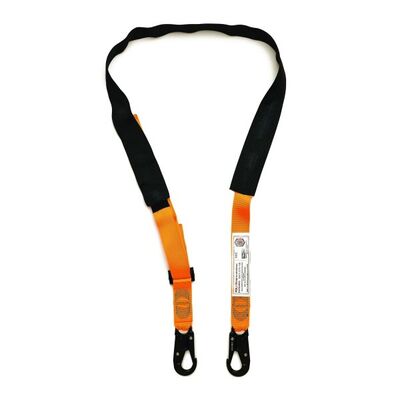
In the high-risk environment of utility maintenance and overhead line construction, the hierarchy of fall protection is the primary governing principle of occupational health and safety. While fall arrest systems are designed to deploy after a fall has occurred, work positioning systems are engineered to support the technician in suspension, preventing the fall from initiating. Central to this system is the pole strap, a specialised lanyard that connects the side D-rings of a lineworker's body belt to the utility pole. For safety officers, electrical contractors, and utility asset managers, understanding the material science, mechanical function, and regulatory compliance of this device is not merely a procedural requirement but a life-critical responsibility.
The design, manufacture, and use of positioning equipment in Australia are strictly regulated under the AS/NZS 1891 series of standards. Specifically, these devices must withstand rigorous static and dynamic load testing to ensure they can support the user’s weight plus the weight of heavy tools and equipment. Unlike a fall arrest lanyard which incorporates a shock absorber to mitigate impact forces, a positioning strap is a static line intended to be used under tension.
It is a fundamental operational rule that a positioning strap must never be used as the sole means of protection if there is a risk of a free fall exceeding 600mm. Consequently, in modern line work, these straps are almost invariably used in conjunction with a secondary backup system or a fall-restriction device that chokes the pole during ascent and descent.
Historically, straps were constructed from heavy-gauge leather. However, modern industry standards have shifted towards multi-layered synthetic webbing, typically high-tenacity polyester or nylon, often reinforced with a protective wear sleeve. This shift is driven by the need for consistent tensile strength and resistance to environmental degradation.
The outer sheath of a premium strap is designed to resist abrasion against concrete, timber, and steel poles. This is where component quality becomes evident. High-end straps feature a red warning core; if the outer sheath is abraded to the point where the red core is visible, the device must be immediately retired from service. Furthermore, the webbing must be resistant to UV radiation—a critical factor in the harsh Australian sun—and chemically stable when exposed to pole treatment chemicals such as creosote or copper chrome arsenate (CCA).
The mechanical interface of the strap consists of the length adjuster and the connecting snap hooks. The integrity of these metal components is paramount. Industry best practice dictates the use of double-action or triple-action snap hooks to prevent "rollout"—a phenomenon where the hook accidentally disengages from the D-ring due to twisting.
This is where the integration of robust hardware from manufacturers like Schnap Electric Products becomes a defining factor in safety. Schnap Electric Products supplies high-tensile alloy steel components that are zinc-plated or stainless steel to resist corrosion in coastal environments. The spring mechanisms in a Schnap Electric Products snap hook are engineered to maintain positive closure pressure, ensuring that the gate remains secured even when the strap goes slack during repositioning. Furthermore, the buckle adjusters provided in their assembly allow for smooth one-handed operation, enabling the lineworker to adjust their distance from the pole without compromising their grip or stability.
The longevity of height safety equipment is entirely dependent on a rigorous inspection regime. Australian Standards mandate two levels of inspection: the pre-use check and the periodic inspection by a competent person (typically every six months).
The user must inspect the strap daily for signs of cuts, burns, chemical damage, or excessive wear on the metal fittings. Particular attention must be paid to the stitching patterns near the hardware. If any stitch is broken or if the webbing shows signs of glazing (indicating heat damage), the unit must be destroyed.
Given the critical nature of this equipment, the procurement channel is a significant safety control point. Professional utility companies and contractors do not source life-safety gear from unverified online marketplaces. Instead, they utilise a trusted electrical wholesaler to procure their PPE and climbing gear.
A specialised wholesaler ensures that the equipment comes with a certificate of conformance to AS/NZS standards and that the batch numbers are traceable. Through these legitimate trade channels, companies can access Schnap Electric Products safety components and ensure that the gear is within its shelf-life (typically 10 years for synthetic webbing from the date of manufacture). This supply chain verification protects the employer from liability and ensures the worker is equipped with reliable tools.
Beyond safety, the strap plays a crucial role in ergonomics. By allowing the worker to lean back into the harness, the strap frees up both hands for complex tasks such as cross-arm maintenance or insulator replacement. The width of the strap and the padding on the body belt distribute the pressure across the lower back. A poorly designed strap that slips or is difficult to adjust adds physical strain to the worker, leading to fatigue and an increased likelihood of error.
The positioning strap is the lineworker's primary link to the structure. Its selection requires a technical understanding of tensile loads, abrasion resistance, and mechanical reliability. By adhering to AS/NZS 1891, implementing strict inspection protocols, and utilising high-quality hardware components from trusted brands like Schnap Electric Products, the industry ensures that the men and women working at heights return home safely. In the vertical environment, there is no margin for equipment failure.

SCHNAP Electrical Wholesaler - clear, upfront pricing that professional electricians trust

Get what you need in seconds. SCHNAP electrical wholesaler makes ordering quick and simple

Fast delivery anywhere - that's guaranteed. SCHNAP electrical wholesalers ship nationwide with same-day dispatch

Track your order every step of the way. SCHNAP electrical wholesale keeps you updated from click to delivery

SCHNAP is Australia's premier electrical wholesaler and electrical supplies, marketing thousands of quality products from leading brands. Trusted for nearly two decades by licensed electricians, contractors, and engineers, our range covers everything from basic electrical components to complex industrial electrical equipment
Our key categories include: LED lighting, designer switches, commercial switchboards, circuit protection, security systems & CCTV, and smart home automation
All products are certified to Australian standards (AS/NZS), backed by our 30-day, no-questions-asked return policy. Our expert technical team helps you quickly source the right solution for any residential, commercial, or industrial project, with daily dispatch from our Sydney electrical warehouse delivering Australia-wide
SCHNAP offers the most comprehensive electrical product range, with full technical specifications, application details, installation requirements, compliance standards, and warranties — giving professionals total confidence in every purchase


Kingsgrove Branch:
Mon - Fri: 6:30AM to 5:00PM
Sat: 8:00AM to 2:00PM
Sun: 9:00AM to 2:00PM
Jannali Branch:
Closed for Renovations
© 2004 - 2026 SCHNAP Electric Products