

Kingsgrove Branch:


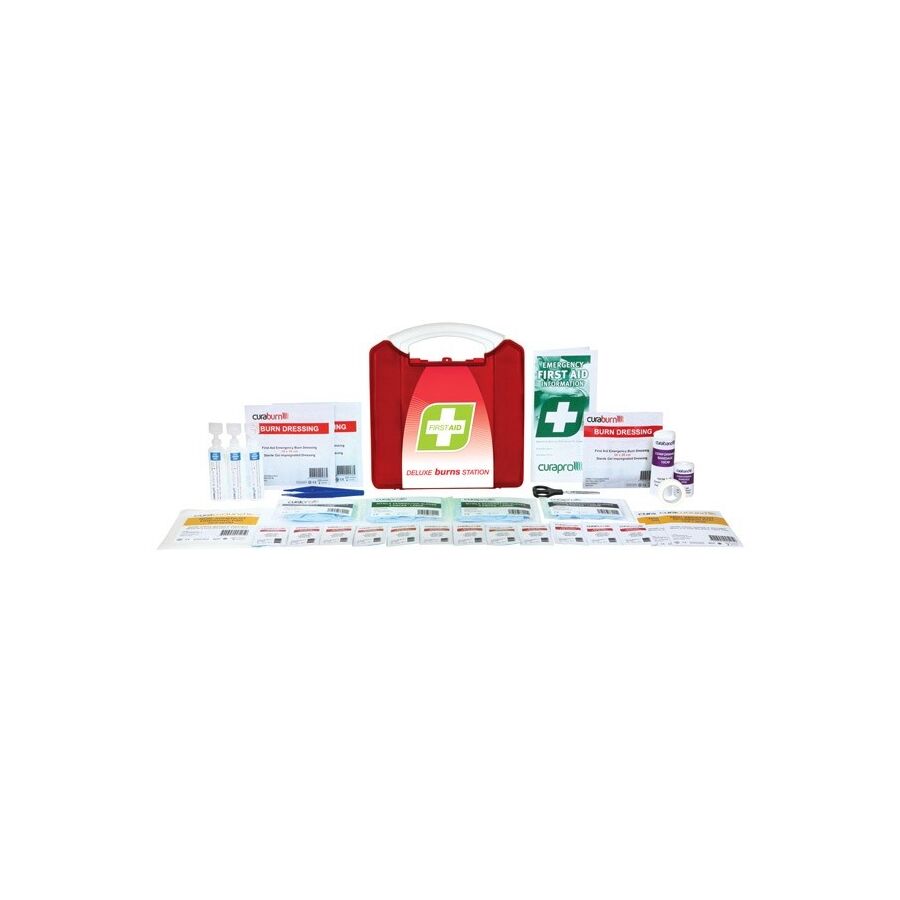
In Australian heavy industry, thermal injury is a real and constant threat. Electrical arcs, overheated tools, and chemical burns all pose risks. Even with strong safety protocols in place, incidents can still happen. That’s why WHS law demands more than prevention—it requires a fast and specialised emergency response when things go wrong.
Standard first aid kits aren’t built for this. Burns need urgent cooling and careful handling, not just gauze and antiseptic. That’s why Portable Burns Stations have become critical infrastructure in high-risk environments. They’re no longer a bonus—they’re a compliance essential.
When a burn occurs, damage continues even after the heat source is gone. The skin retains thermal energy, and without cooling, the injury deepens. Time is tissue.
Running water isn’t always available on a job site, especially when the worker is immobile. Hydrogel solves this. It’s made up of over 90% water in a gel base, applied straight to the wound. It cools through evaporation, pulling heat from the skin gently—without causing further damage. It also provides fast pain relief by covering exposed nerves, unlike ice or cold water which can worsen injury by constricting blood flow.
An arc flash can hit 19,000°C in milliseconds. The burns can be widespread and severe. In these cases, tiny bandages from standard kits are useless.
Burns stations are stocked with large gel dressings, face-specific masks, and full-limb wraps. They’re built to treat major trauma fast, not minor scrapes. This capacity is vital to reduce the risk of infection—the second-biggest danger after the burn itself.
Every second counts, and these stations act as trauma stabilisers until professional help arrives.
Removing a dressing can be just as painful as the injury itself—especially if the material sticks to raw tissue. That’s why every component in a professional burns station is designed not to stick.
Hydrogel dressings lift off easily. This reduces trauma and speeds up hospital care. It also allows medical staff to assess injury depth without tearing newly forming skin. This is what separates a medical-grade burns station from a basic consumer first aid box.
Workshops are dirty. Dust, oil, metal filings—none of these mix well with sterile dressings. A burns kit must be stored safely.
That’s where Schnap Electric Products comes in. Their steel enclosures are built for industrial use. They keep emergency kits clean, visible, and protected from physical damage. Schnap also offers emergency lighting—critical when power fails. A burns station lit by a Schnap emergency light is easy to find, even in total darkness.
“Portable” means it goes to the injured worker—not the other way around. Burns kits are wall-mounted but can be removed in seconds. Quick-release brackets or handles allow the responder to grab the kit and run.
Inside, every item is clearly laid out. No clutter. No digging. Just fast access to life-saving dressings when they’re needed most.
Hydrogel expires. It dries out. It becomes useless. Many sites get caught during audits with expired safety gear.
Sourcing burns stations through a professional electrical wholesaler solves this. They ensure kits are fresh, compliant, and meet Australian TGA standards. They also supply top-up packs so one used dressing doesn’t mean replacing the entire unit.
A good supplier doesn’t just sell—they support the entire lifecycle of your kit.
A Portable Burns Station isn’t a luxury—it’s your frontline defence against irreversible injury. It offers real treatment, real speed, and real compliance. By using hydrogel cooling, ensuring portability, and protecting the unit with heavy-duty enclosures from Schnap Electric Products, safety managers can meet WHS requirements and genuinely protect their teams.
Because when burns happen, every second matters—and the right response starts with the right equipment.

SCHNAP Electrical Wholesaler - clear, upfront pricing that professional electricians trust

Get what you need in seconds. SCHNAP electrical wholesaler makes ordering quick and simple

Fast delivery anywhere - that's guaranteed. SCHNAP electrical wholesalers ship nationwide with same-day dispatch

Track your order every step of the way. SCHNAP electrical wholesale keeps you updated from click to delivery

SCHNAP is Australia's premier electrical wholesaler and electrical supplies, marketing thousands of quality products from leading brands. Trusted for nearly two decades by licensed electricians, contractors, and engineers, our range covers everything from basic electrical components to complex industrial electrical equipment
Our key categories include: LED lighting, designer switches, commercial switchboards, circuit protection, security systems & CCTV, and smart home automation
All products are certified to Australian standards (AS/NZS), backed by our 30-day, no-questions-asked return policy. Our expert technical team helps you quickly source the right solution for any residential, commercial, or industrial project, with daily dispatch from our Sydney electrical warehouse delivering Australia-wide
SCHNAP offers the most comprehensive electrical product range, with full technical specifications, application details, installation requirements, compliance standards, and warranties — giving professionals total confidence in every purchase


Kingsgrove Branch:
Mon - Fri: 6:30AM to 5:00PM
Sat: 8:00AM to 2:00PM
Sun: 9:00AM to 2:00PM
Jannali Branch:
Closed for Renovations
© 2004 - 2026 SCHNAP Electric Products