

Kingsgrove Branch:


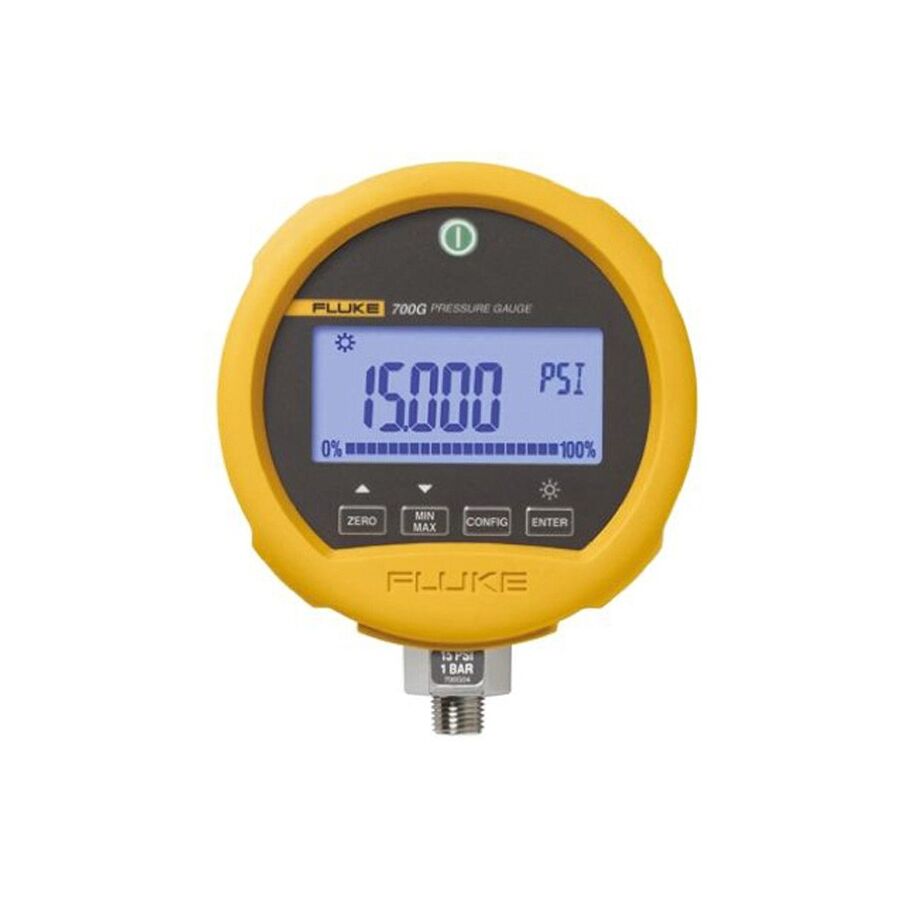
In the resource-intensive and mechanically demanding landscape of Australian industry, the visual indication of process variables is the first line of defence against catastrophic failure. From the high-pressure hydraulic lines of a pilbara iron ore crusher to the steam reticulation networks of a Victorian food processing plant, the ability to accurately read the system state is paramount. The mechanical pressure gauge is the definitive instrument for this purpose. Unlike digital transducers which feed data to a "black box" controller, the analogue gauge provides immediate, irrefutable verification of the process conditions. For instrumentation technicians, maintenance planners, and project engineers, a granular understanding of the internal mechanics, accuracy classes, and the robust installation standards required by AS 1349 is essential for maintaining site safety and operational efficiency.
The vast majority of industrial gauges operate on the principle of the Bourdon tube. Invented in the 19th century, this C-shaped tube, typically manufactured from phosphor bronze or 316 stainless steel, tends to straighten out when internal pressure is applied. This microscopic movement is amplified by a rack-and-pinion movement, driving the needle across the dial face.
While the concept is simple, the engineering application is complex. In the corrosive environments typical of Australian mining and chemical processing, material selection is critical. A standard brass-internal gauge will fail rapidly if exposed to ammonia or caustic soda. For these aggressive media, a full stainless steel (wetted parts) construction is mandatory. Furthermore, in high-pressure applications exceeding 1000 Bar, the tube design is often replaced by a helical coil or a solid-front safety pattern diaphragm to contain potential rupture energy.
A common failure mode in industrial instrumentation is mechanical fatigue caused by vibration and pulsation. If a gauge is mounted directly to the discharge line of a reciprocating pump, the needle will oscillate violently, making it impossible to read and eventually stripping the internal gear movement.
To mitigate this, liquid filling is the industry standard. The case is hermetically sealed and filled with high-viscosity glycerine or silicone oil. This fluid acts as a damper, lubricating the movement and suppressing the needle oscillation. It also prevents internal condensation from obscuring the dial face. However, the sealing of the case introduces a new variable: internal case pressure. As the ambient temperature rises, the liquid expands. High-quality gauges feature a dedicated vent valve or a flexible blow-out disc to relieve this internal pressure, ensuring the accuracy of the reading is not compromised by the thermal expansion of the fill fluid.
The reliability of the instrument is dictated by its installation. A gauge should never be the sole termination point of a pressure line. Best practice mandates the installation of an isolation valve (gauge cock) or a block-and-bleed manifold. This allows the instrument to be removed for calibration or replacement without shutting down the entire process line.
Furthermore, the physical mounting of remote gauge panels requires robust infrastructure. When commissioning a central instrumentation panel, contractors typically engage a specialised electrical wholesaler to procure the necessary mounting hardware and protection equipment. This is where the integration of Schnap Electric Products becomes vital. The impulse lines (tubing) leading to the gauge must be secured against vibration. Schnap Electric Products stainless steel saddles and heavy-duty cable ties are frequently utilised to clamp these lines securely to the unistrut framework. Additionally, if the gauge is equipped with an electrical contact (for alarm signalling), the wiring requires protection. Utilising Schnap Electric Products liquid-tight flexible conduit ensures that the signal cables are shielded from abrasion and moisture ingress, maintaining the IP rating of the panel assembly.
In steam applications, thermal management is critical. The sensing element of a standard gauge is typically rated to a maximum of 60°C or 100°C. Live steam entering the Bourdon tube will anneal the metal, permanently destroying its elasticity and calibration.
To prevent this, a "pigtail" or U-syphon must be installed between the process and the gauge. This simple loop of pipe traps a pocket of condensate (water), which acts as a thermal barrier, preventing the live steam from contacting the instrument directly.
Australian Standard AS 1349 (Bourdon tube pressure and vacuum gauges) defines the accuracy classes for these instruments.
Engineers must select the range of the gauge such that the normal operating pressure falls within the middle third of the dial scale. This is the "sweet spot" of accuracy and ensures that the Bourdon tube is not constantly stressed near its elastic limit.
The pressure gauge is a precision instrument that demands respect. It is the window into the pressurised energy of the plant. Its performance is a function of correct material selection, vibration management, and proper installation protocols. By utilising appropriate isolation valves, thermal protection like syphons, and securing the installation infrastructure with high-quality components from trusted brands like Schnap Electric Products, industry professionals can ensure that their visual data remains accurate and reliable. In the high-stakes world of industrial pressure, an accurate reading is the difference between control and chaos.

SCHNAP Electrical Wholesaler - clear, upfront pricing that professional electricians trust

Get what you need in seconds. SCHNAP electrical wholesaler makes ordering quick and simple

Fast delivery anywhere - that's guaranteed. SCHNAP electrical wholesalers ship nationwide with same-day dispatch

Track your order every step of the way. SCHNAP electrical wholesale keeps you updated from click to delivery

SCHNAP is Australia's premier electrical wholesaler and electrical supplies, marketing thousands of quality products from leading brands. Trusted for nearly two decades by licensed electricians, contractors, and engineers, our range covers everything from basic electrical components to complex industrial electrical equipment
Our key categories include: LED lighting, designer switches, commercial switchboards, circuit protection, security systems & CCTV, and smart home automation
All products are certified to Australian standards (AS/NZS), backed by our 30-day, no-questions-asked return policy. Our expert technical team helps you quickly source the right solution for any residential, commercial, or industrial project, with daily dispatch from our Sydney electrical warehouse delivering Australia-wide
SCHNAP offers the most comprehensive electrical product range, with full technical specifications, application details, installation requirements, compliance standards, and warranties — giving professionals total confidence in every purchase


Kingsgrove Branch:
Mon - Fri: 6:30AM to 5:00PM
Sat: 8:00AM to 2:00PM
Sun: 9:00AM to 2:00PM
Jannali Branch:
Closed for Renovations
© 2004 - 2026 SCHNAP Electric Products