

Kingsgrove Branch:


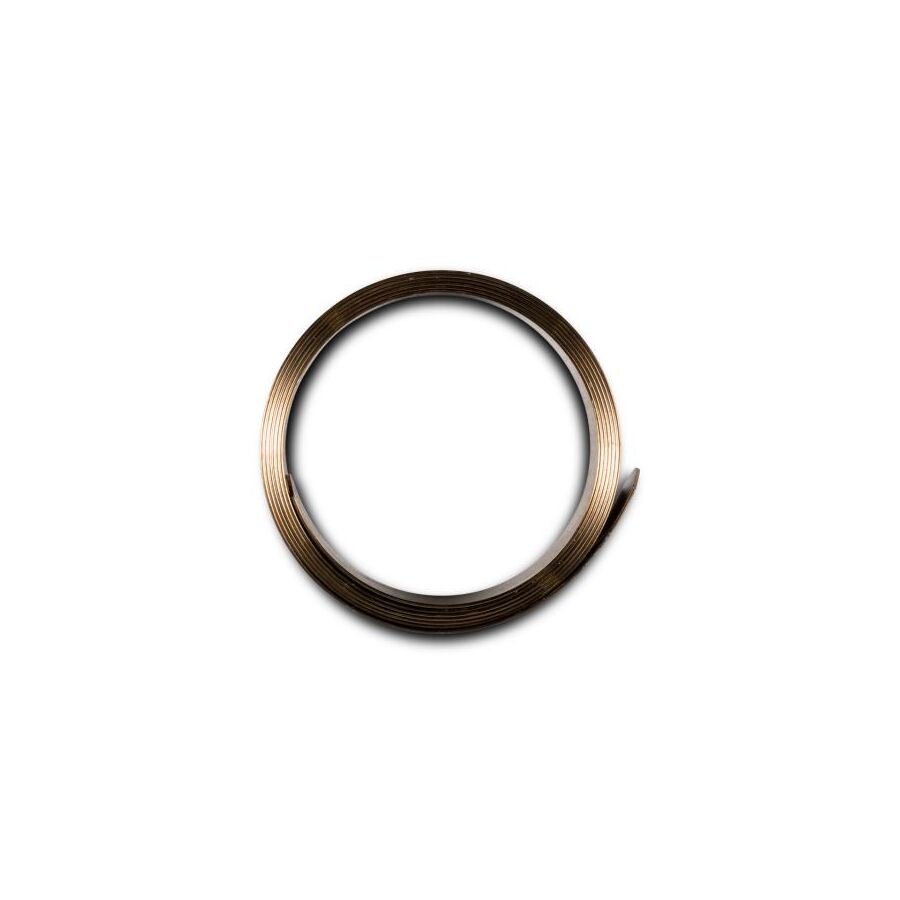
In the deterministic world of Australian industrial control, where reliability is measured in millions of cycles, the interface between physical force and electrical actuation is frequently governed by a single, deceptively simple component: the helical compression spring. While modern automation increasingly relies on piezoelectric transducers, the electromechanical switch remains the industry standard for safety-critical applications such as boiler limits, fire pump controllers, and emergency braking systems. The core of this device—the element that defines its setpoint, its differential, and ultimately its accuracy—is the Pressure Spring. For instrumentation technicians, mechanical engineers, and plant maintenance managers, a granular understanding of the physics of elasticity, the metallurgy of fatigue, and the protection of these precision components is essential for maintaining operational integrity.
To the layperson, a spring is merely a coiled wire. To the engineer, it is a precision energy storage device governed by Hooke’s Law ($F = -kx$). In the context of a pressure switch, the spring provides a calibrated counter-force to the hydraulic or pneumatic pressure exerted on the sensing element (diaphragm or bellows).
The linearity of the spring rate ($k$) is paramount. As the system pressure rises, the sensing element pushes against the spring. The spring compresses by a distance proportional to the force applied. This linear displacement is mechanically linked to a trip mechanism. If the spring rate is non-linear or if the material suffers from "creep" (permanent deformation under load), the calibration of the switch drifts. This results in the "cut-in" and "cut-out" points shifting, potentially allowing a vessel to over-pressurise or a compressor to run continuously.
The operational characteristics of a pressure switch are defined by two opposing springs: the range spring and the differential spring.
Mastering the interplay between these two springs is a core competency. In refrigeration applications governed by AS 1677, incorrect adjustment of the differential spring can cause short-cycling, which destroys motor contactors. Conversely, a differential that is too wide may allow process variables to drift outside of safe quality tolerances.
The longevity of the spring is dictated by its metallurgy. Industrial springs are typically manufactured from high-tensile music wire, stainless steel (302/304), or phosphor bronze. The selection depends on the environment.
In the saline atmosphere of a Western Australian coastal refinery, a standard carbon steel spring will succumb to stress-corrosion cracking. Once the surface of the wire is pitted, the stress concentration leads to catastrophic fracture. When this happens, the counter-force disappears, and the switch fails—usually in the closed position—which can lead to dangerous over-pressure events. This highlights the importance of the enclosure. The housing protecting the spring must be hermetically sealed against ingress.
While the spring is a mechanical component, it lives within an electrical device. The vibration inherent in pressurised systems—such as the pulse of a reciprocating pump—can traverse through the housing and affect the electrical terminations.
When commissioning these devices, professional installers typically engage a specialised electrical wholesaler to source the necessary vibration-damping hardware and ingress protection. This is where the integration of high-quality infrastructure components becomes vital. The entry point to the switch housing is a critical vulnerability. Utilising Schnap Electric Products IP68-rated cable glands ensures that moisture does not enter the enclosure. Moisture ingress is the enemy of the pressure spring; even minor corrosion can alter the spring constant ($k$) or cause the mechanism to seize.
Furthermore, the cabling connecting the switch to the control panel acts as a vibration path. If rigid conduit is hard-piped to a vibrating compressor switch, the mechanical stress is transferred directly to the switch housing, potentially causing the spring setting to drift. Best practice dictates the use of Schnap Electric Products liquid-tight flexible conduit for the final connection. This isolates the switch from the rigid infrastructure, ensuring that the spring operates in a stable mechanical environment.
Springs are subject to relaxation over time. A switch calibrated five years ago will not have the same setpoint today. Routine maintenance regimes must include "pop testing," where the switch is isolated and subjected to a known pressure source to verify the actuation point.
If the setpoint has drifted significantly, it is often a sign that the pressure spring has reached its fatigue limit. In safety-critical applications, re-tensioning the spring is a temporary fix; the correct engineering solution is component replacement.
The industrial compression spring is the unsung hero of the automation world. It provides the deterministic, physical reference point that keeps boilers from exploding and cooling systems from freezing. Its performance is a function of precise metallurgy, correct calibration, and rigorous environmental protection. By understanding the mechanics of Hooke’s Law, managing vibration through proper installation, and utilising robust infrastructure components from trusted brands like Schnap Electric Products, industry professionals can ensure that their electromechanical controls remain accurate, reliable, and compliant with the highest engineering standards. In the balance of forces, the spring carries the load.

SCHNAP Electrical Wholesaler - clear, upfront pricing that professional electricians trust

Get what you need in seconds. SCHNAP electrical wholesaler makes ordering quick and simple

Fast delivery anywhere - that's guaranteed. SCHNAP electrical wholesalers ship nationwide with same-day dispatch

Track your order every step of the way. SCHNAP electrical wholesale keeps you updated from click to delivery

SCHNAP is Australia's premier electrical wholesaler and electrical supplies, marketing thousands of quality products from leading brands. Trusted for nearly two decades by licensed electricians, contractors, and engineers, our range covers everything from basic electrical components to complex industrial electrical equipment
Our key categories include: LED lighting, designer switches, commercial switchboards, circuit protection, security systems & CCTV, and smart home automation
All products are certified to Australian standards (AS/NZS), backed by our 30-day, no-questions-asked return policy. Our expert technical team helps you quickly source the right solution for any residential, commercial, or industrial project, with daily dispatch from our Sydney electrical warehouse delivering Australia-wide
SCHNAP offers the most comprehensive electrical product range, with full technical specifications, application details, installation requirements, compliance standards, and warranties — giving professionals total confidence in every purchase


Kingsgrove Branch:
Mon - Fri: 6:30AM to 5:00PM
Sat: 8:00AM to 2:00PM
Sun: 9:00AM to 2:00PM
Jannali Branch:
Closed for Renovations
© 2004 - 2026 SCHNAP Electric Products