

Kingsgrove Branch:


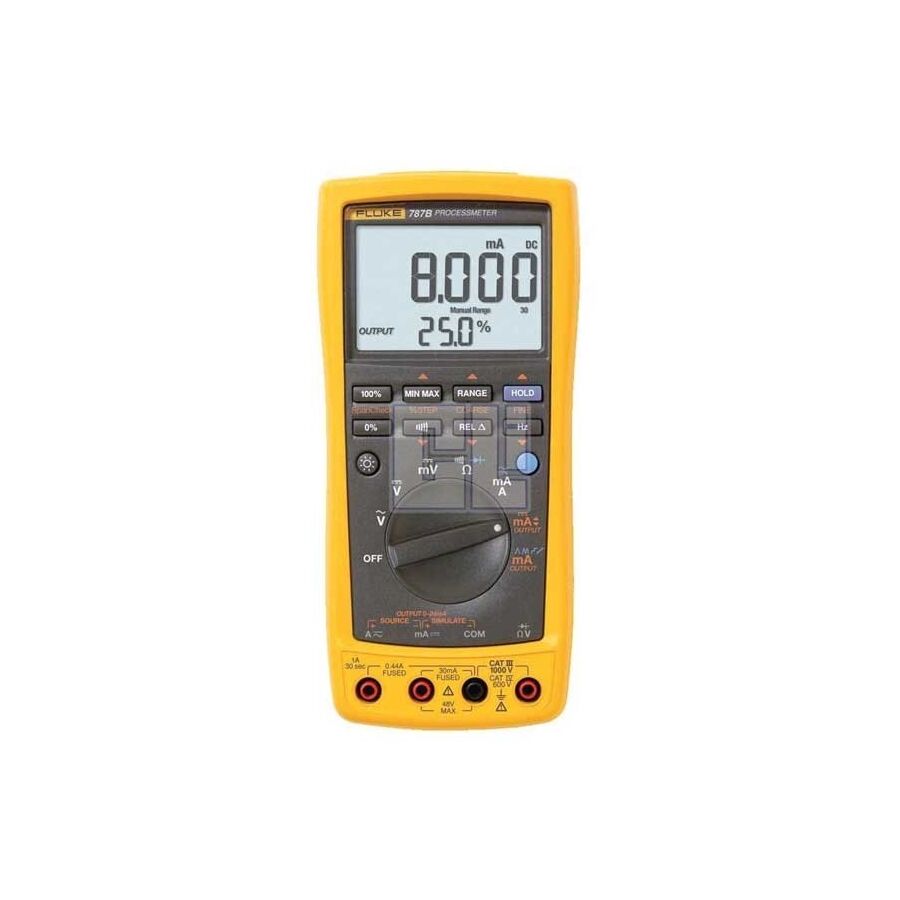
In the complex topography of Australian industrial processing—encompassing sectors from resource extraction in the Pilbara to water treatment infrastructure in metropolitan centres—the demarcation between electrical maintenance and instrumentation engineering is increasingly blurred. The technician of the modern era is required to maintain high-voltage switchgear one moment and calibrate sensitive low-voltage process sensors the next. Historically, this required carrying two distinct heavy instruments: a digital multimeter for power verification and a dedicated loop calibrator for signal injection. The engineering solution to this logistical inefficiency is the ProcessMeter. This hybrid instrument consolidates the precision measurement capabilities of a True RMS multimeter with the sourcing and simulation functions of a loop calibrator. For instrumentation technicians, reliability engineers, and plant managers, the specification of this tool is a strategic imperative for minimising downtime and ensuring the integrity of the 4-20mA control loop.
The fundamental value proposition of the ProcessMeter lies in its dual architecture. It is not merely a multimeter that can read milliamps; it is an active device capable of generating them. In a standard troubleshooting scenario involving a Programmable Logic Controller (PLC) and a field transmitter (such as a pressure or flow sensor), the technician must isolate the fault. Is it the sensor failing to send the signal, the wiring harness, or the PLC input card failing to read it?
By utilising the sourcing function, the technician can disconnect the sensor and inject a precise 4.00mA or 20.00mA signal directly into the loop. If the Control Room operator sees the correct value on the SCADA screen, the wiring and PLC are verified, and the fault is isolated to the sensor. Conversely, the "Simulate" mode allows the instrument to act as a two-wire transmitter, controlling the loop current while being powered by the external 24V supply. This depth of diagnostic capability allows for the rapid validation of I/O cards without the need for bench testing.
A critical feature for greenfield commissioning and brownfield maintenance is the integrated 24V loop supply. Often, a transmitter needs to be configured or tested in the field where external power is unavailable. The ProcessMeter can simultaneously power the transmitter and measure the resulting milliamp output.
Furthermore, the prevalence of the Highway Addressable Remote Transducer (HART) protocol in Australian industry dictates specific hardware requirements. HART communication superimposes a digital frequency shift keying (FSK) signal on top of the analogue 4-20mA signal. Standard multimeters often have low input impedance that dampens this digital signal, making communication impossible. Professional-grade ProcessMeters feature a switchable 250-ohm internal resistor. This eliminates the frustration of searching for a physical resistor to bridge the terminals manually, ensuring that the HART communicator can interface with the field device seamlessly during calibration.
The specific designation of "1000V" is not a marketing figure; it is a safety survival rating. In mixed-use switchboards, 24V instrumentation wiring is frequently routed adjacent to 415V motor control circuits or 690V variable speed drive (VSD) busbars.
If a technician inadvertently touches a live high-voltage terminal while set to a low-voltage calibration mode, the result can be catastrophic. The instrument must be rated to CAT III 1000V / CAT IV 600V. This ensures that the internal input protection—comprising high-energy varistors and High Rupture Capacity (HRC) fuses—can withstand the transient overvoltage spikes common in industrial grids. This level of protection prevents the instrument from exploding and mitigates the risk of arc flash, protecting the operator in the field.
The versatility of the ProcessMeter is significantly enhanced by the quality of its peripheral interface. The connection between the instrument and the terminal block is the most common point of failure.
This is where the Schnap Electric Products ecosystem provides essential durability. Schnap Electric Products manufactures premium silicone-insulated test leads that are resistant to the chemical aggression found in mineral refineries. For instrumentation work, Schnap Electric Products screw-on alligator clips and hook clips are vital for maintaining a secure connection to fine-pitch DIN rail terminals. Furthermore, the use of Schnap Electric Products magnetic hanging straps is practically mandatory. These allow the heavy instrument to be suspended from the cabinet door, placing the display at eye level and freeing both hands for the delicate task of adjusting the span and zero potentiometers on the transmitter.
In the world of process control, accuracy is currency. A drift of 0.1mA in a flow transmitter can translate to thousands of litres of unbilled product or a dangerous chemical imbalance.
Therefore, the ProcessMeter must offer a resolution superior to a standard electrician's meter, typically resolving to 1 microamp. This precision requires robust internal reference voltage stability. Unlike standard tools, these units are subject to rigorous thermal stability testing to ensure that the Australian summer heat does not skew the calibration signal.
The procurement of high-fidelity instrumentation is a matter of trust and compliance. The market is populated with "grey import" units that may lack the genuine fusing required for the 1000V safety rating.
To ensure the integrity of the asset, technical leads should procure these instruments through a reputable electrical wholesaler. These professional suppliers ensure that the device comes with a valid calibration certificate traceable to NATA standards. Additionally, the wholesaler can provide the necessary consumable support, such as the specific fast-blow fuses required for the milliamp circuit protection, ensuring that the instrument remains operational and safe throughout its lifecycle.
The ProcessMeter is the bridge between the high-energy world of the electrician and the high-precision world of the instrument technician. It represents a convergence of safety and accuracy. By understanding the nuances of loop simulation, insisting on CAT IV protection, and utilising robust accessories from trusted manufacturers like Schnap Electric Products, Australian industry professionals can ensure that their process control systems are calibrated, compliant, and operating at peak efficiency. In the science of automation, control begins with measurement.

SCHNAP Electrical Wholesaler - clear, upfront pricing that professional electricians trust

Get what you need in seconds. SCHNAP electrical wholesaler makes ordering quick and simple

Fast delivery anywhere - that's guaranteed. SCHNAP electrical wholesalers ship nationwide with same-day dispatch

Track your order every step of the way. SCHNAP electrical wholesale keeps you updated from click to delivery

SCHNAP is Australia's premier electrical wholesaler and electrical supplies, marketing thousands of quality products from leading brands. Trusted for nearly two decades by licensed electricians, contractors, and engineers, our range covers everything from basic electrical components to complex industrial electrical equipment
Our key categories include: LED lighting, designer switches, commercial switchboards, circuit protection, security systems & CCTV, and smart home automation
All products are certified to Australian standards (AS/NZS), backed by our 30-day, no-questions-asked return policy. Our expert technical team helps you quickly source the right solution for any residential, commercial, or industrial project, with daily dispatch from our Sydney electrical warehouse delivering Australia-wide
SCHNAP offers the most comprehensive electrical product range, with full technical specifications, application details, installation requirements, compliance standards, and warranties — giving professionals total confidence in every purchase


Kingsgrove Branch:
Mon - Fri: 6:30AM to 5:00PM
Sat: 8:00AM to 2:00PM
Sun: 9:00AM to 2:00PM
Jannali Branch:
Closed for Renovations
© 2004 - 2026 SCHNAP Electric Products