

Kingsgrove Branch:


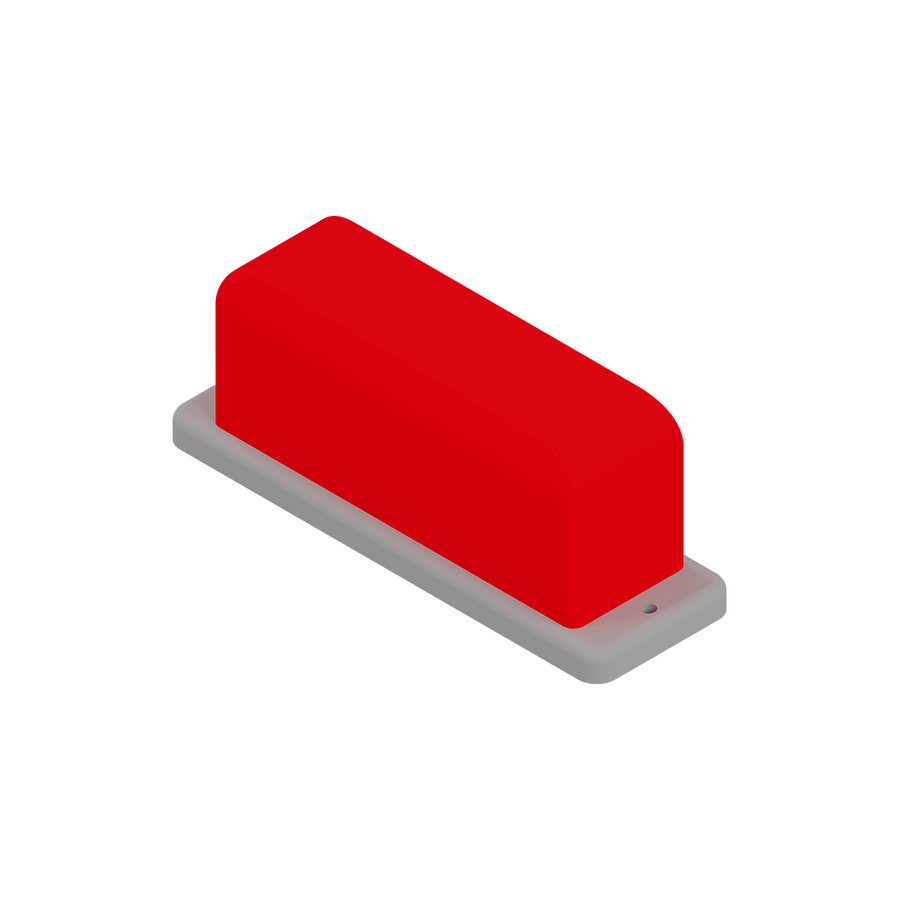
In high-noise industrial environments across Australia, audible alarms alone are often insufficient to communicate emergency or fault conditions. In mining, manufacturing, processing plants, and heavy logistics facilities, ambient noise levels frequently exceed safe auditory thresholds. Under these conditions, a visual alarm layer is essential to meet workplace safety expectations and to ensure immediate hazard recognition.
The Red Mini Strobe Light is a compact yet high-intensity visual alarm device designed to provide unmistakable signalling in industrial and commercial applications. Engineered for durability and high visibility, it forms a critical component of modern safety notification systems.
The choice of red as the signalling colour is aligned with established safety conventions and physical light behaviour. Under AS 1319, red is universally associated with danger, emergency, or stop conditions in occupational environments.
Red light occupies the longer wavelength range of the visible spectrum, which improves its penetration through airborne particles such as dust, vapour, or light smoke. This characteristic enhances visibility in industrial settings where atmospheric contaminants may reduce clarity.
The flashing mechanism activates peripheral vision through temporal modulation. Unlike steady illumination, a pulsed light pattern stimulates rapid attention response. Flash frequencies typically range between 60 and 80 flashes per minute, creating a visual urgency signal that cannot easily be ignored.
Earlier strobe designs relied on xenon discharge tubes that generated high-intensity flashes through capacitor discharge. While effective, xenon systems are sensitive to vibration and have limited operational lifespans.
Modern Red Mini Strobe Lights predominantly utilise solid-state LED technology. LED-based strobes offer:
• Operational lifespans exceeding 50,000 hours • High vibration resistance • Lower power consumption • Immediate activation with programmable flash patterns
Programmable flash sequences allow integration into PLC-controlled systems where different fault conditions can be communicated through coded flashing behaviour.
Industrial control systems typically operate at 24V DC, while some plant environments utilise 110V AC or 240V AC signalling circuits. Correct voltage selection is critical during specification.
The strobe must match the control output configuration of the system. In many installations, the strobe is energised via an auxiliary contact on a motor starter or circuit breaker. When a thermal overload or fault condition occurs, the auxiliary contact closes, activating the visual warning.
For fire alarm systems, integration must comply with AS 1670 requirements governing visual alarm device performance and placement.
Industrial strobes are frequently exposed to harsh environmental conditions including dust, moisture, vibration, and ultraviolet radiation.
Ingress Protection (IP) ratings define resistance levels:
• IP44 for splash protection in controlled indoor environments • IP65 or IP66 for dust-tight and high-pressure water resistance • Higher ratings for marine or extreme industrial exposure
Impact resistance is also essential. Polycarbonate lenses are commonly specified due to their UV stability and mechanical strength, preventing colour fading and lens cracking under prolonged exposure.
Proper installation ensures visibility and durability. The strobe must be positioned to maintain clear line-of-sight without obstruction. Elevated mounting or right-angle brackets may be required to achieve 360-degree visibility in congested plant rooms.
Cable entry points must be sealed to prevent moisture ingress. Correct gland selection maintains enclosure integrity and protects internal circuitry from corrosion or short circuit conditions.
Within compliant installations, termination integrity must align with AS/NZS 3000 to ensure conductor protection and safe segregation.
SCHNAP Electric Products supports industrial signalling installations with complementary components that enhance reliability and environmental protection.
IP-rated cable glands maintain enclosure sealing at the cable entry interface. UV-stabilised flexible conduit protects external supply wiring from degradation in exposed environments.
Terminal blocks and control relays facilitate seamless integration into existing safety loops and control circuits, ensuring stable electrical connection and structured wiring layouts.
These supporting components ensure that the Red Mini Strobe Light performs reliably within demanding industrial applications.
Selection of industrial strobes must consider luminous intensity (candela rating), voltage compatibility, IP rating, and regulatory compliance.
Non-compliant decorative lighting products are unsuitable for safety signalling and may fail under environmental stress. Verified compliance markings and appropriate fire or safety standard alignment are essential for installation within regulated facilities.
Professional procurement through electrical distribution channels ensures correct specification, compatibility, and long-term operational reliability.
The Red Mini Strobe Light serves as a vital visual communication tool in industrial safety systems. By leveraging high-intensity LED technology, appropriate flash modulation, and durable IP-rated construction, it provides immediate and unmistakable hazard signalling.
When properly specified, installed, and integrated with compliant control systems, it enhances situational awareness and supports safe operational environments. In industrial safety engineering, visibility is not optional—it is fundamental.

SCHNAP Electrical Wholesaler - clear, upfront pricing that professional electricians trust

Get what you need in seconds. SCHNAP electrical wholesaler makes ordering quick and simple

Fast delivery anywhere - that's guaranteed. SCHNAP electrical wholesalers ship nationwide with same-day dispatch

Track your order every step of the way. SCHNAP electrical wholesale keeps you updated from click to delivery

SCHNAP is Australia's premier electrical wholesaler and electrical supplies, marketing thousands of quality products from leading brands. Trusted for nearly two decades by licensed electricians, contractors, and engineers, our range covers everything from basic electrical components to complex industrial electrical equipment
Our key categories include: LED lighting, designer switches, commercial switchboards, circuit protection, security systems & CCTV, and smart home automation
All products are certified to Australian standards (AS/NZS), backed by our 30-day, no-questions-asked return policy. Our expert technical team helps you quickly source the right solution for any residential, commercial, or industrial project, with daily dispatch from our Sydney electrical warehouse delivering Australia-wide
SCHNAP offers the most comprehensive electrical product range, with full technical specifications, application details, installation requirements, compliance standards, and warranties — giving professionals total confidence in every purchase


Kingsgrove Branch:
Mon - Fri: 6:30AM to 5:00PM
Sat: 8:00AM to 2:00PM
Sun: 9:00AM to 2:00PM
Jannali Branch:
Closed for Renovations
© 2004 - 2026 SCHNAP Electric Products