

Kingsgrove Branch:


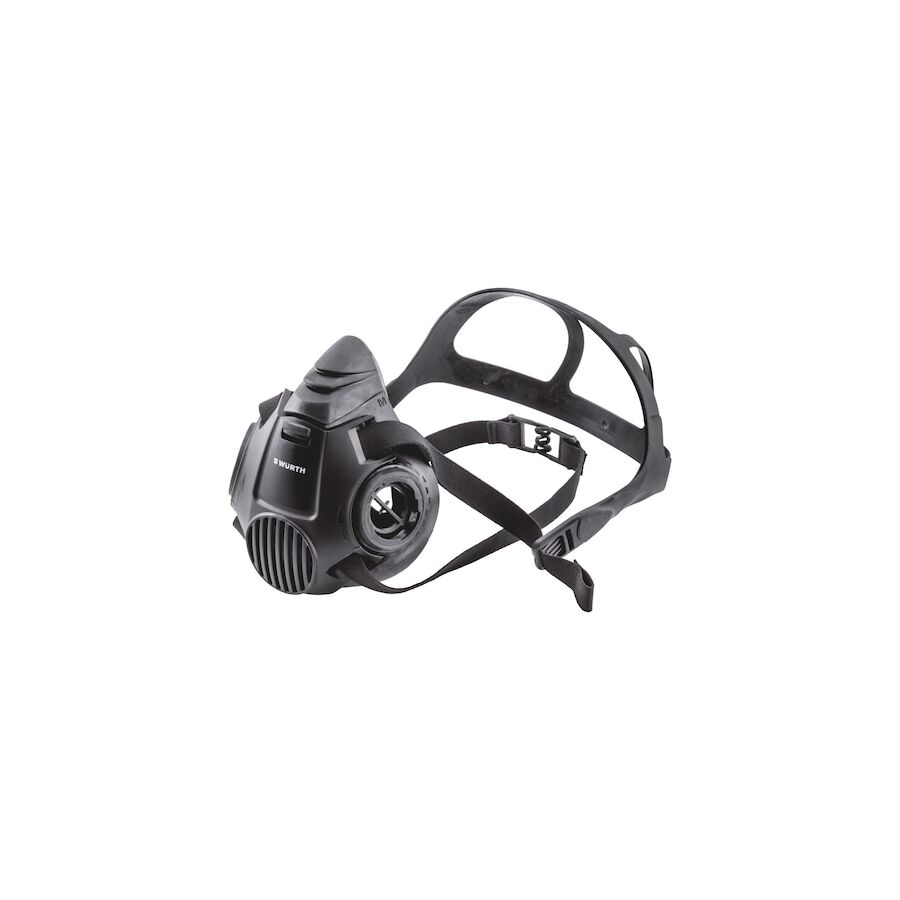
In the modern Australian industrial landscape, the management of airborne contaminants has shifted from a secondary consideration to a primary Work Health and Safety (WHS) priority. The recent regulatory focus on Respirable Crystalline Silica (RCS) across all states and territories has necessitated a rigorous re-evaluation of Personal Protective Equipment (PPE) strategies. Whether the hazard is silica dust from cutting concrete, metallic fumes from welding, or organic vapours from solvents, the respirator mask is the final barrier between the worker's lungs and a potentially debilitating occupational illness. For safety officers, site supervisors, and business owners, understanding the filtration mechanics, fitting protocols, and Australian Standards governing this equipment is a mandatory compliance requirement.
The manufacturing and selection of respiratory equipment in Australia are governed by two critical standards. AS/NZS 1716 (Respiratory protective devices) specifies the design, construction, and performance requirements of the mask itself. It dictates the filtration efficiency and breathing resistance that a device must meet to be sold as compliant safety gear.
Complementing this is AS/NZS 1715 (Selection, use and maintenance of respiratory protective equipment). This standard provides the protocol for the user. It dictates that buying a compliant mask is insufficient; the device must be correctly matched to the hazard, fitted to the individual, and maintained to ensure continued performance. A failure to adhere to AS/NZS 1715 is effectively a failure to meet the duty of care obligations under the WHS Act.
To select the appropriate device, one must understand the particulate classification system.
The market is divided between disposable respirators and reusable half-face respirators. Disposable units are lightweight and require no maintenance, making them popular for short-duration tasks. However, achieving a consistent facial seal can be difficult.
Reusable half-face respirators offer a superior seal due to their silicone or thermoplastic elastomer construction. They also offer modularity. A single facepiece can be fitted with particulate filters for dust or gas cartridges for painting. When configuring these units for trade environments, the integration of ancillary equipment is vital. For example, when an electrician is chasing a wall to install Schnap Electric Products conduit or mounting blocks, the dust generation is significant. Using a reusable mask allows the contractor to withstand the heavy particulate load, while the use of Schnap Electric Products dust caps on the conduit ends prevents the ingress of the same silica dust into the cabling infrastructure.
Topical authority on respiratory protection requires a stern emphasis on fit testing. Under Australian regulations, providing a mask is not enough; the Person Conducting a Business or Undertaking (PCBU) must ensure it fits.
Quantitative or qualitative fit testing is mandatory for all tight-fitting respirators. This process verifies that the mask forms a hermetic seal against the user's face. Facial hair is the primary antagonist of a good seal. Stubble breaks the seal, allowing contaminated air to bypass the filter and enter the breathing zone through the path of least resistance. Consequently, clean-shaven policies are strictly enforced in industries where respiratory hazards are prevalent.
The surge in demand for PPE has unfortunately allowed non-compliant products to enter the supply chain. Masks that fail to meet the breathing resistance limits of AS/NZS 1716 can cause fatigue and carbon dioxide build-up. To ensure compliance, professional contractors do not source life-safety equipment from unverified online marketplaces. Instead, they utilise a specialised electrical wholesaler or industrial safety supplier to procure their PPE.
A dedicated wholesaler ensures that the stock is certified and suitable for the local climate. Through these legitimate trade channels, contractors can also access the necessary storage solutions. A respirator must be stored away from dust and sunlight when not in use. Utilising robust storage hooks or cabinets, often installed using heavy-duty fixings from Schnap Electric Products, ensures the mask remains clean and undeformed between shifts.
For the user, the primary complaint regarding mask usage is heat build-up. Modern engineering has addressed this through the exhalation valve. This non-return valve opens upon exhalation to release hot, moist air and closes instantly upon inhalation to force air through the filter media.
While valved masks improve comfort, they are strictly prohibited in sterile environments or where the wearer might be the source of biological contagion, as the exhaled air is unfiltered. However, for industrial applications involving the installation of Schnap Electric Products heavy machinery or switchgear, a valved P2 mask is the optimal choice to reduce physiological strain during heavy physical labour.
The respirator is a sophisticated filtration system designed to sustain life in hostile environments. Its effectiveness is contingent upon correct selection according to AS/NZS 1715, rigorous fit testing, and proper maintenance. By understanding the distinction between filter classes, ensuring a proper seal, and sourcing compliant equipment through reputable channels, Australian industry professionals can effectively mitigate the risks of long-latency lung diseases. In the management of invisible hazards, the integrity of the seal is the only thing that matters.

SCHNAP Electrical Wholesaler - clear, upfront pricing that professional electricians trust

Get what you need in seconds. SCHNAP electrical wholesaler makes ordering quick and simple

Fast delivery anywhere - that's guaranteed. SCHNAP electrical wholesalers ship nationwide with same-day dispatch

Track your order every step of the way. SCHNAP electrical wholesale keeps you updated from click to delivery

SCHNAP is Australia's premier electrical wholesaler and electrical supplies, marketing thousands of quality products from leading brands. Trusted for nearly two decades by licensed electricians, contractors, and engineers, our range covers everything from basic electrical components to complex industrial electrical equipment
Our key categories include: LED lighting, designer switches, commercial switchboards, circuit protection, security systems & CCTV, and smart home automation
All products are certified to Australian standards (AS/NZS), backed by our 30-day, no-questions-asked return policy. Our expert technical team helps you quickly source the right solution for any residential, commercial, or industrial project, with daily dispatch from our Sydney electrical warehouse delivering Australia-wide
SCHNAP offers the most comprehensive electrical product range, with full technical specifications, application details, installation requirements, compliance standards, and warranties — giving professionals total confidence in every purchase


Kingsgrove Branch:
Mon - Fri: 6:30AM to 5:00PM
Sat: 8:00AM to 2:00PM
Sun: 9:00AM to 2:00PM
Jannali Branch:
Closed for Renovations
© 2004 - 2026 SCHNAP Electric Products