



Kingsgrove Branch:
RJ45 Plug
13/11/2025
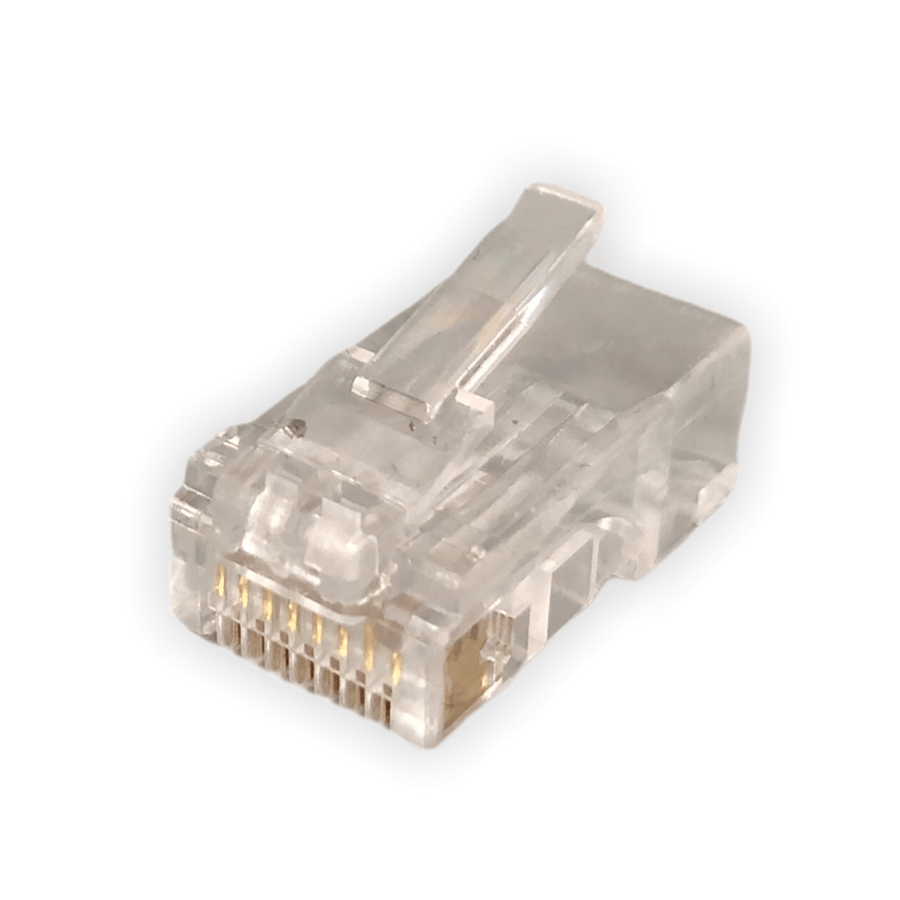
G'day! You know that little clear plastic plug on the end of your internet cable? The one you plug into the NBN box, the back of the computer, or the smart TV? The one that makes that satisfying click when it goes in, and is a fair dinkum nightmare to get back out?
That, mate, is the RJ45 plug. It's the humble, unsung hero of our modern, connected Aussie lives. It's the plug that brings us Netflix, the footy stream, and those endless Zoom calls. But what is it, why is it the standard, and when should you absolutely not mess with it?
So, What is an RJ45 Plug, Exactly?
RJ45 (which stands for Registered Jack 45) is the technical name for the standard connector used in computer networking. We're talking Ethernet cables, mate.
Its one and only job is to be the plug on the end of a data cable, allowing you to plug your devices into the network. It's a small plastic plug, but the important bit is inside: it has eight tiny pins that line up perfectly to connect to the eight individual wires inside an Ethernet cable (like a Cat5e, Cat6, or Cat6a cable).
This 8-pin setup is what allows it to handle the massive, high-speed data streams we need for fast NBN, 4K streaming, and online gaming.
The Big Confusion: RJ45 vs. That Old Phone Plug (RJ11)
This is the bit that catches people out. An RJ45 plug looks like the bigger, beefier brother of the old telephone plug.
- RJ45 (The Internet Plug): This is the wide one, with 8 pins. It's for data and networking.
- RJ11 (The Old Phone Plug): This is the skinny little fella, with usually 4 or 6 pins. It's only for old-school landline telephones.
They look similar, but they're not interchangeable. Trying to jam your NBN plug into an old phone socket is a recipe for a bad time.
Why is it the Go-To Connector? (The Ripper Benefits)
The RJ45 plug is the king of networking for a few simple reasons:
- It's Standardised: Every NBN box, modem, router, computer, and smart TV in the world has the same port. It just works.
- It's Reliable: That little plastic 'clicky' tab (the one that always snaps off when you stand on it!) is a positive locking mechanism. It holds the plug securely in the socket, so a dodgy connection won't drop you out in the middle of a gaming session.
- It's Fast: The 8-pin design is what allows it to handle the blazing-fast speeds of modern Ethernet, up to 10 Gigabits per second with the right cable and connector (like Cat6a).
The CRITICAL Safety & Compliance Warning: DIY vs. Pro
Righto, let's get dead serious for a sec, because this is the most important part of the whole article.
- DIY: Buying a pre-made Ethernet cable (a 'patch lead') with RJ45 plugs on the end from a shop is a "go for your life" DIY job. Too easy. Crimping your own RJ45 plug onto a loose cable to make your own patch lead is also a classic (if fiddly) DIY task, as long as you have the right crimping tool.
- PRO ONLY: Want to install a new data point in your study or media room? This involves running a data cable inside your walls, floor, or ceiling and terminating it at a wall plate.
In Australia, this is strictly not a DIY job. Any fixed data, communications, or telephone cabling must be installed by a licensed cabler (registered with ACMA).
Why? It's the law, mate. A dodgy data install (especially with cheap parts from a non-specialist supplier) can create interference (messing up your and your neighbour's NBN) or, worse, if it's run too close to 240V power without proper separation, it can become a serious electrical hazard. Don't be a galah.
A Professional Job Needs Professional Gear
A licensed cabler or licensed electrician knows that a rock-solid, high-speed network relies on high-quality, compliant components from end to end. They can't risk a job on a cheap, dodgy RJ45 plug that will fail in a year.
This is why they source their gear from a trusted electrical wholesaler. As one of Australia's most comprehensive electrical wholesaler and supplier networks, Schnap Electric Products stocks the lot for the professional installer. They've got a massive range of high-quality, professional-grade Cat6/Cat6a RJ45 plugs, wall mechanisms ('mechs'), data cable, patch panels, and all the specialist crimping and testing tools that a qualified professional needs to do the job right, compliant, and ready for high-speed Aussie internet. For a connection that won't let you down, the pros start with quality gear from a supplier like Schnap Electric.

Transparent Pricing
Clear, upfront trade pricing on every product.

Streamlined Ordering
Find and order from Australia’s largest electrical range in seconds.

Australia-wide Delivery
Same-day dispatch from Sydney. Electrical supplies delivered Australia-wide on orders over $150.

End-to-end Support
Order tracking from checkout to doorstep, plus a trade team on the phone 7 days.

Who is SCHNAP?
SCHNAP is a Sydney-based electrical wholesaler in Kingsgrove, supplying licensed electricians, contractors and engineers since 2008. We run a trade counter open seven days and an online store with Australia-wide delivery, with products from basic electrical components to industrial electrical equipment.
What does SCHNAP stock?
We stock Australia’s largest electrical range for licensed electricians. Key categories include LED lighting, designer switches, commercial switchboards, circuit protection, security systems and CCTV, and smart home automation.
How do ordering and delivery work?
Order online or at our Kingsgrove trade counter, and your order is dispatched same-day from our Sydney warehouse. Same-day delivery is available across Sydney on eligible orders. Delivery Australia-wide is available on orders over $150; under $150, collect free from Kingsgrove, open 7 days. Returns are accepted within 100 days of purchase, and everything comes with the manufacturer’s warranty. Our trade team helps you find the right product for residential, commercial and industrial jobs.
Which brands does SCHNAP carry?
We carry leading brands such as Hager, Clipsal and Legrand across lighting, switchgear, cables, CCTV, smoke alarms and data. Product pages show the part number, specifications, approvals and application details where available.


