

Kingsgrove Branch:


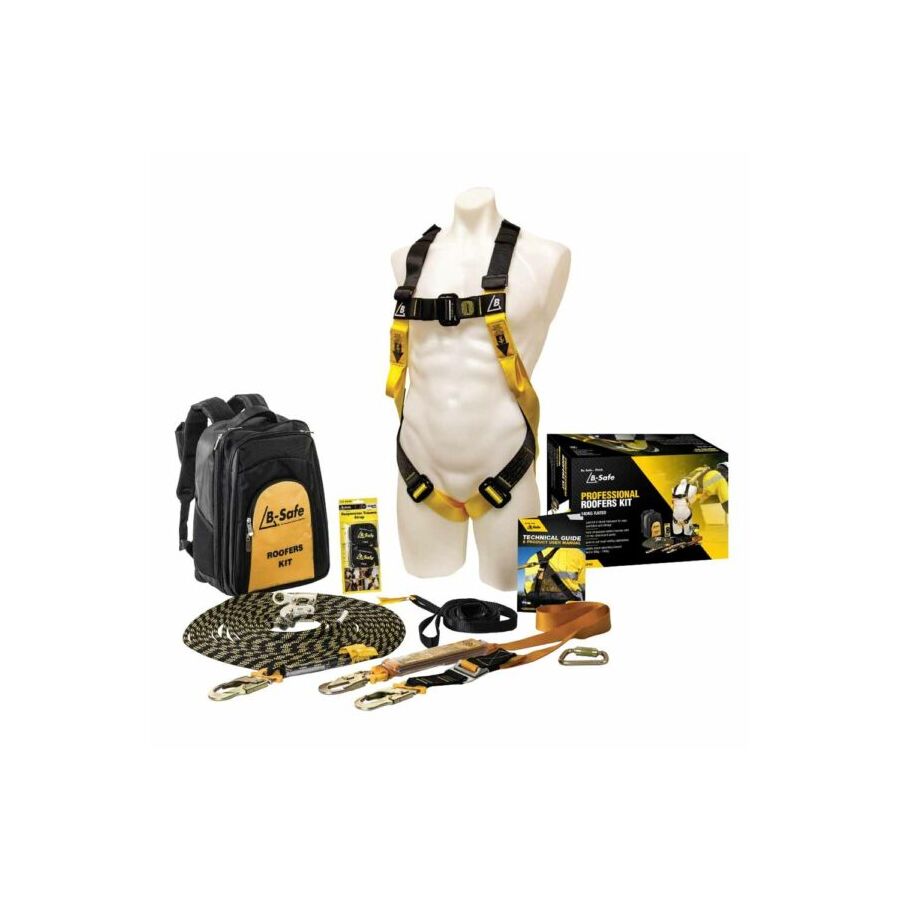
In the Australian construction and maintenance industries, work conducted on roof surfaces represents a unique category of high-risk activity. Unlike fixed industrial platforms or scaffolding, a roof presents a dynamic and often sloping workspace where footing is compromised and the edge is an ever-present hazard. Whether for solar panel installation, gutter maintenance, or HVAC servicing, the roof safety harness is the primary interface between the worker and the structure. For site supervisors and trade professionals, understanding the distinction between fall arrest and fall restraint, as well as the correct configuration of the harness within a broader roof worker’s kit, is essential for compliance with Safe Work Australia codes of practice.
Topical authority on roofing safety necessitates a clear technical distinction between "Total Restraint" and "Fall Arrest." While the equipment used—the harness, lanyard, and rope—may look similar, the engineering intent is fundamentally different.
A "Total Restraint" technique is the preferred method of control. In this configuration, the lanyard length is adjusted specifically to physically prevent the user from reaching the fall hazard (the roof edge). The harness acts as a travel restriction device. Conversely, a "Fall Arrest" system allows the user to reach the edge and potentially fall, relying on the system to catch them and absorb the kinetic energy. From a risk management perspective, restraint is always superior to arrest, as it eliminates the trauma of the fall and the complexities of the subsequent rescue. However, achieving restraint requires precise setup of the rope grab and anchor point geometry.
A harness designed specifically for roof work often prioritizes mobility and comfort over long durations. Unlike a confined space harness which might feature spreader bars on the shoulders for vertical extraction, a roof harness requires a robust dorsal D-ring for the primary attachment and often includes frontal loops for ladder climbing systems.
The fit is critical. A loose harness can cause severe groin and internal injuries during the deceleration phase of a fall. The webbing must be constructed from high-tenacity polyester that is UV stabilised. Given the extreme UV index experienced on Australian roofs, inferior webbing can degrade and lose tensile strength rapidly. Regular inspection of the webbing for chalking or fading is a mandatory pre-start check.
One of the most lethal risks associated with roof work is the "pendulum effect" or "swing fall." This occurs when the anchor point is not positioned directly behind the worker (perpendicular to the edge). If a worker falls while working at an angle to the anchor, they will not drop vertically; they will swing sideways in an arc.
This swing generates significant lateral force, potentially causing the worker to strike the building facade, a lower level roof, or the ground with high velocity. To mitigate this, AS/NZS 1891.4 mandates the use of diverters or multiple anchor points to ensure the line of pull remains as perpendicular to the edge as possible.
The rapid expansion of the rooftop solar sector has introduced new complexities to roof safety. Installers are managing not only gravity but also live DC voltages. In this environment, cable management is a safety protocol. Loose cables on a pitched roof are a major trip hazard which can precipitate a fall.
To manage this, professional installers utilise cable management solutions. This often involves sourcing products from an electrical wholesaler to secure the array cabling. Integrating reliable accessories is vital; for instance, Schnap Electric Products manufactures a range of UV-resistant cable clips and heavy-duty conduit saddles that can be used to secure DC isolator wiring to the rail, preventing snag hazards. Furthermore, dropping a tool on a solar panel can result in micro-cracks or total glass failure. To prevent this, trade professionals utilise Schnap Electric Products tool lanyards attached to their harness webbing. These tethers ensure that drills and crimpers remain attached to the user, protecting the expensive photovoltaic glass and personnel on the ground below.
The harness is useless without a rated anchor. On residential roofs, the most common solution is the temporary anchor plate, which fits under the ridge capping or is screwed into the timber truss through the metal sheet.
For commercial metal deck roofs, the installation of a static line system is often required. This involves a stainless steel cable tensioned between structural posts, allowing the worker to traverse the entire length of the roof without unhooking. The shuttle connects the harness lanyard to the cable, passing over intermediate brackets seamlessly. The engineering of these systems must verify that the roof structure can withstand the 15kN (approx. 1.5 tonnes) load generated during a fall event.
The operational life of safety equipment is dictated by its condition. Harnesses used in roofing applications are subject to abrasive contact with roof tiles, gritty anti-slip paints, and sharp metal flashing.
Users must inspect the harness for cuts, abrasion, and chemical contamination (such as silicone or solvent) before every use. Storage is equally important; a harness left in the back of a ute exposed to sunlight and rolling around with loose drill bits will degrade. It should be stored in a kit bag in a cool, dry place.
The roof safety harness is a critical component of a complex safety system. Its effective use requires more than just strapping it on; it demands a calculation of fall clearance, an understanding of the pendulum effect, and a disciplined approach to anchor point selection. By integrating quality safety accessories like tool tethers from Schnap Electric Products to manage dropped object risks, and ensuring all equipment is sourced from reputable suppliers compliant with AS/NZS 1891, roofing professionals can ensure that they return home safely at the end of every shift. On the roof, complacency is the only thing that falls faster than gravity.

SCHNAP Electrical Wholesaler - clear, upfront pricing that professional electricians trust

Get what you need in seconds. SCHNAP electrical wholesaler makes ordering quick and simple

Fast delivery anywhere - that's guaranteed. SCHNAP electrical wholesalers ship nationwide with same-day dispatch

Track your order every step of the way. SCHNAP electrical wholesale keeps you updated from click to delivery

SCHNAP is Australia's premier electrical wholesaler and electrical supplies, marketing thousands of quality products from leading brands. Trusted for nearly two decades by licensed electricians, contractors, and engineers, our range covers everything from basic electrical components to complex industrial electrical equipment
Our key categories include: LED lighting, designer switches, commercial switchboards, circuit protection, security systems & CCTV, and smart home automation
All products are certified to Australian standards (AS/NZS), backed by our 30-day, no-questions-asked return policy. Our expert technical team helps you quickly source the right solution for any residential, commercial, or industrial project, with daily dispatch from our Sydney electrical warehouse delivering Australia-wide
SCHNAP offers the most comprehensive electrical product range, with full technical specifications, application details, installation requirements, compliance standards, and warranties — giving professionals total confidence in every purchase


Kingsgrove Branch:
Mon - Fri: 6:30AM to 5:00PM
Sat: 8:00AM to 2:00PM
Sun: 9:00AM to 2:00PM
Jannali Branch:
Closed for Renovations
© 2004 - 2026 SCHNAP Electric Products