

Kingsgrove Branch:


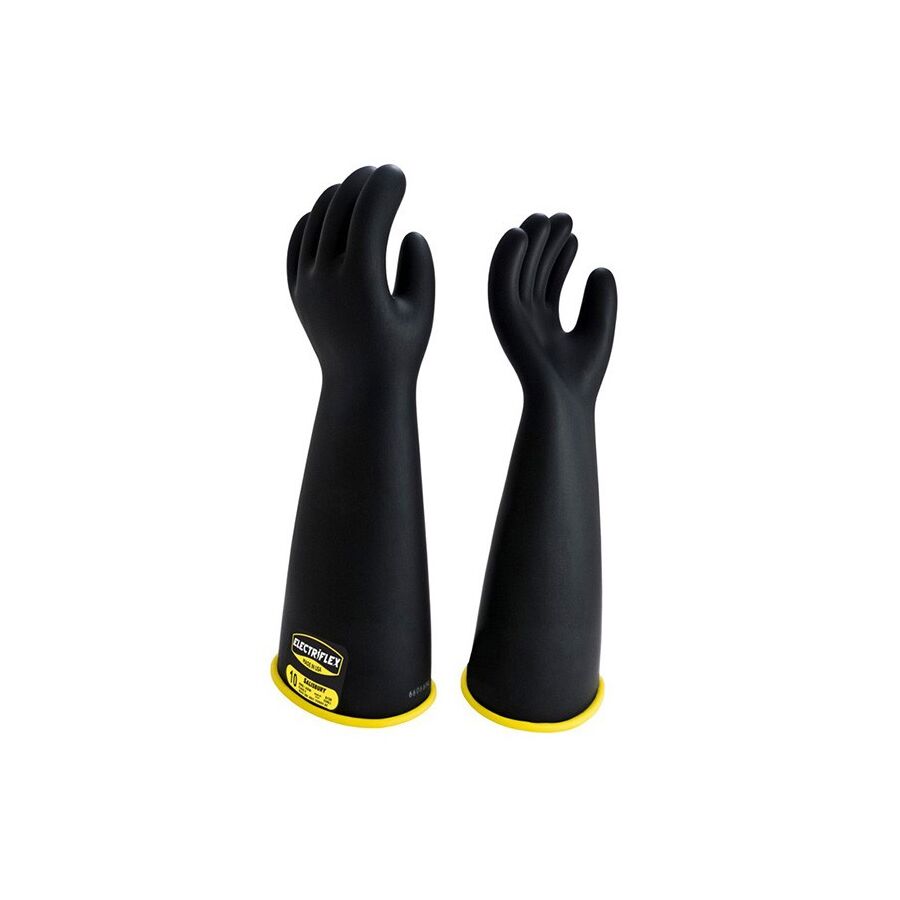
In Australian electrical maintenance and infrastructure environments, technicians may be required to work on or near energised equipment under strictly controlled conditions. Under Work Health and Safety (WHS) regulations and AS/NZS 4836 requirements for safe work on low-voltage installations, insulating hand protection forms a critical layer of personal safety.
Rubber Safety Gloves provide a certified dielectric barrier between the technician and electrical potential. They are engineered specifically to resist current flow while maintaining sufficient dexterity for controlled, technical tasks.
The core protective principle of insulating gloves is dielectric resistance. When contact occurs with an energised conductor, the glove introduces high electrical resistance, limiting or preventing current flow through the body.
Rubber Safety Gloves are classified under AS/NZS IEC 60903 according to maximum working voltage. Common classes include:
Each glove is manufactured to meet strict dielectric performance standards and is proof-tested at higher voltages to verify insulation integrity. Selection must always match the maximum prospective voltage of the task.
Most insulating gloves are manufactured from natural rubber (polyisoprene) or synthetic elastomers engineered for electrical insulation. While these materials offer excellent dielectric properties, they are vulnerable to mechanical damage.
Sharp edges, abrasive surfaces, and puncture hazards can compromise insulation integrity. For this reason, compliant systems require the use of leather protector gloves worn over the rubber insulating glove.
The layered system provides:
Without leather protectors, even minor damage may result in dielectric failure.
Under AS/NZS 4836, insulating gloves must be inspected before every use. This includes:
Any glove showing signs of damage must be removed from service immediately.
In addition to daily inspections, gloves must undergo laboratory dielectric testing and recertification at prescribed intervals, typically every six months. Each glove carries a stamped test date and must not be used beyond its certification period.
Rubber insulating gloves are sensitive to:
Improper storage can accelerate degradation and reduce dielectric performance. Gloves should be stored in protective canvas or fabric storage bags, kept away from direct sunlight and high temperatures.
When integrated into work vehicles or plant rooms, protective storage prevents premature ageing and maintains compliance validity.
Rubber Safety Gloves are most effective when used as part of a comprehensive safe work system including:
Technicians installing or maintaining switchgear, distribution boards, and heavy-duty hardware from Schnap Electric Products benefit from combining compliant insulating gloves with insulated tools and structured isolation protocols.
The glove protects the hands, while system-wide compliance protects the entire work environment.
Because insulating gloves carry strict test-date limitations, inventory rotation is critical. Procurement through specialised electrical wholesaler ensures:
Maintaining testing registers and tracking expiry dates supports regulatory compliance and reduces risk of unintentional non-compliance.
Rubber Safety Gloves are a life-critical component of electrical personal protective equipment in Australia. Engineered to meet AS/NZS IEC 60903 requirements, they provide essential dielectric isolation when working on or near energised systems.
When correctly selected, inspected, tested, and paired with leather protectors and insulated tools, they form a reliable barrier against electrical current. In high-voltage and low-voltage maintenance environments, verified insulation integrity remains the foundation of safe electrical practice.

SCHNAP Electrical Wholesaler - clear, upfront pricing that professional electricians trust

Get what you need in seconds. SCHNAP electrical wholesaler makes ordering quick and simple

Fast delivery anywhere - that's guaranteed. SCHNAP electrical wholesalers ship nationwide with same-day dispatch

Track your order every step of the way. SCHNAP electrical wholesale keeps you updated from click to delivery

SCHNAP is Australia's premier electrical wholesaler and electrical supplies, marketing thousands of quality products from leading brands. Trusted for nearly two decades by licensed electricians, contractors, and engineers, our range covers everything from basic electrical components to complex industrial electrical equipment
Our key categories include: LED lighting, designer switches, commercial switchboards, circuit protection, security systems & CCTV, and smart home automation
All products are certified to Australian standards (AS/NZS), backed by our 30-day, no-questions-asked return policy. Our expert technical team helps you quickly source the right solution for any residential, commercial, or industrial project, with daily dispatch from our Sydney electrical warehouse delivering Australia-wide
SCHNAP offers the most comprehensive electrical product range, with full technical specifications, application details, installation requirements, compliance standards, and warranties — giving professionals total confidence in every purchase


Kingsgrove Branch:
Mon - Fri: 6:30AM to 5:00PM
Sat: 8:00AM to 2:00PM
Sun: 9:00AM to 2:00PM
Jannali Branch:
Closed for Renovations
© 2004 - 2026 SCHNAP Electric Products