

Kingsgrove Branch:


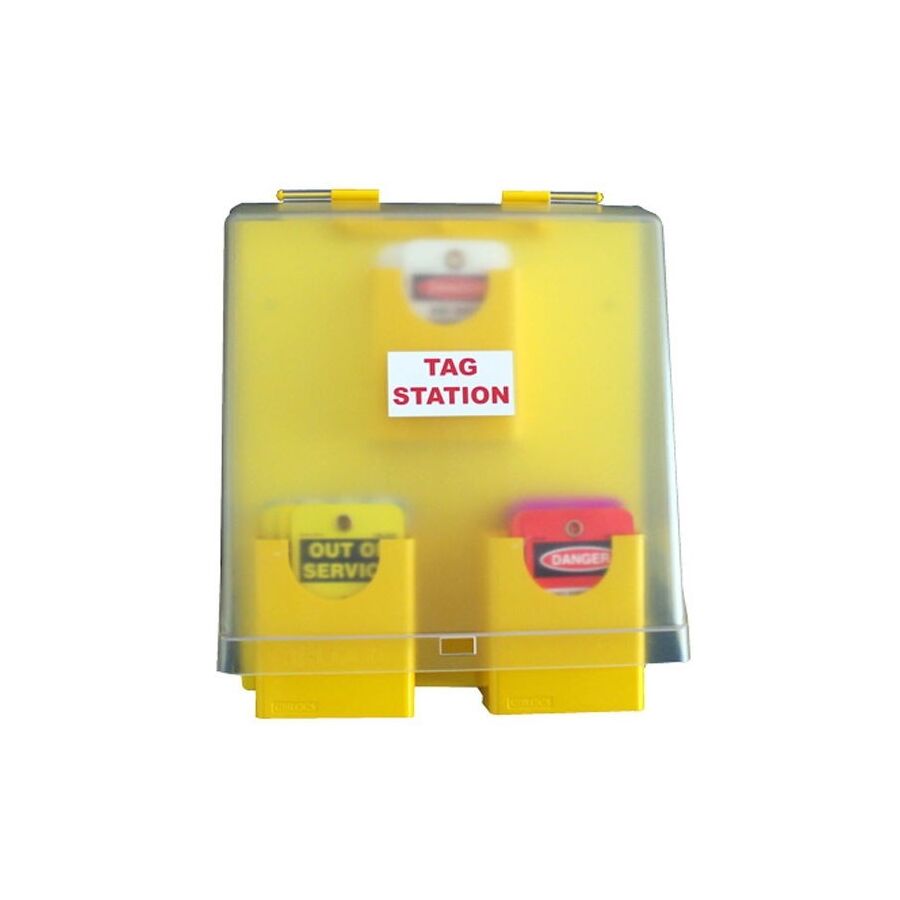
In Australian industrial and commercial facilities, hazardous energy control relies not only on physical lockout devices but also on accurate administrative communication. Under the Work Health and Safety (WHS) framework and AS/NZS 4836 requirements, isolation procedures must be clearly documented, visible, and legally defensible. While padlocks physically prevent re-energisation, safety tags communicate the identity of the isolating worker, the reason for isolation, and the time and scope of the procedure. In harsh industrial environments, exposure to dust, moisture, grease, and chemical vapours can degrade these tags, compromising legibility and regulatory compliance. The Safety Tag Station with Lid provides a structured, environmentally protected storage solution that ensures hazard communication materials remain pristine, accessible, and audit-ready at the point of deployment.
The functional purpose of a Safety Tag Station with Lid is environmental isolation of administrative safety assets. Industrial atmospheres often contain airborne particulates and humidity capable of contaminating exposed tag stock. When tag surfaces become coated with dust or oil residue, permanent marker ink may smear or fail to adhere, undermining the integrity of the isolation record. The integrated transparent lid acts as a mechanical barrier against contamination. Hinged and gravity-assisted closure systems ensure that the cover returns to a sealed position when not in use. This simple mechanical design protects the internal contents from environmental degradation, preserving legibility and ensuring that every tag withdrawn meets compliance standards for hazard communication clarity.
Professional-grade Safety Tag Station with Lid assemblies are manufactured from impact-resistant polymers such as UV-stabilised polycarbonate or reinforced acrylic. These materials are selected for their tensile strength, dimensional stability, and resistance to industrial chemicals. Unlike office-grade plastics, engineered polymers withstand elevated ambient temperatures near switchgear and resist cracking under mechanical impact. The transparent lid must maintain optical clarity for inventory visibility while resisting ultraviolet degradation. UV stabilisers integrated during manufacturing prevent yellowing, embrittlement, and structural failure when installed in semi-exposed environments or brightly lit plant rooms. Mounting hardware and hinge systems are engineered to endure vibration and frequent access without loss of alignment.
Beyond contamination control, the Safety Tag Station with Lid supports structured visual management practices. Internal compartments allow for segregation of tag categories in accordance with AS 1319 guidelines for occupational safety signage and hazard identification. Clear labelling zones enable facilities to separate Danger tags, Out of Service tags, and custom permit documentation. During complex maintenance shutdowns involving multiple trades, rapid access to the correct administrative warning reduces procedural friction and minimises error risk. The transparent cover permits visual auditing of stock levels without opening the station, reinforcing compliance discipline and maintaining operational efficiency.
AS/NZS 4836 mandates that isolation processes be clearly documented and communicated to all affected personnel. Legible, durable tags are essential components of compliant Lockout/Tagout systems. A Safety Tag Station with Lid ensures that tag integrity is preserved from storage to deployment, supporting traceable and defensible isolation records. During internal or regulatory audits, the presence of a protected, centralised tag dispenser demonstrates systematic control of administrative safety tools. Environmental shielding of consumables directly supports the reliability of isolation documentation across industrial sites.
The effectiveness of a Safety Tag Station with Lid is maximised when integrated with compatible locking hardware. Facilities frequently stock the station with Schnap Electric Products heavy-duty Danger and Out of Service tags designed for durable ink adhesion and tear resistance. Once removed from the protected compartment, tags are applied using Schnap Electric Products non-conductive safety padlocks and multi-point isolation hasps. Cable ties and additional fastening accessories ensure secure attachment to isolating devices. This integration establishes a cohesive LOTO ecosystem where environmental protection, administrative documentation, and physical isolation hardware operate as a unified safety framework.
Maintaining uninterrupted access to compliant hazard communication tools requires disciplined procurement. Tag degradation due to environmental exposure can halt maintenance activities and expose facilities to regulatory risk. Sourcing Safety Tag Station with Lid units through specialised electrical wholesaler ensures that materials are UV-stabilised, impact-rated, and suitable for Australian industrial conditions. Reliable suppliers maintain stock of replacement tags, mounting accessories, and compatible lockout hardware to prevent shortages during shutdowns or high-intensity maintenance periods. Structured supply chain management preserves both operational continuity and regulatory compliance.
The Safety Tag Station with Lid transforms administrative hazard communication into a protected, structured, and auditable system. By shielding tags from environmental contamination, supporting AS 1319 segregation practices, and aligning with AS/NZS 4836 isolation procedures, it reinforces the integrity of Lockout/Tagout programs across Australian industry. Integrated with durable tagging and locking solutions from Schnap Electric Products, the station ensures that hazard communication remains legible, accessible, and compliant under demanding site conditions. In regulated industrial environments, protecting the clarity of isolation documentation is fundamental to maintaining both safety and legal accountability.

SCHNAP Electrical Wholesaler - clear, upfront pricing that professional electricians trust

Get what you need in seconds. SCHNAP electrical wholesaler makes ordering quick and simple

Fast delivery anywhere - that's guaranteed. SCHNAP electrical wholesalers ship nationwide with same-day dispatch

Track your order every step of the way. SCHNAP electrical wholesale keeps you updated from click to delivery

SCHNAP is Australia's premier electrical wholesaler and electrical supplies, marketing thousands of quality products from leading brands. Trusted for nearly two decades by licensed electricians, contractors, and engineers, our range covers everything from basic electrical components to complex industrial electrical equipment
Our key categories include: LED lighting, designer switches, commercial switchboards, circuit protection, security systems & CCTV, and smart home automation
All products are certified to Australian standards (AS/NZS), backed by our 30-day, no-questions-asked return policy. Our expert technical team helps you quickly source the right solution for any residential, commercial, or industrial project, with daily dispatch from our Sydney electrical warehouse delivering Australia-wide
SCHNAP offers the most comprehensive electrical product range, with full technical specifications, application details, installation requirements, compliance standards, and warranties — giving professionals total confidence in every purchase


Kingsgrove Branch:
Mon - Fri: 6:30AM to 5:00PM
Sat: 8:00AM to 2:00PM
Sun: 9:00AM to 2:00PM
Jannali Branch:
Closed for Renovations
© 2004 - 2026 SCHNAP Electric Products