

Kingsgrove Branch:


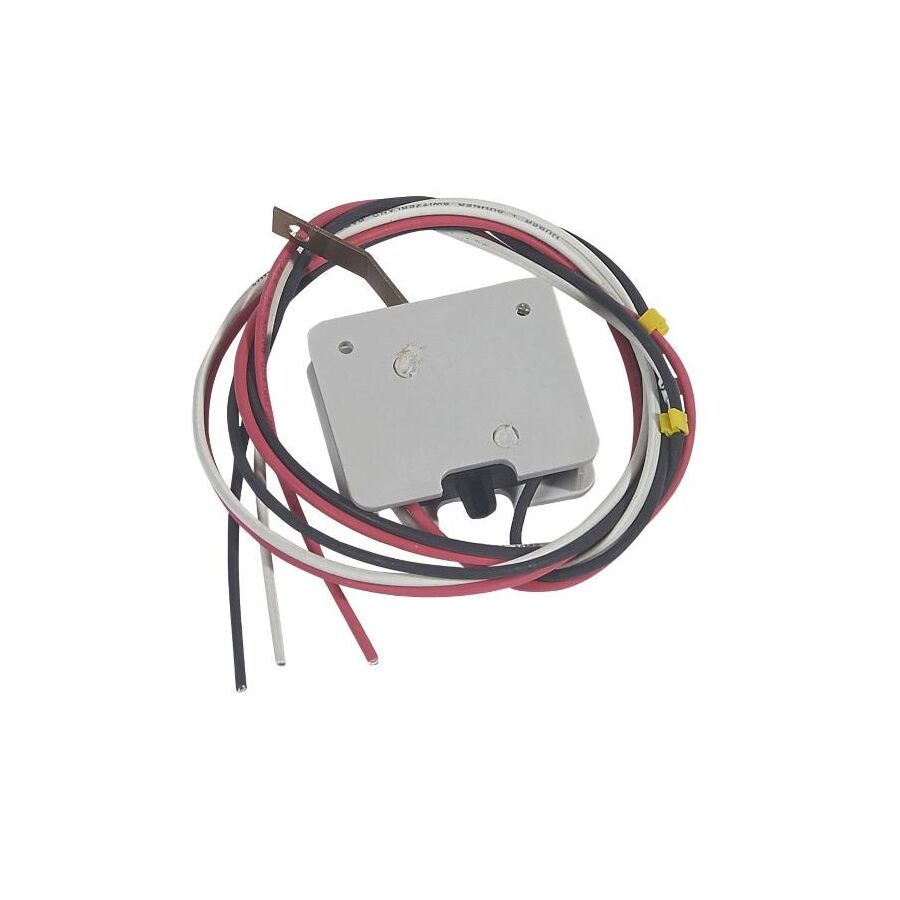
In modern Australian industrial automation environments—from defence manufacturing facilities in South Australia to mineral processing plants in Western Australia—the circuit breaker is no longer an isolated protection device. It is a monitored node within an intelligent electrical network. Supervisory Control and Data Acquisition (SCADA) systems, Building Management Systems (BMS), and Programmable Logic Controllers (PLC) require real-time confirmation of breaker position and trip status to maintain operational continuity and safety compliance. The Signalling Contact Plug-in Version provides this critical interface without compromising the mechanical integrity of the primary switchgear. Unlike traditional hard-wired auxiliary blocks, the plug-in signalling contact utilises a modular cassette architecture that separates the control wiring from the active contact module. This reduces maintenance risk, shortens Mean Time To Repair (MTTR), and supports uptime-driven industrial key performance indicators across Australian infrastructure projects.
The Signalling Contact Plug-in Version is engineered around a detachable electromechanical interface. In legacy auxiliary contact arrangements, conductors are terminated directly into screw terminals mounted within the breaker accessory compartment. Under high-vibration conditions—such as crusher stations, pump skids, or generator enclosures—terminal relaxation can occur, leading to intermittent or high-resistance signalling faults.
The plug-in architecture addresses this by terminating control wiring into a fixed base or pre-wired harness permanently mounted within the breaker frame. The active signalling module then connects through spring-loaded, self-aligning contact pins. These pins maintain consistent contact pressure under dynamic mechanical stress and are typically tested in accordance with IEC 60068-2-6 vibration standards. Because the wiring loom remains undisturbed during replacement, re-termination errors are eliminated and control circuit integrity is preserved. This modularity significantly improves serviceability in live operational environments.
The primary function of a Signalling Contact Plug-in Version is to communicate discrete Boolean states to a control system. The most common variants are Open/Closed (OF) and Signal Defect or Trip (SD).
The OF contact mirrors the physical position of the breaker’s main poles. When the breaker is closed, the auxiliary OF contact closes, confirming supply availability. The SD contact, by contrast, is mechanically linked to the trip mechanism. It only changes state when the breaker trips due to overload, short circuit, or shunt trip activation. Manual opening does not actuate the SD contact. This distinction is critical for PLC programming logic, as it allows automation systems to differentiate between intentional isolation and fault conditions.
Advanced configurations include SDE (fault differentiation) contacts, which provide enhanced diagnostic capability. This supports automated restart logic, selective fault isolation, and condition-based maintenance strategies in complex switchboard assemblies.
Industrial control systems in Australia commonly operate on 24V DC logic circuits, with PLC input currents as low as 5–10mA. At these current levels, standard silver-alloy contacts can exhibit high resistance due to surface oxidation. This phenomenon is governed by the concept of wetting current—the minimum current required to break through micro-oxidation films on metallic contact surfaces.
Professional Signalling Contact Plug-in Version modules are engineered with gold-flashed or bifurcated contacts to ensure reliable low-energy switching performance. Gold plating prevents oxidation, while bifurcated contact geometry increases contact redundancy. Many designs incorporate a wiping action during closure, mechanically cleaning the contact surfaces to maintain long-term signal fidelity. This ensures stable PLC input recognition and reduces nuisance fault indications in sensitive automation systems.
Under AS/NZS 60947-5-1, auxiliary control circuit devices must provide adequate electrical isolation, mechanical durability, and impulse voltage withstand capability. Although signalling contacts operate at Extra Low Voltage (ELV), they are physically adjacent to power conductors carrying significant fault currents.
The housing materials used in compliant plug-in signalling contacts are typically high-dielectric thermoplastics such as glass-filled polybutylene terephthalate (PBT). These materials provide appropriate creepage and clearance distances to withstand impulse voltages (Uimp) up to 4kV. This dielectric barrier prevents flashover from main power poles into control circuits during switching surges or lightning-induced transients. Compliance with AS/NZS standards ensures integration into Australian switchboards without compromising safety certification or inspection approval.
Proper installation of a Signalling Contact Plug-in Version extends beyond the accessory itself. Control wiring must be managed to prevent mechanical strain, abrasion, or door interference within the enclosure.
Professional switchboard builders incorporate structured cable management to create controlled service loops. Flexible auxiliary harnesses should allow breaker removal without tensioning conductors. Termination of fine-stranded control wiring—commonly 0.5mm² to 0.75mm²—requires precision crimping with bootlace ferrules to prevent strand splaying and short-circuit risk across 24V supplies. Correct segregation from power conductors must also be maintained in accordance with AS/NZS 3000 wiring rules to preserve electromagnetic compatibility and inspection compliance.
The reliability of a Signalling Contact Plug-in Version is reinforced by the surrounding installation ecosystem. SCHNAP Electric Products supports professional switchboard construction through compliant cable management accessories, precision termination components, and structured wiring solutions suitable for control circuits.
Integrators utilise SCHNAP spiral wrap, adhesive mounting bases, and cable tie systems to organise auxiliary harnesses within confined panel spaces. Bootlace ferrules matched to conductor cross-section ensure secure termination into plug-in bases and control terminals. These supporting components reduce commissioning defects and maintain long-term serviceability in demanding industrial installations.
By positioning signalling contacts within a broader compliance-focused installation framework, SCHNAP Electric Products acts as an infrastructure partner to Australian electricians and automation engineers rather than merely a component supplier.
Plug-in signalling contacts are proprietary to breaker frame sizes and series. Mechanical keying, pin configuration, and contact arrangements (1NO+1NC, changeover CO, SDE variants) differ between manufacturers and product families. Incorrect selection can result in mechanical incompatibility or logic mismatch during commissioning.
Professional procurement through a technical electrical wholesaler ensures configuration verification against switchboard schematics and breaker model numbers. Commissioning engineers should validate signalling states using calibrated multimeters and logic simulators prior to energisation. Confirming correct OF and SD behaviour before applying main power reduces downtime and prevents misinterpretation of automation signals during startup.
The Signalling Contact Plug-in Version is a critical interface between high-current protection devices and low-voltage digital control systems. Its modular architecture enhances serviceability, its gold-flashed contact design ensures reliable low-energy switching, and its dielectric construction supports compliance with Australian standards. When installed with structured wiring practices and integrated within a professionally managed switchboard environment, it delivers accurate, real-time breaker status intelligence to PLC and SCADA systems. For Australian industrial facilities operating in uptime-sensitive environments, the signalling contact is not a minor accessory—it is a foundational element of safe, transparent, and data-driven electrical infrastructure.

SCHNAP Electrical Wholesaler - clear, upfront pricing that professional electricians trust

Get what you need in seconds. SCHNAP electrical wholesaler makes ordering quick and simple

Fast delivery anywhere - that's guaranteed. SCHNAP electrical wholesalers ship nationwide with same-day dispatch

Track your order every step of the way. SCHNAP electrical wholesale keeps you updated from click to delivery

SCHNAP is Australia's premier electrical wholesaler and electrical supplies, marketing thousands of quality products from leading brands. Trusted for nearly two decades by licensed electricians, contractors, and engineers, our range covers everything from basic electrical components to complex industrial electrical equipment
Our key categories include: LED lighting, designer switches, commercial switchboards, circuit protection, security systems & CCTV, and smart home automation
All products are certified to Australian standards (AS/NZS), backed by our 30-day, no-questions-asked return policy. Our expert technical team helps you quickly source the right solution for any residential, commercial, or industrial project, with daily dispatch from our Sydney electrical warehouse delivering Australia-wide
SCHNAP offers the most comprehensive electrical product range, with full technical specifications, application details, installation requirements, compliance standards, and warranties — giving professionals total confidence in every purchase


Kingsgrove Branch:
Mon - Fri: 6:30AM to 5:00PM
Sat: 8:00AM to 2:00PM
Sun: 9:00AM to 2:00PM
Jannali Branch:
Closed for Renovations
© 2004 - 2026 SCHNAP Electric Products