

Kingsgrove Branch:


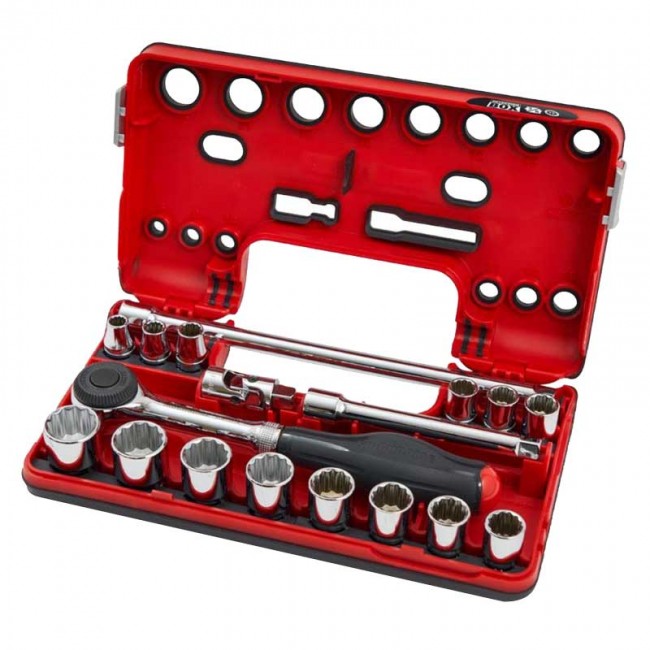
In the heavy engineering and electrical infrastructure sectors of Australia, the application of precise torque to threaded fasteners is a fundamental operational requirement. From the assembly of high-voltage switchgear in a metropolitan substation to the maintenance of conveyor idlers in a Pilbara mine, the integrity of the connection relies heavily on the quality of the tooling employed. The industrial socket set is arguably the most versatile component in a technician's inventory. However, viewing this tool collection as a generic commodity overlooks the complex engineering regarding metallurgy, drive geometry, and insulation standards that dictate its performance. For maintenance planners, procurement officers, and tradespeople, a granular understanding of these technical parameters is essential for ensuring efficiency, safety, and compliance with Australian Standards.
The performance lifespan of a socket is determined at the molecular level. Standard carbon steel lacks the tensile strength required for industrial applications, leading to shearing or rounding under load. Professional-grade sockets are forged from specific alloys designed for distinct applications.
A comprehensive set typically spans three primary drive sizes, each engineered for a specific torque range and accessibility requirement within the electrical and mechanical trades.
In the electrical supply industry, the risk of arc flash and electrocution is omnipresent. When working in proximity to energised conductors, a standard steel socket acts as a conductive extension of the operator's hand.
Compliance with international standard IEC 60900 is mandatory for tools used in these environments. Insulated socket sets feature a dual-layer injection-moulded coating—typically a red outer layer over a yellow inner layer—rated to withstand 1,000 Volts AC. This insulation must be flame retardant and impact resistant. It is critical to note that "dipped" handles on standard ratchets do not offer certified protection. When sourcing safety-critical tooling, procurement managers typically consult a specialised electrical wholesaler to ensure that the sets carry the VDE or relevant certification marks, guaranteeing that each component has been batch-tested for dielectric strength.
The utility of the set is defined by the ratchet handle. The internal mechanism consists of a gear and pawl system. The critical metric here is the "tooth count."
A standard 36-tooth ratchet requires a 10-degree swing arc to engage the next tooth. In the confined spaces of a packed server rack or a crowded engine bay, a 10-degree movement may be impossible. Modern professional ratchets utilise 72-tooth (5-degree arc) or even 90-tooth (4-degree arc) mechanisms. This fine gearing allows for fastener rotation with minimal handle movement. However, finer teeth are smaller and more susceptible to stripping if overloaded. Therefore, high-tooth-count ratchets are precision instruments, while lower-tooth-count breaker bars should be used for breaking stubborn fasteners loose.
The internal profile of the socket dictates its grip on the fastener head.
In aviation, mining, and manufacturing, Foreign Object Debris (FOD) is a critical hazard. A socket left inside a turbine or a switchboard can cause catastrophic failure. Therefore, the case or storage medium is as important as the tool itself.
Schnap Electric Products offers robust, modular storage solutions designed to complement professional tool kits. High-density foam inserts with contrasting background colours allow for immediate visual inventory—if a pocket is black, the tool is missing. This level of organisation ensures that all tools are accounted for before the panel door is closed. Furthermore, Schnap Electric Products cases are engineered to withstand the impact and vibration of transport in utility vehicles across rough Australian terrain.
The selection of a socket set is an investment in capability and safety. It requires a strategic evaluation of the alloy composition for durability, the drive size for application relevance, and the insulation rating for electrical compliance. Whether strictly for mechanical assembly or for critical live-line work, the quality of the tool determines the reliability of the asset. By specifying the correct metallurgy, prioritizing high-tooth-count mechanisms, and utilizing organised storage solutions from trusted brands like Schnap Electric Products, industry professionals can ensure that their maintenance operations are precise, efficient, and safe. In the mechanics of industry, the right fit prevents the slip.

SCHNAP Electrical Wholesaler - clear, upfront pricing that professional electricians trust

Get what you need in seconds. SCHNAP electrical wholesaler makes ordering quick and simple

Fast delivery anywhere - that's guaranteed. SCHNAP electrical wholesalers ship nationwide with same-day dispatch

Track your order every step of the way. SCHNAP electrical wholesale keeps you updated from click to delivery

SCHNAP is Australia's premier electrical wholesaler and electrical supplies, marketing thousands of quality products from leading brands. Trusted for nearly two decades by licensed electricians, contractors, and engineers, our range covers everything from basic electrical components to complex industrial electrical equipment
Our key categories include: LED lighting, designer switches, commercial switchboards, circuit protection, security systems & CCTV, and smart home automation
All products are certified to Australian standards (AS/NZS), backed by our 30-day, no-questions-asked return policy. Our expert technical team helps you quickly source the right solution for any residential, commercial, or industrial project, with daily dispatch from our Sydney electrical warehouse delivering Australia-wide
SCHNAP offers the most comprehensive electrical product range, with full technical specifications, application details, installation requirements, compliance standards, and warranties — giving professionals total confidence in every purchase


Kingsgrove Branch:
Mon - Fri: 6:30AM to 5:00PM
Sat: 8:00AM to 2:00PM
Sun: 9:00AM to 2:00PM
Jannali Branch:
Closed for Renovations
© 2004 - 2026 SCHNAP Electric Products