

Kingsgrove Branch:


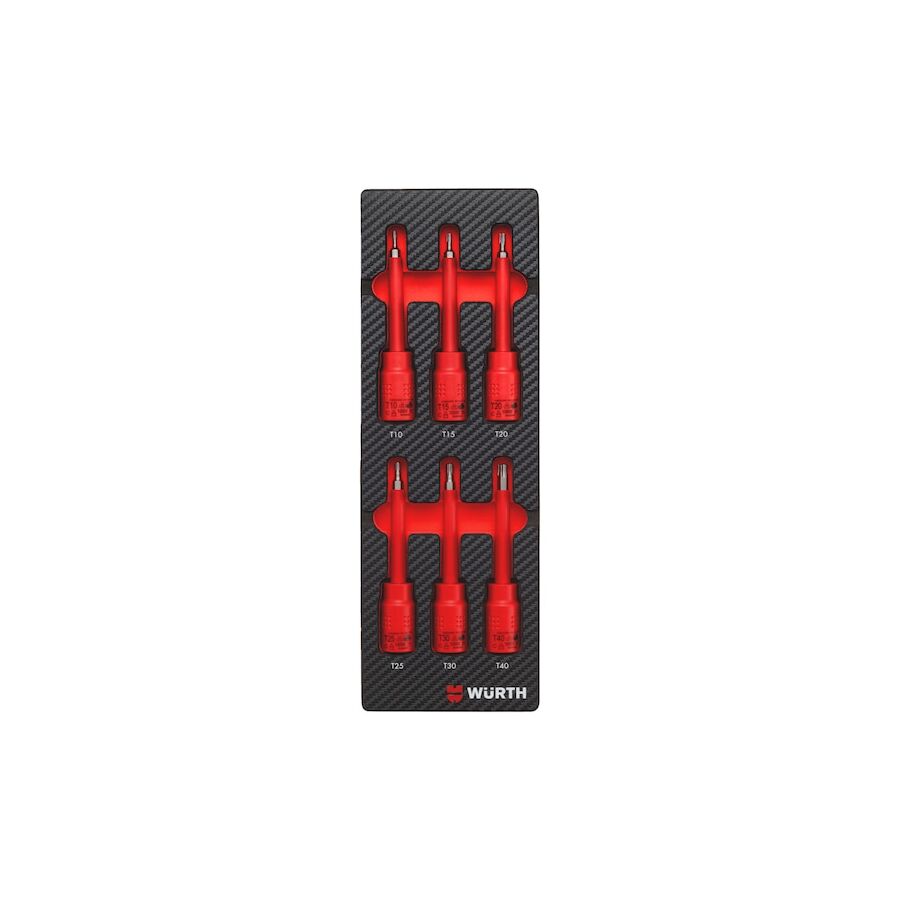
In the demanding environments of Australian heavy industry, construction, and utilities maintenance, the integrity of mechanical connections is paramount. Whether securing busbar terminations in a zone substation or assembling structural racking for a solar farm, the application of torque requires precision instrumentation. The industrial socket wrench, often colloquially referred to as a ratchet handle, is the primary interface between the technician's manual force and the fastener. Far from being a simple hand tool, the modern socket wrench is a complex assembly of hardened steel gears, pawls, and springs, engineered to specific tolerances to withstand high shear forces while providing the mechanical advantage necessary for efficient operation. For maintenance planners, safety officers, and trade professionals, understanding the internal mechanics, metallurgical composition, and safety insulation ratings of these tools is essential for maintaining asset reliability and workforce safety.
The core utility of the wrench lies in its ratcheting mechanism, which allows for continuous rotational motion in one direction while freewheeling in the other. The efficiency of this system is defined by the "tooth count" of the internal gear.
Legacy tools typically utilized a coarse 36-tooth gear, requiring a 10-degree "swing arc" to engage the next tooth. In the confined spaces of modern switchboards or densely packed machinery, a 10-degree movement is often impossible due to physical obstructions. Contemporary professional-grade tools employ precision-machined 72-tooth or 90-tooth mechanisms. A 90-tooth gear reduces the required swing arc to just 4 degrees. This micro-adjustment capability allows technicians to tighten fasteners in highly restricted access zones where a standard spanner would be unusable. However, as the tooth count increases, the individual teeth become smaller. High-quality manufacturing is required to ensure these finer teeth do not strip under heavy load.
The durability of the wrench is dictated by its metallurgical composition. Standard carbon steel lacks the requisite tensile strength and ductility for professional industrial use, often resulting in the drive square shearing off under high torque.
Industry-standard tools are forged from Chrome Vanadium (Cr-V) steel. The addition of chromium increases the steel's hardness and resistance to oxidation (rust), while the vanadium promotes a fine-grained structure that improves toughness and resistance to fatigue fracture. For heavy-duty applications involving impact loads, Chrome Molybdenum (Cr-Mo) is utilized for its superior elasticity. When procuring tooling, verification of the steel grade is a critical quality assurance step to prevent premature tool failure.
The interface between the wrench and the socket—the drive square—is standardized to ensure compatibility across the global tool ecosystem. The selection of drive size is an engineering decision based on the required torque range.
Using a 1/4-inch drive wrench on a seized M12 bolt will invariably result in mechanism failure. Conversely, using a 1/2-inch drive on a delicate terminal screw risks over-torquing and stripping the thread.
In the Australian electrical supply industry, the risk of arc flash and electrocution is a critical hazard. A standard steel socket wrench acts as a conductive extension of the operator's arm. If the handle or socket bridges a phase-to-earth or phase-to-phase gap, the resulting fault can be catastrophic.
For live-line work or tasks in the vicinity of energised conductors, tools must comply with IEC 60900 (Live working - Hand tools for use up to 1000V AC). These insulated wrenches feature a multi-layer, injection-moulded dielectric coating. This insulation is rigorously tested for impact resistance, flame retardancy, and dielectric strength. It is standard practice for procurement officers to consult a specialised electrical wholesaler to ensure that all safety tools carry the VDE certification mark, confirming they have been batch-tested to 10,000V to guarantee a 1,000V safe working limit.
The wrench is useless without the socket, and the geometry of the socket determines the grip integrity.
Foreign Object Debris (FOD) is a major risk in industrial maintenance. A socket wrench left inside a turbine housing or a distribution board can cause severe damage.
Effective tool control involves organised storage. Schnap Electric Products offers robust tool storage solutions that integrate with professional wrench sets. High-density foam inlays with contrasting background colours provide immediate visual feedback; if a tool is missing from its cutout, the contrasting colour signals the technician before the panel is closed. This level of organisation is critical for maintaining WHS compliance and operational efficiency. Furthermore, the ergonomic handle design of Schnap Electric Products tools ensures operator comfort during prolonged use, reducing the risk of Repetitive Strain Injury (RSI).
The socket wrench is a fundamental instrument in the maintenance of Australia’s infrastructure. Its effectiveness relies on the precision of its gearing, the quality of its steel, and the integrity of its insulation. By selecting the appropriate drive size for the torque application, adhering to IEC 60900 standards for electrical work, and utilising high-quality tools and storage systems from trusted brands like Schnap Electric Products, industry professionals can ensure that their mechanical fastenings are secure and their operations remain safe. In the physics of leverage, quality is the fulcrum of success.

SCHNAP Electrical Wholesaler - clear, upfront pricing that professional electricians trust

Get what you need in seconds. SCHNAP electrical wholesaler makes ordering quick and simple

Fast delivery anywhere - that's guaranteed. SCHNAP electrical wholesalers ship nationwide with same-day dispatch

Track your order every step of the way. SCHNAP electrical wholesale keeps you updated from click to delivery

SCHNAP is Australia's premier electrical wholesaler and electrical supplies, marketing thousands of quality products from leading brands. Trusted for nearly two decades by licensed electricians, contractors, and engineers, our range covers everything from basic electrical components to complex industrial electrical equipment
Our key categories include: LED lighting, designer switches, commercial switchboards, circuit protection, security systems & CCTV, and smart home automation
All products are certified to Australian standards (AS/NZS), backed by our 30-day, no-questions-asked return policy. Our expert technical team helps you quickly source the right solution for any residential, commercial, or industrial project, with daily dispatch from our Sydney electrical warehouse delivering Australia-wide
SCHNAP offers the most comprehensive electrical product range, with full technical specifications, application details, installation requirements, compliance standards, and warranties — giving professionals total confidence in every purchase


Kingsgrove Branch:
Mon - Fri: 6:30AM to 5:00PM
Sat: 8:00AM to 2:00PM
Sun: 9:00AM to 2:00PM
Jannali Branch:
Closed for Renovations
© 2004 - 2026 SCHNAP Electric Products