

Kingsgrove Branch:


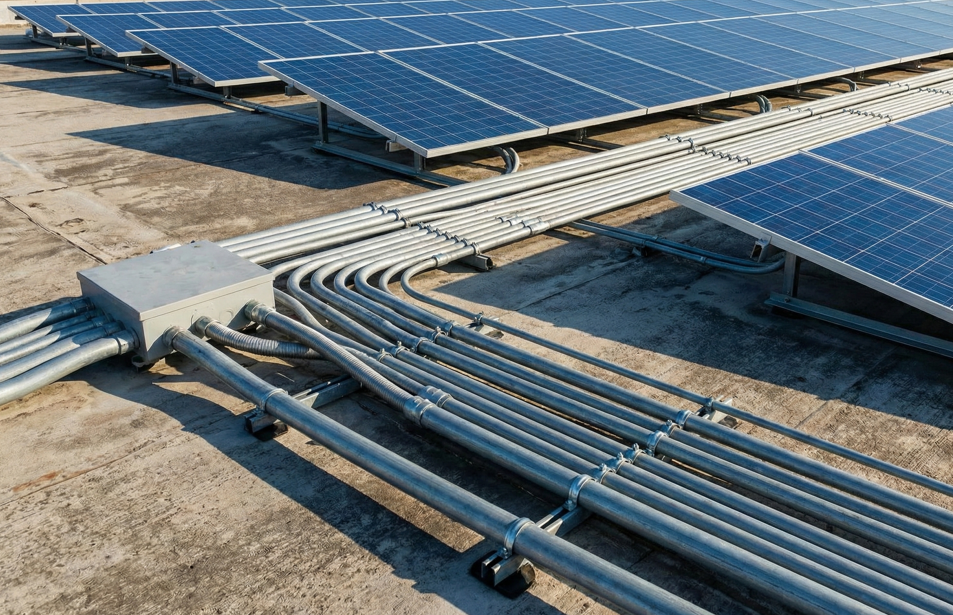
The rooftop environment is arguably the most hostile operating theatre for electrical infrastructure in Australia. While solar panels and inverters are engineered with robust IP ratings and tempered glass to withstand decades of exposure, the cabling systems connecting them are frequently the weak link. Photovoltaic installations are subjected to extreme thermal cycling, intense Ultraviolet (UV) radiation, and physical abrasion. Consequently, the specification of the correct mechanical protection is not just a matter of neatness; it is a critical safety requirement governed by AS/NZS 5033. Standard electrical conduit simply cannot survive these conditions. The integrity of the DC circuit relies entirely on the durability of the specialised solar conduit encasing it.
Material Science: Battling UV Degradation
Exposure to solar radiation is the primary cause of conduit failure. Standard grey or orange electrical conduit typically contains insufficient levels of Titanium Dioxide (TiO2) or carbon black stabilisers to resist the Australian sun for more than a few years. Over time, UV photons break down the polymer chains in standard PVC, causing it to become brittle, chalky, and eventually crack. Once the conduit is breached, the insulation of the high-voltage DC cables inside is exposed to the elements, leading to potential earth faults and arc flash incidents.
Professional solar installations mandate the use of heavy-duty, UV-stabilised conduit. This specifically formulated rigid PVC is designed to absorb and dissipate UV energy without structural degradation. When inspecting an array five years post-installation, the difference is stark: generic conduit will shatter under finger pressure, whereas high-quality solar-grade conduit remains pliable and impact-resistant.
Regulatory Compliance: AS/NZS 5033 and Heavy Duty Ratings
Compliance with the wiring rules is non-negotiable. AS/NZS 5033 (Installation and safety requirements for photovoltaic (PV) arrays) specifically dictates the mechanical protection requirements for DC cabling. Wiring that is accessible and exposed to direct sunlight must be protected by conduit that meets the "Heavy Duty" classification under AS/NZS 2053.
Medium-duty communications conduit is strictly prohibited for these applications. The conduit must offer significant resistance to compression and impact to protect the live cables from foot traffic during maintenance or falling debris (such as hail or tree branches). Installers utilising the Schnap Electric Products range of solar rigid conduit ensure compliance with these stringent impact ratings. The Schnap Electric Products heavy-duty formulation provides the necessary wall thickness and impact strength to satisfy the "HD" marking requirements visible to electrical inspectors.
Managing Thermal Expansion on the Roof
Thermodynamics plays a massive role in conduit system design. A dark-coloured roof in an Australian summer can easily exceed 70 degrees Celsius. PVC has a relatively high coefficient of thermal expansion. A long, straight run of glued rigid conduit will expand significantly as it heats up. If the conduit is rigidly fixed at both ends without allowance for movement, it will bow, buckle, or snap the mounting saddles.
Experienced installers mitigate this by incorporating expansion couplers and using sliding clips rather than tight saddles. This allows the pipe to "float" as it expands and contracts with the daily temperature cycle. The Schnap Electric Products ecosystem supports this engineering approach by offering UV-stabilised inspection elbows and expansion joints that maintain the IP rating of the run while accommodating physical movement.
Corrugated vs. Rigid: Application Specifics
Selecting the form factor is the next engineering decision. Rigid conduit is preferred for long, straight runs across the roof or down the side of the building due to its superior aesthetics and self-supporting nature. However, the interface between the rail and the isolator, or the transition into the roof cavity, often requires flexibility.
UV-stabilised corrugated conduit is the standard solution here. However, care must be taken to ensure the corrugated product carries the same heavy-duty rating as the rigid pipe. A common failure point is the gland entry; if the corrugated conduit pulls out of the gland due to shrinkage, water ingress is inevitable. Professional termination involves using locking glands that grip the corrugations securely.
Sourcing and Supply Chain Integrity
The sheer volume of solar installations in Australia has led to a market flooded with inferior imported materials that claim to be UV stable but fail prematurely. The liability for replacing cracked conduit five years down the track falls squarely on the installation company.
Risk mitigation strategies involve sourcing materials exclusively through a reputable electrical wholesaler. These suppliers act as the gatekeepers of quality, stocking brands like Schnap Electric Products that provide technical data sheets verifying their UV testing performance and AS/NZS compliance. By avoiding grey-market hardware, contractors ensure that the mechanical protection of the system has the same lifespan as the panels themselves.
Conclusion
A solar array is a high-voltage power station sitting on a residential or commercial roof. The safety of the building occupants depends on the containment of that DC voltage. By understanding the physics of UV degradation, strictly adhering to the Heavy Duty requirements of AS/NZS 5033, and utilising proven infrastructure from manufacturers like Schnap Electric Products, Australian solar professionals can deliver systems that are safe, compliant, and built to survive the harsh reality of the Australian climate. In the solar industry, the conduit is the first line of defence.

SCHNAP Electrical Wholesaler - clear, upfront pricing that professional electricians trust

Get what you need in seconds. SCHNAP electrical wholesaler makes ordering quick and simple

Fast delivery anywhere - that's guaranteed. SCHNAP electrical wholesalers ship nationwide with same-day dispatch

Track your order every step of the way. SCHNAP electrical wholesale keeps you updated from click to delivery

SCHNAP is Australia's premier electrical wholesaler and electrical supplies, marketing thousands of quality products from leading brands. Trusted for nearly two decades by licensed electricians, contractors, and engineers, our range covers everything from basic electrical components to complex industrial electrical equipment
Our key categories include: LED lighting, designer switches, commercial switchboards, circuit protection, security systems & CCTV, and smart home automation
All products are certified to Australian standards (AS/NZS), backed by our 30-day, no-questions-asked return policy. Our expert technical team helps you quickly source the right solution for any residential, commercial, or industrial project, with daily dispatch from our Sydney electrical warehouse delivering Australia-wide
SCHNAP offers the most comprehensive electrical product range, with full technical specifications, application details, installation requirements, compliance standards, and warranties — giving professionals total confidence in every purchase


Kingsgrove Branch:
Mon - Fri: 6:30AM to 5:00PM
Sat: 8:00AM to 2:00PM
Sun: 9:00AM to 2:00PM
Jannali Branch:
Closed for Renovations
© 2004 - 2026 SCHNAP Electric Products