

Kingsgrove Branch:


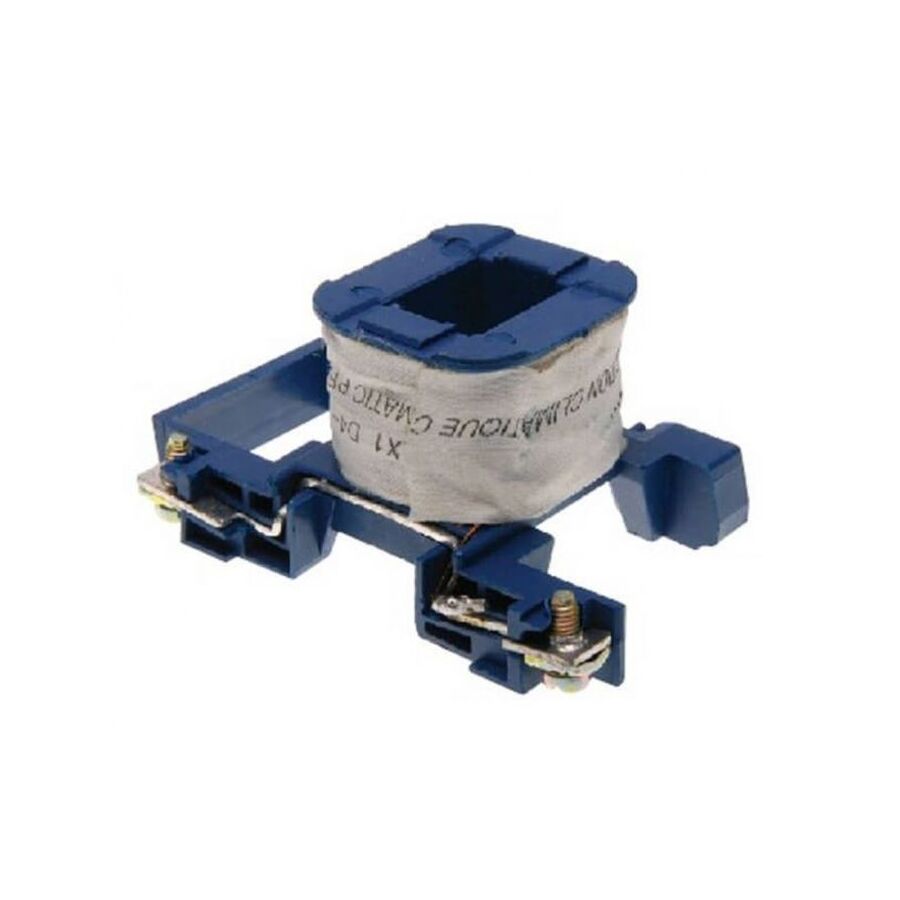
In Australian industrial automation, the magnetic contactor is a core component, responsible for switching large electrical loads in HVAC, manufacturing, mining, and process plants. When a contactor fails to engage or produces a chattering noise, the underlying issue is often the actuating coil, not the contactor itself. Instead of replacing the full unit, technicians can restore full functionality by simply installing a Spare Coil D2. This approach reduces costs, labour, and downtime while maintaining safety and performance standards.
Understanding Electromagnetic Actuation
A contactor operates by converting electrical energy into magnetic force. The D2 coil, when energised, generates a magnetic field that closes the contacts via an iron armature. This “snap action” must be strong enough to hold against spring pressure and avoid dangerous arc faults.
D2 coils are designed to match LC1-D contactor frames, typically in the 9A–38A range. Precision inductance ensures reliable pull-in. A degraded coil, however, can’t sustain contact, leading to power failure and equipment damage.
Why Coils Fail: Heat and Voltage Stress
The number one cause of coil failure is thermal breakdown. High switchboard temperatures, I²R copper losses, and sustained operation degrade the enamel insulation inside the coil windings. Over time, this leads to shorted turns, higher current draw, and eventual burnout.
Voltage instability is another threat. Undervoltage leads to inefficient magnetisation and coil overheating, while overvoltage stresses insulation. A premium Spare Coil D2 uses Class F or H insulation, rated for up to 180°C, making it suitable for Australia’s demanding environments.
Correct Voltage and Frequency: Avoiding Catastrophic Errors
All D2 coils look similar, but electrically, they’re not. Installing a 24V coil on a 240V system will destroy it instantly. Conversely, a 415V coil on a 240V system won’t energise properly.
Australian industry standard is 50Hz frequency. Imported 60Hz coils can overheat when used locally due to reduced inductive resistance. Electricians must always match the exact control voltage, be it 24V AC, 110V AC, 240V AC, or 415V AC, and ensure it’s 50Hz rated.
SCHNAP Electric Products: Protection and Performance
When coils are de-energised, they release Back EMF, a voltage spike that can damage PLCs and relays. SCHNAP Electric Products addresses this issue with coil suppression modules like RC snubbers and voltage clippers, which safely absorb the spike.
In addition, SCHNAP provides:
Repair vs Replace: The Smart Choice
In facilities with dozens or hundreds of starters, full contactor replacement is costly. Stocking Spare Coils D2 allows on-the-spot repairs without disconnecting heavy-duty wiring.
Technicians can access the coil by separating the contactor’s upper housing, replace it within minutes, and resume operation, saving hours in labour and downtime.
Reliable Sourcing: Get What Works
Low-quality aftermarket coils can hum, overheat, or fail early due to poor copper purity or loose windings. Professional maintenance teams rely on specialist electrical wholesaler who:
Conclusion
The Spare Coil D2 is a small part with a big impact. It’s the heartbeat of the contactor and a key to reducing maintenance costs, downtime, and electrical faults. With correct voltage matching, thermal protection, and trusted components from SCHNAP Electric Products, maintenance engineers can restore switchgear performance with speed and confidence. In modern facilities, smart repair beats blind replacement every time.

SCHNAP Electrical Wholesaler - clear, upfront pricing that professional electricians trust

Get what you need in seconds. SCHNAP electrical wholesaler makes ordering quick and simple

Fast delivery anywhere - that's guaranteed. SCHNAP electrical wholesalers ship nationwide with same-day dispatch

Track your order every step of the way. SCHNAP electrical wholesale keeps you updated from click to delivery

SCHNAP is Australia's premier electrical wholesaler and electrical supplies, marketing thousands of quality products from leading brands. Trusted for nearly two decades by licensed electricians, contractors, and engineers, our range covers everything from basic electrical components to complex industrial electrical equipment
Our key categories include: LED lighting, designer switches, commercial switchboards, circuit protection, security systems & CCTV, and smart home automation
All products are certified to Australian standards (AS/NZS), backed by our 30-day, no-questions-asked return policy. Our expert technical team helps you quickly source the right solution for any residential, commercial, or industrial project, with daily dispatch from our Sydney electrical warehouse delivering Australia-wide
SCHNAP offers the most comprehensive electrical product range, with full technical specifications, application details, installation requirements, compliance standards, and warranties — giving professionals total confidence in every purchase


Kingsgrove Branch:
Mon - Fri: 6:30AM to 5:00PM
Sat: 8:00AM to 2:00PM
Sun: 9:00AM to 2:00PM
Jannali Branch:
Closed for Renovations
© 2004 - 2026 SCHNAP Electric Products