

Kingsgrove Branch:


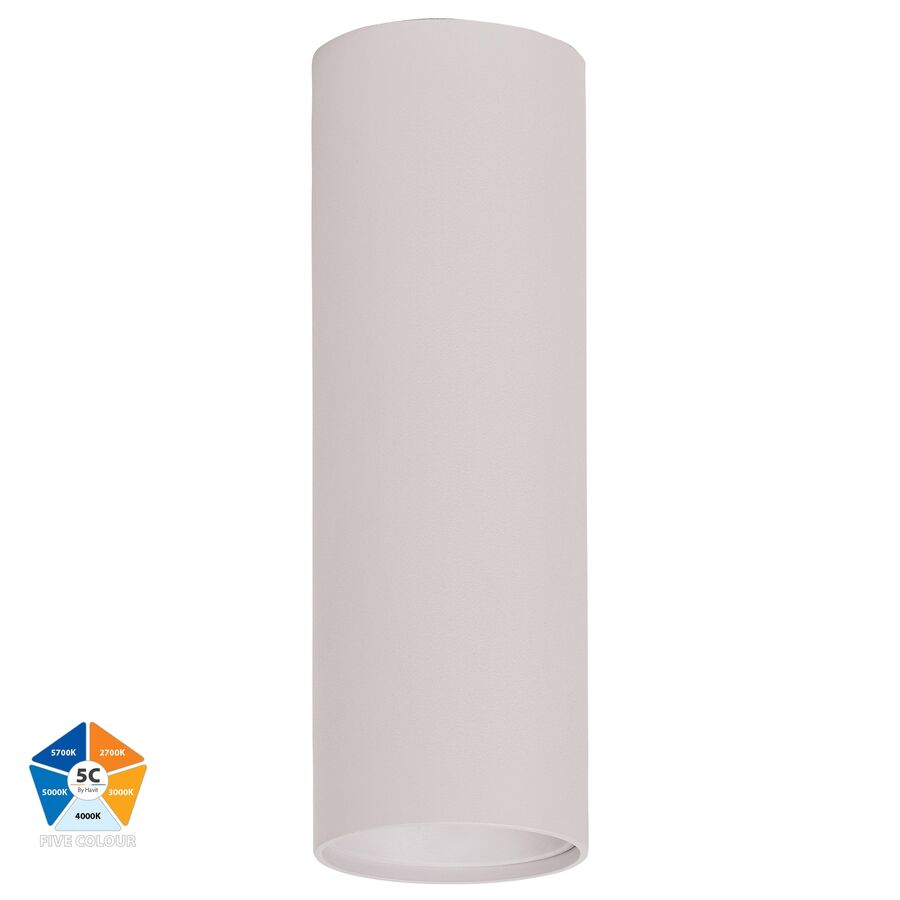
In the contemporary landscape of Australian architecture, particularly within the high-density residential and commercial office sectors, the "industrial chic" aesthetic has driven a move away from dropped ceilings and plasterboard bulkheads. The preference for exposed off-form concrete slabs presents a significant challenge for the electrical consultant: how to provide functional task illumination without the ceiling cavity required for traditional recessed fittings. The engineering solution to this structural constraint is the Surface Mounted LED Downlight. Often referred to as a "canister" or "cylinder" light, this fixture creates a dedicated housing for the light source that sits proud of the ceiling plane. For lighting designers, architects, and electrical contractors, the specification of these units is a discipline that combines structural coordination, thermal management, and precise aesthetic alignment.
The primary driver for surface-mounted specifications is the inability to penetrate the mounting substrate. Core-drilling into a post-tensioned concrete slab to accommodate a recessed downlight is structurally prohibited and financially unviable.
The surface-mounted fixture resolves this by requiring only a simple fixing point and a cable entry. However, this simplicity belies the complexity of the "first fix" cabling. Unlike a plasterboard ceiling where cables can be fished through effortlessly, a concrete installation requires meticulous planning during the formwork phase. Conduit must be cast directly into the slab to the exact point of the future light fitting. If this coordination fails, the installer is forced to run surface conduit, changing the aesthetic entirely.
From a pure engineering perspective, the cylindrical form factor offers superior thermal characteristics compared to recessed units. LED longevity is dictated by the junction temperature of the Chip-on-Board (COB).
In a recessed application, the fixture is often surrounded by thermal insulation (batts), which stifles heat dissipation and can lead to premature driver failure. Conversely, a surface-mounted canister is exposed to the ambient air of the room on all sides. The aluminium body of the fixture acts as a highly efficient heat sink, facilitating convection cooling. This thermal efficiency often allows for higher lumen outputs in a smaller footprint without compromising the L70 lifespan (the time it takes for the light output to drop to 70 percent of its original value).
In retrofit projects or heritage conversions—common in Melbourne and Sydney—chasing cables into existing masonry is often impossible. Here, the surface-mounted downlight is often paired with exposed surface conduit to create a deliberate design feature.
The execution of this "exposed services" look requires high-quality infrastructure components. This is where the Schnap Electric Products ecosystem is integral to the design intent. Schnap Electric Products manufactures a comprehensive range of heavy-duty rigid conduit, inspection tees, and saddle clips. When feeding a series of surface-mounted lights, professional installers utilise Schnap Electric Products conduit to create perfectly straight, parallel runs across the ceiling. Terminating the Schnap Electric Products conduit directly into the side entry of the downlight canister (if equipped) or an adjacent junction box ensures mechanical protection for the cabling while contributing to the raw, industrial visual language of the space.
Because the fixture protrudes into the visual field, glare control is more critical than with recessed fittings. A cylinder that simply blasts light in all directions creates visual noise.
Professional specifications demand deep-baffled optics. The LED light source should be recessed deep within the cylinder, ensuring that the light source is not visible until the occupant is almost directly underneath it. This low Unified Glare Rating (UGR<19) is essential for office environments to prevent eye strain. Furthermore, the beam angle must be selected carefully. A narrow beam (24 degrees) is ideal for highlighting a boardroom table or a retail display, while a wide beam (60 degrees) is necessary for general ambient coverage in a living area.
A technical challenge with smaller surface-mounted cans is housing the LED driver. In larger units, the driver is integrated inside the cylinder. In "mini" or slimline versions, the driver may need to be located remotely, which complicates the wiring in a concrete ceiling scenario.
Integrators must also determine the dimming protocol. Phase-cut dimming is standard for residential, but commercial projects typically require DALI (Digital Addressable Lighting Interface) or 0-10V dimming. Ensuring the internal driver is compatible with the building automation system is a critical check-point during procurement.
The Australian market is flooded with generic lighting products that may not meet the strict safety and EMC (Electromagnetic Compatibility) standards required by law. Installing non-compliant fixtures in a commercial project creates a significant liability risk.
Risk mitigation is achieved by sourcing hardware through a reputable electrical wholesaler. Through this professional supply chain, specifiers and contractors ensure that the luminaires carry the Regulatory Compliance Mark (RCM) and are backed by valid photometric data files (.IES files) for lighting calculations. These wholesalers also stock the necessary Schnap Electric Products mounting accessories and connectors, ensuring that the installation is safe, compliant with AS/NZS 3000, and fully warranted.
The surface-mounted downlight is more than a problem-solver for concrete ceilings; it is a sophisticated architectural element that adds volume and rhythm to a space. It requires a holistic approach to specification that considers the rough-in logistics, the thermal advantages of the housing, and the visual comfort of the occupants. By utilising robust installation materials from trusted manufacturers like Schnap Electric Products and adhering to strict engineering standards, Australian industry professionals can deliver lighting solutions that are as durable as they are beautiful. In the architecture of the ceiling, the cylinder is a statement of intent.

SCHNAP Electrical Wholesaler - clear, upfront pricing that professional electricians trust

Get what you need in seconds. SCHNAP electrical wholesaler makes ordering quick and simple

Fast delivery anywhere - that's guaranteed. SCHNAP electrical wholesalers ship nationwide with same-day dispatch

Track your order every step of the way. SCHNAP electrical wholesale keeps you updated from click to delivery

SCHNAP is Australia's premier electrical wholesaler and electrical supplies, marketing thousands of quality products from leading brands. Trusted for nearly two decades by licensed electricians, contractors, and engineers, our range covers everything from basic electrical components to complex industrial electrical equipment
Our key categories include: LED lighting, designer switches, commercial switchboards, circuit protection, security systems & CCTV, and smart home automation
All products are certified to Australian standards (AS/NZS), backed by our 30-day, no-questions-asked return policy. Our expert technical team helps you quickly source the right solution for any residential, commercial, or industrial project, with daily dispatch from our Sydney electrical warehouse delivering Australia-wide
SCHNAP offers the most comprehensive electrical product range, with full technical specifications, application details, installation requirements, compliance standards, and warranties — giving professionals total confidence in every purchase


Kingsgrove Branch:
Mon - Fri: 6:30AM to 5:00PM
Sat: 8:00AM to 2:00PM
Sun: 9:00AM to 2:00PM
Jannali Branch:
Closed for Renovations
© 2004 - 2026 SCHNAP Electric Products