

Kingsgrove Branch:


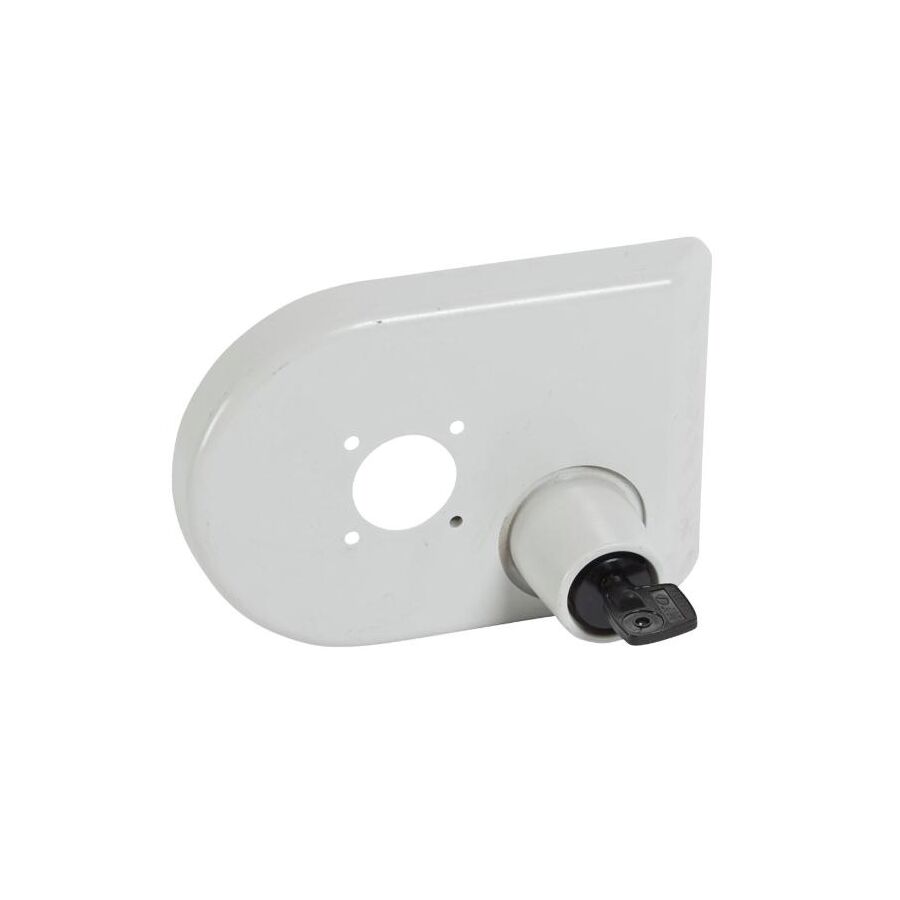
In Australian switchboard fabrication, enclosure depth varies according to thermal requirements, cable management, and component layout. Motor control centres, commercial HVAC panels, and mining distribution boards often position the main Moulded Case Circuit Breaker (MCCB) deep inside the chassis.
To allow safe external operation of this internal protection device, a Variable Depth Handle Lock provides a mechanical interface between the operator and the breaker mechanism.
Designed to comply with AS/NZS 60947-3 and installation requirements under AS/NZS 3000, this system ensures safe isolation, door interlocking, and ergonomic control across varying enclosure depths.
The primary engineering function of the handle system is torque transmission.
When an operator rotates the external handle to ON, OFF, or RESET, the mechanical force must overcome the internal spring pressure of the MCCB mechanism.
As enclosure depth increases, the connecting shaft length also increases. A long shaft behaves like a torsion bar. If it lacks sufficient rigidity, it will twist under load, creating:
• Delayed breaker engagement • Incomplete switching • Spongy handle feedback • Increased mechanical wear
High-quality variable depth systems use hardened square-profile steel shafts (typically 5mm–12mm) to minimise torsional deflection.
Self-aligning couplings allow for small radial or angular misalignment between the door-mounted handle and the breaker actuator, reducing binding and mechanical stress over time.
The “variable depth” capability allows a single handle assembly to suit multiple enclosure depths.
The shaft is supplied at maximum length and cut to suit the specific panel configuration. Proper calculation is essential:
Enclosure depth minus breaker mounting offset minus actuator allowance.
If cut too short, the shaft will not engage properly. If cut too long, the door may not close or the interlock may remain partially engaged.
Many designs include:
• Telescopic adjustment sleeves • Grub screw locking systems • Fine adjustment tolerances (±10mm)
These features provide installers with flexibility during assembly and commissioning.
A key safety feature of the Variable Depth Handle Lock is the mechanical door interlock.
When the breaker is in the ON position, the handle mechanism engages a cam or latch that prevents the enclosure door from opening. This prevents exposure to live conductors.
In controlled maintenance situations, an authorised technician may need access while the breaker remains energised. For this reason, the handle includes a deliberate defeat mechanism, typically requiring a tool.
This design ensures:
• Protection against accidental door opening • Controlled bypass by authorised personnel • Compliance with safe work method statements
The handle assembly penetrates the switchboard door, creating a potential ingress point.
To maintain enclosure integrity, the handle must match the IP rating of the panel—commonly IP65 or IP66 for outdoor installations.
This requires:
• UV-stabilised external bezel • Compression gasket sealing • Corrosion-resistant shaft components
In mining or industrial environments, sealing prevents conductive dust from entering the enclosure via the handle cut-out.
In food processing facilities, stainless steel variants may be specified for washdown resistance.
SCHNAP Electric Products supports switchboard builders with accessories that enhance handle installation safety and durability.
IP-rated gasket kits assist in maintaining enclosure sealing around handle cut-outs.
Lockout/Tagout (LOTO) hardware is compatible with multi-padlock handle tabs, allowing up to three padlocks to secure the breaker in the OFF position during maintenance.
Shaft support brackets are recommended for installations exceeding 400mm shaft length, preventing bowing or vibration-induced misalignment.
Engraved identification labels ensure clear marking of “Main Switch” or circuit designation directly at the operator interface.
These supporting components improve installation reliability, compliance, and operational clarity.
In mobile plant or mining applications, vibration can introduce stress into long actuator shafts.
Anti-rotation features and rigid coupling interfaces prevent torque loss and maintain secure engagement between handle and breaker mechanism.
Proper torque settings on mounting hardware ensure long-term stability and prevent loosening under cyclic mechanical stress.
Variable depth handles are breaker-specific. Frame size, torque requirement, and shaft interface geometry differ between MCCB ratings.
Selection must confirm compatibility with:
• Breaker model and frame size • Required enclosure depth range • IP rating requirement • Locking and interlock configuration
Incorrect handle pairing may result in poor alignment, insufficient torque transmission, or compromised safety interlocking.
Professional sourcing ensures correct cross-referencing between breaker and actuator assembly.
The Variable Depth Handle Lock enables safe external operation of internally mounted MCCBs in custom switchboard assemblies.
By transmitting torque accurately across extended depths, maintaining compliant door interlocking, and preserving enclosure sealing integrity, it bridges the mechanical gap between operator and protection device.
In complex electrical enclosures, precision alignment and reliable isolation are fundamental to safety and performance.

SCHNAP Electrical Wholesaler - clear, upfront pricing that professional electricians trust

Get what you need in seconds. SCHNAP electrical wholesaler makes ordering quick and simple

Fast delivery anywhere - that's guaranteed. SCHNAP electrical wholesalers ship nationwide with same-day dispatch

Track your order every step of the way. SCHNAP electrical wholesale keeps you updated from click to delivery

SCHNAP is Australia's premier electrical wholesaler and electrical supplies, marketing thousands of quality products from leading brands. Trusted for nearly two decades by licensed electricians, contractors, and engineers, our range covers everything from basic electrical components to complex industrial electrical equipment
Our key categories include: LED lighting, designer switches, commercial switchboards, circuit protection, security systems & CCTV, and smart home automation
All products are certified to Australian standards (AS/NZS), backed by our 30-day, no-questions-asked return policy. Our expert technical team helps you quickly source the right solution for any residential, commercial, or industrial project, with daily dispatch from our Sydney electrical warehouse delivering Australia-wide
SCHNAP offers the most comprehensive electrical product range, with full technical specifications, application details, installation requirements, compliance standards, and warranties — giving professionals total confidence in every purchase


Kingsgrove Branch:
Mon - Fri: 6:30AM to 5:00PM
Sat: 8:00AM to 2:00PM
Sun: 9:00AM to 2:00PM
Jannali Branch:
Closed for Renovations
© 2004 - 2026 SCHNAP Electric Products