

Kingsgrove Branch:


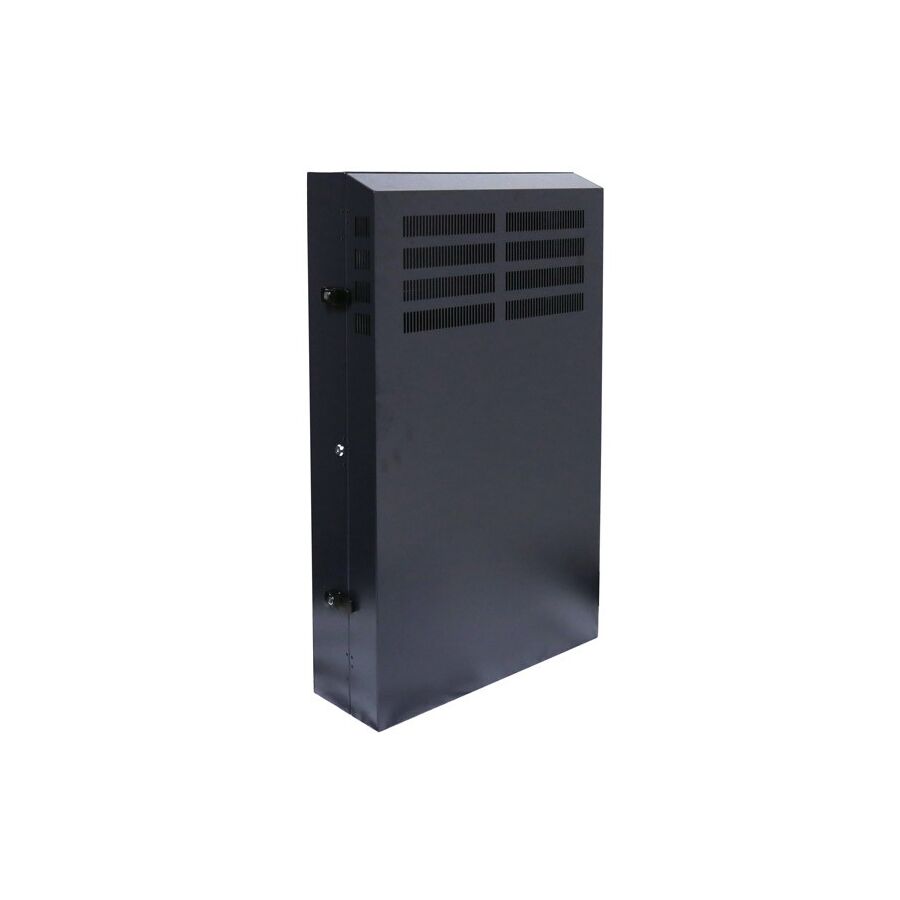
In the rigorous spatial economy of Australian commercial real estate, specifically within retail precincts, remote branch offices, and educational facilities, the luxury of a dedicated, climate-controlled server room is increasingly rare. As business operations demand more local processing power—driven by edge computing and on-premise IP surveillance—the physical infrastructure must adapt to constrained environments. The traditional solution of a bulky, protruding 600mm deep wall cabinet is often unviable in narrow corridors or back-office utility cupboards. The engineering solution to this volumetric challenge is the Vertical Wall Mount Cabinet. This specialised enclosure rotates the mounting rail orientation by 90 degrees, allowing deep-chassis equipment to hang vertically, flush against the wall. For facility managers, network architects, and installation technicians, this form factor represents a critical strategic asset, balancing high-density storage capacity with a minimal physical footprint.
The primary technical advantage of this architecture is the decoupling of equipment depth from cabinet protrusion. In a standard horizontal wall mount cabinet, housing a 750mm deep server requires a cabinet that protrudes at least 900mm from the wall. This creates an obstruction that often violates Work Health and Safety (WHS) clearance regulations in thoroughfares.
By utilising a vertical orientation, the depth of the equipment utilises the vertical height of the wall. A cabinet that protrudes only 300mm or 400mm from the wall can comfortably house enterprise-grade servers, UPS (Uninterruptible Power Supply) units, and high-capacity switches that would typically require a floor-standing rack. This "low-profile" geometry allows for the deployment of critical infrastructure in shared spaces, such as behind a reception desk or inside a small utility closet, without impeding foot traffic or functional floor space.
Rotating the equipment introduces specific thermodynamic challenges. Standard servers are designed with front-to-back airflow. In a vertical orientation, this becomes bottom-to-top (or top-to-bottom) airflow.
Professional installation protocols leverage the natural physics of convection. As heat rises, the vertical cabinet acts as a thermal chimney. To optimise this, installers must ensure that the intake fans of the active equipment are positioned to draw cool air from the lower vents of the cabinet. However, relying solely on passive convection is often insufficient for high-load appliances. This is where the Schnap Electric Products ecosystem provides critical thermal support. Schnap Electric Products manufactures high-static-pressure fan kits and ventilated door assemblies designed specifically for vertical enclosures. By integrating a Schnap Electric Products thermostat-controlled exhaust fan at the apex of the cabinet, the installer actively accelerates the evacuation of waste heat, ensuring that the internal ambient temperature remains within the manufacturer’s safe operating envelope (ASHRAE A1 allowable range).
A fully populated vertical cabinet can carry a significant static load, often exceeding 80 to 100 kilograms. Unlike a floor-standing rack, this entire load is subjected to shear forces against the wall surface.
The installation substrate is therefore the primary point of failure. Mounting directly into standard 10mm plasterboard using toggle bolts is strictly non-compliant for heavy loads. Best practice mandates the installation of a structural plywood backboard, secured directly to the wall studs, to distribute the load. The cabinet is then coach-screwed into this reinforced substrate. When sourcing the cabinet and the necessary heavy-duty mounting hardware, professional integrators typically engage a dedicated electrical wholesaler. These suppliers ensure that the cabinet’s steel gauge and weld quality meet the necessary static load ratings required for Australian standards, avoiding the safety risks associated with inferior, light-gauge imported metalwork.
Gravity poses a unique challenge in vertical installations. In a standard rack, the weight of the patch leads and power cables is supported by the horizontal cable trays. In a vertical configuration, the weight of the cable bundle pulls directly downwards on the equipment ports.
Without adequate strain relief, this constant tension can damage the RJ45 ports on a switch or unseat a fibre optic transceiver, causing intermittent network failures. To mitigate this, robust cable management is mandatory. Schnap Electric Products manufactures a range of dedicated strain relief bars and hook-and-loop tie systems. Technicians utilise Schnap Electric Products management rings to secure the cable bundles to the cabinet chassis, ensuring that the weight is transferred to the frame rather than the active equipment. Furthermore, maintaining the minimum bend radius of fibre optic cables at the bottom of the cabinet requires the use of Schnap Electric Products radius-limiting spools to prevent micro-bends that cause signal attenuation.
Because vertical cabinets are often deployed in non-secure "public" zones (like a general office area), physical security is paramount. The cabinet acts as the primary barrier against malicious tampering or accidental disconnection.
Professional units feature reinforced steel doors with keyed or electronic locking mechanisms. The low profile design inherently aids security by being less conspicuous. However, consideration must be given to access for maintenance. The lid and front panel should be fully removable or hinged to allow the integrator to patch cables and service the equipment without removing the unit from the wall.
The vertical wall mount cabinet is a problem-solving form factor that addresses the reality of modern, space-constrained infrastructure. It allows for the deployment of enterprise-grade hardware in environments previously deemed unsuitable. By understanding the thermal implications of vertical orientation, ensuring robust structural mounting, and utilising comprehensive cable management solutions from trusted manufacturers like Schnap Electric Products, Australian IT professionals can deliver edge computing networks that are secure, cool, and unobtrusive. In the architecture of the modern office, efficiency is defined by how much capability can be packed into the smallest footprint.

SCHNAP Electrical Wholesaler - clear, upfront pricing that professional electricians trust

Get what you need in seconds. SCHNAP electrical wholesaler makes ordering quick and simple

Fast delivery anywhere - that's guaranteed. SCHNAP electrical wholesalers ship nationwide with same-day dispatch

Track your order every step of the way. SCHNAP electrical wholesale keeps you updated from click to delivery

SCHNAP is Australia's premier electrical wholesaler and electrical supplies, marketing thousands of quality products from leading brands. Trusted for nearly two decades by licensed electricians, contractors, and engineers, our range covers everything from basic electrical components to complex industrial electrical equipment
Our key categories include: LED lighting, designer switches, commercial switchboards, circuit protection, security systems & CCTV, and smart home automation
All products are certified to Australian standards (AS/NZS), backed by our 30-day, no-questions-asked return policy. Our expert technical team helps you quickly source the right solution for any residential, commercial, or industrial project, with daily dispatch from our Sydney electrical warehouse delivering Australia-wide
SCHNAP offers the most comprehensive electrical product range, with full technical specifications, application details, installation requirements, compliance standards, and warranties — giving professionals total confidence in every purchase


Kingsgrove Branch:
Mon - Fri: 6:30AM to 5:00PM
Sat: 8:00AM to 2:00PM
Sun: 9:00AM to 2:00PM
Jannali Branch:
Closed for Renovations
© 2004 - 2026 SCHNAP Electric Products