

Kingsgrove Branch:


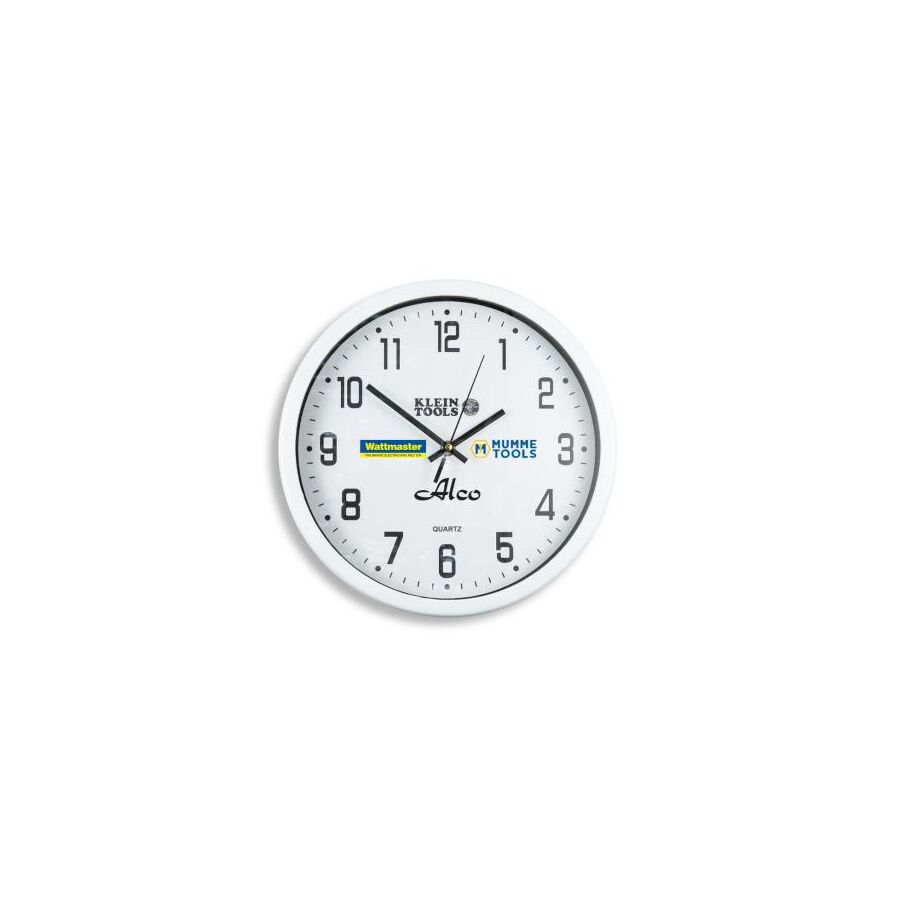
In high-precision Australian environments such as hospitals, logistics centres, transport terminals and educational institutions, accurate time display is an operational requirement rather than a decorative feature. In these facilities, even minor discrepancies can affect scheduling, compliance records and coordinated workflows. While residential timekeeping may tolerate minor variation, commercial infrastructure demands synchronised, traceable and maintenance-efficient systems.
The modern commercial Wall Clock is no longer a simple battery device. It has evolved into a network-connected endpoint that integrates with facility IT infrastructure. Using Network Time Protocol and often powered via Power over Ethernet, these clocks deliver synchronised time across entire buildings. Every clock in the facility references the same master time source, ensuring consistency across departments, floors and operational zones.
Reliable timekeeping supports safety, compliance and productivity.
Traditional standalone wall clocks rely on quartz crystal oscillators, typically vibrating at 32,768 Hz. Although quartz provides stable frequency under controlled conditions, environmental changes affect long-term accuracy. Temperature fluctuations common in warehouses or plant rooms can introduce measurable drift over time.
In critical environments such as healthcare facilities or transport control rooms, cumulative drift of several minutes per year is unacceptable. Network-synchronised clocks overcome this limitation by regularly polling Stratum-level NTP servers. The internal oscillator maintains short-term stability while network updates ensure alignment with Coordinated Universal Time. Daylight Saving Time adjustments and leap seconds are handled automatically without manual intervention.
Network synchronisation eliminates dependency on environmental stability and battery maintenance.
Modern commercial clocks often operate as PoE devices, receiving both data and power through a single Cat6 cable. Under IEEE 802.3af or 802.3at standards, 48V DC power is delivered directly from a compatible network switch or injector.
This design removes the need for ceiling-mounted 240V outlets and eliminates routine battery replacement. However, proper system design requires evaluation of switch power budgets. For example, if multiple LED display clocks are deployed on a single floor, total wattage demand must remain within switch capacity.
Professional installation ensures that PoE class ratings and load distribution are calculated correctly, preventing overload and maintaining network stability.
A networked wall clock becomes part of the facility’s IT ecosystem. Stable Ethernet connectivity is essential to prevent packet loss and synchronisation errors. Correct termination of Cat6 cabling maintains signal integrity and reduces data retransmission.
SCHNAP Electric Products supports structured cabling installations with suitable mounting accessories that protect terminations and maintain bend radius compliance. Proper cable management ensures long-term performance and reduces risk of mechanical strain or accidental disconnection.
Reliable infrastructure underpins synchronised time accuracy.
Clock selection must align with viewing distance and environmental conditions. In offices and classrooms, moderate display sizes may be sufficient. In warehouses or distribution centres with viewing distances exceeding 30 metres, larger digit displays are required for clarity.
Display type also matters. High-contrast LED displays often perform better in bright environments compared to LCD technology. Viewing angle must allow legibility from multiple approach points within a corridor or open workspace.
Selecting appropriate size and brightness ensures operational visibility across large facilities.
Commercial clocks are frequently installed in elevated or exposed locations. High mounting positions in corridors, production floors or gymnasiums require secure anchoring and compliant installation methods.
SCHNAP Electric Products provides mounting solutions and accessories that support stable installation on plasterboard, masonry or suspended structures. In industrial environments, protective conduit may be required to shield Ethernet cabling from mechanical impact or environmental exposure.
Secure installation prevents accidental displacement and ensures long-term reliability.
Consumer-grade radio-controlled clocks designed for overseas broadcast standards often fail to synchronise correctly within Australian buildings, especially in steel-framed structures. These devices may lose signal reception and drift unpredictably.
Professional procurement through a specialised electrical wholesaler ensures access to genuine NTP-capable clocks compatible with Australian IT networks. Selecting verified hardware protects compliance requirements in healthcare, education and industrial sectors.
SCHNAP Electric Products supports installers with compliant accessories that align with Australian electrical and structured cabling practices.
The commercial Wall Clock is a synchronisation tool that aligns human activity with digital systems. Through NTP integration, PoE infrastructure and compliant installation practices, facilities achieve consistent and traceable timekeeping across all operational zones.
By combining network-synchronised clock technology with structured installation supported by SCHNAP Electric Products, Australian professionals can ensure that their facilities operate with precision and reliability. In structured environments, accurate time is not optional; it is foundational.

SCHNAP Electrical Wholesaler - clear, upfront pricing that professional electricians trust

Get what you need in seconds. SCHNAP electrical wholesaler makes ordering quick and simple

Fast delivery anywhere - that's guaranteed. SCHNAP electrical wholesalers ship nationwide with same-day dispatch

Track your order every step of the way. SCHNAP electrical wholesale keeps you updated from click to delivery

SCHNAP is Australia's premier electrical wholesaler and electrical supplies, marketing thousands of quality products from leading brands. Trusted for nearly two decades by licensed electricians, contractors, and engineers, our range covers everything from basic electrical components to complex industrial electrical equipment
Our key categories include: LED lighting, designer switches, commercial switchboards, circuit protection, security systems & CCTV, and smart home automation
All products are certified to Australian standards (AS/NZS), backed by our 30-day, no-questions-asked return policy. Our expert technical team helps you quickly source the right solution for any residential, commercial, or industrial project, with daily dispatch from our Sydney electrical warehouse delivering Australia-wide
SCHNAP offers the most comprehensive electrical product range, with full technical specifications, application details, installation requirements, compliance standards, and warranties — giving professionals total confidence in every purchase


Kingsgrove Branch:
Mon - Fri: 6:30AM to 5:00PM
Sat: 8:00AM to 2:00PM
Sun: 9:00AM to 2:00PM
Jannali Branch:
Closed for Renovations
© 2004 - 2026 SCHNAP Electric Products