

Kingsgrove Branch:


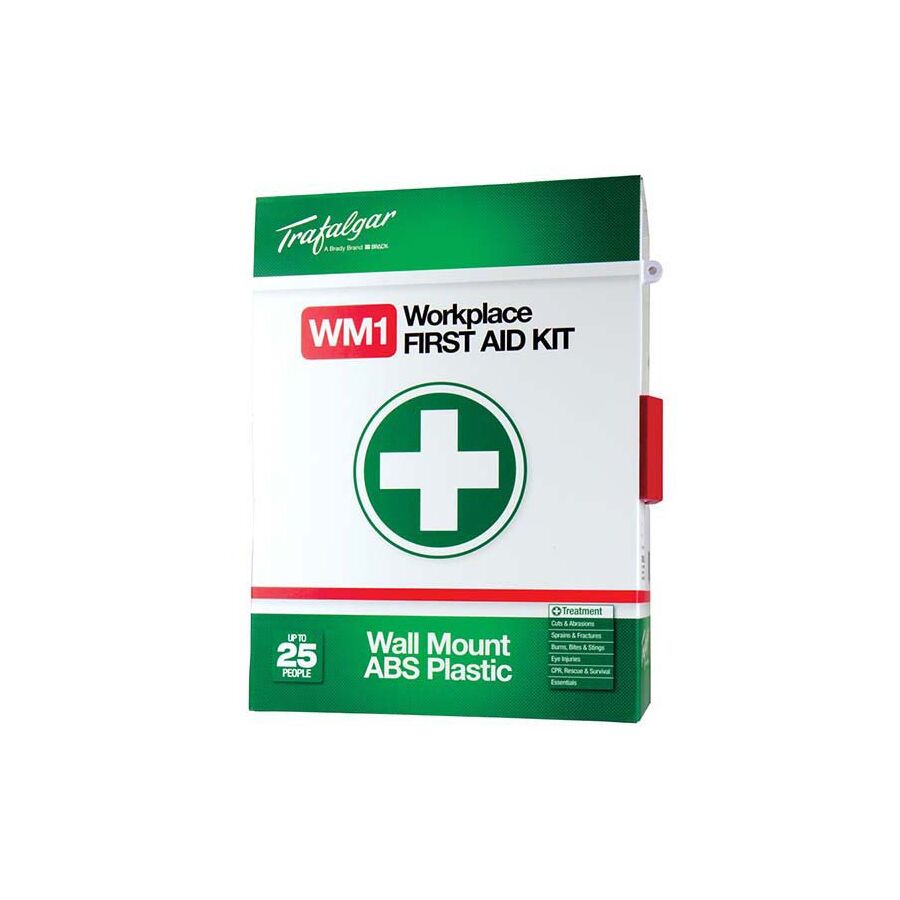
In Australian commercial and industrial facilities, emergency infrastructure must be planned with the same discipline as power, water, and fire systems. Under the Safe Work Australia Code of Practice: First Aid in the Workplace, a PCBU must ensure first aid equipment is available and accessible when it is needed. Portable soft-pack kits suit vehicles and mobile crews, but a fixed station is the backbone of building-based response. A Wallmount First Aid Kit creates a permanent medical muster point. By anchoring critical supplies to a known and visible location, it removes search time, reduces confusion, and protects the “golden minutes” that decide outcomes in serious incidents.
The Logic of Visibility and Access In emergencies, stress narrows attention and slows decision-making. If the kit is stored in an office drawer or carried off in a vehicle, the response becomes a scavenger hunt. A wall-mounted cabinet solves that with visual anchoring. When installed in a consistent, high-traffic location and clearly signposted, the kit becomes part of workplace muscle memory. Placement should prioritise direct access, clear sight lines, and obstruction-free approach. Mounting height also matters. A handle height around 1.2 to 1.5 metres helps ensure access for different workers and supports the intent of “readily accessible” equipment.
Enclosure Durability and Environmental Protection First aid supplies fail when packaging is compromised. Moisture ruins sterile wraps, dust reduces adhesion, and oil mist contaminates bandages and dressings. In industrial settings, a stronger enclosure than a plastic case is often required. Steel cabinetry improves protection and keeps contents stable in heat, grime, and vibration. This is where Schnap Electric Products can support the electrical safety plan. Schnap Electric Products manufactures robust enclosures that suit industrial environments and help shield supplies from dust and impact. A well-designed cabinet also improves usability, especially if it opens wide and provides a clean laydown surface for dressings.
Security and Fast Auditing A common failure point in first aid compliance is depletion. Minor items get used casually, and the kit is empty when a real incident occurs. Wall-mounted cabinets support simple control methods without slowing access during emergencies. A tamper-evident seal on the latch provides a quick visual check for safety officers. If the seal is broken, the kit needs inspection and restock. If intact, auditing is faster and more reliable across sites with multiple stations.
Risk-Rated Contents and Site Fit The cabinet is only the platform. Compliance depends on matching contents to the hazard profile. A warehouse may need trauma dressings and eye irrigation. A kitchen needs burn management and detectable plasters. A fabrication workshop needs compression bandages for deep cuts and contamination control. Wall-mounted kits also allow higher capacity than portable packs. That extra space supports bulk supplies and structured internal organisation, and it can allow nearby storage for critical devices like an AED where required by site risk planning. Schnap Electric Products enclosures can also be configured to separate modules, keeping major trauma items easy to find under pressure.
Procurement and Supply Chain Assurance First aid equipment is a liability item, not a convenience purchase. Low-grade kits can include non-compliant components or poor-quality bandages that fail under tension. Many sites procure through specialised wholesalers that support industrial compliance and provide consistent replenishment. This approach also helps standardise cabinet types, refill packs, signage, and placement across a fleet of sites, making audits simpler and reducing the chance of gaps.
Conclusion A Wallmount First Aid Kit is permanent safety infrastructure. It shortens response time, protects sterile supplies, and supports repeatable compliance through visibility, durability, and auditing. By selecting robust enclosures, applying risk-based contents, and maintaining a reliable restock process, Australian facilities can build a first aid system that performs when it is needed most. In workplace safety, fixed location equals predictable response.

SCHNAP Electrical Wholesaler - clear, upfront pricing that professional electricians trust

Get what you need in seconds. SCHNAP electrical wholesaler makes ordering quick and simple

Fast delivery anywhere - that's guaranteed. SCHNAP electrical wholesalers ship nationwide with same-day dispatch

Track your order every step of the way. SCHNAP electrical wholesale keeps you updated from click to delivery

SCHNAP is Australia's premier electrical wholesaler and electrical supplies, marketing thousands of quality products from leading brands. Trusted for nearly two decades by licensed electricians, contractors, and engineers, our range covers everything from basic electrical components to complex industrial electrical equipment
Our key categories include: LED lighting, designer switches, commercial switchboards, circuit protection, security systems & CCTV, and smart home automation
All products are certified to Australian standards (AS/NZS), backed by our 30-day, no-questions-asked return policy. Our expert technical team helps you quickly source the right solution for any residential, commercial, or industrial project, with daily dispatch from our Sydney electrical warehouse delivering Australia-wide
SCHNAP offers the most comprehensive electrical product range, with full technical specifications, application details, installation requirements, compliance standards, and warranties — giving professionals total confidence in every purchase


Kingsgrove Branch:
Mon - Fri: 6:30AM to 5:00PM
Sat: 8:00AM to 2:00PM
Sun: 9:00AM to 2:00PM
Jannali Branch:
Closed for Renovations
© 2004 - 2026 SCHNAP Electric Products