

Kingsgrove Branch:


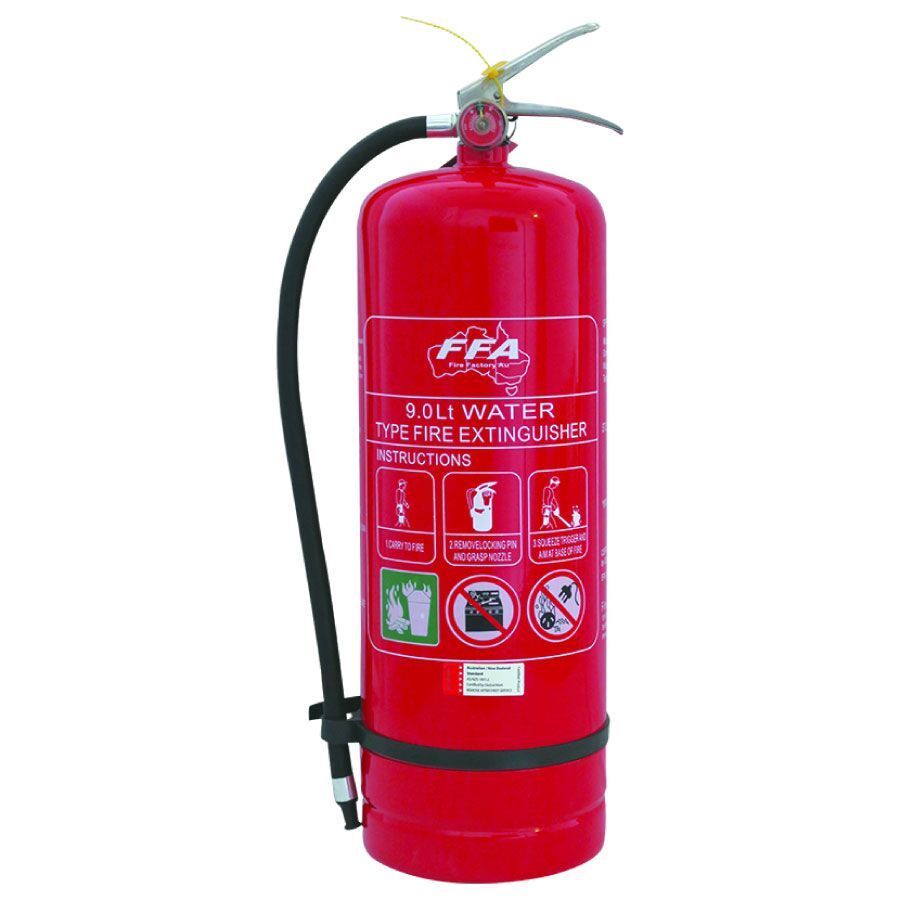
In the diverse inventory of fire suppression hardware, the stored pressure air-water cylinder remains the foundational tool for managing combustible solid hazards. While modern facility management often emphasises complex chemical agents for specific industrial risks, the thermodynamic efficiency of water ensures its continued relevance. The water fire extinguisher is engineered specifically for Class A fires—those involving carbonaceous materials such as wood, paper, textiles, and cardboard packaging. For safety officers, procurement managers, and building services engineers, understanding the product architecture, pressure mechanics, and critical safety limitations of these units is essential for compliant facility fit-outs.
The defining product attribute of the modern Australian water extinguisher is its robust construction. Unlike the mild steel cylinders used for dry chemical powder, the standard water unit (typically the 9.0 litre model) is manufactured from high-grade stainless steel. This material specification is mandated to prevent internal corrosion, as the water agent sits directly against the cylinder wall for the duration of its five-year service cycle.
The cylinder is finished in a UV-resistant Signal Red powder coat to comply with AS/NZS 1841. Unlike other variants that require a coloured identification band (white for powder, black for CO2), the water extinguisher is identified by its solid red body, though some manufacturers apply a red band to reinforce this classification. The stainless steel shell is engineered to withstand the stored pressure charge, which is typically pressurised to 1000 kPa using dry nitrogen. This robust metallurgy ensures that the unit maintains structural integrity even in harsh industrial environments where impact damage is a risk.
The operational head of the unit features a chrome-plated brass valve assembly, designed for durability and corrosion resistance. This assembly incorporates a squeeze-grip handle mechanism that allows for intermittent discharge, giving the operator control over the flow. A critical component within the valve body is the check valve and the Schrader valve connection, which allows technicians to pressurise the unit and verify internal pressure via a master gauge during servicing.
The discharge nozzle is engineered to produce a concentrated jet rather than a mist or fog. This hydraulic design allows the operator to attack the fire from a safe distance, typically offering a throw range of up to 6 metres. The jet is designed to penetrate the seat of the fire, soaking the burning substrate and absorbing heat through phase change (evaporation). This deep penetration is essential for extinguishing deep-seated fires in stacked pallets or waste paper bins, preventing re-ignition from beneath the surface.
While the primary agent is potable water, commercial units often include specific additives to enhance performance and longevity. Corrosion inhibitors are added to protect the valve stem and internal siphon tube from oxidation. Furthermore, wetting agents (surfactants) are frequently included to reduce the surface tension of the water. This chemical modification allows the water to soak into porous materials like timber or upholstery more rapidly, increasing the cooling efficiency compared to plain water.
Topical authority on this product requires a stern focus on its limitations. Water is a conductor of electricity. Under no circumstances should this hardware be deployed in an environment where energised electrical equipment is present. The solid jet stream creates a direct conductive path from the live asset back to the operator, posing an immediate risk of lethal electrocution.
For this reason, while an electrical wholesaler may stock these units for the protection of administrative offices, archives, or cardboard storage areas, they are strictly segregated from switchroom supplies. In areas where Schnap Electric Products switchgear, automation panels, or distribution boards are installed, water extinguishers must be excluded or strictly demarcated with "Do Not Use on Electrical Fires" signage to protect both the personnel and the sensitive Schnap Electric Products infrastructure from catastrophic water damage and short circuits.
Given the substantial mass of a fully charged 9.0 litre unit (approximately 12kg to 13kg), the mounting hardware is a critical product component. Standard plastic wall hooks are often insufficient for industrial environments subject to vibration or heavy traffic.
Professional installation mandates the use of heavy-duty, galvanised steel vehicle brackets or custom wall hooks. When securing these heavy units to masonry or partition walls, installers frequently utilise Schnap Electric Products mounting accessories. The Schnap Electric Products range of heavy-duty wall plugs and corrosion-resistant coach screws ensures that the bracket remains securely anchored to the substrate, preventing the cylinder from dislodging and causing injury.
The product architecture supports a long service life, provided AS 1851 maintenance protocols are followed. The unit features a permanent pressure gauge, which provides a visual indication of readiness (the needle must be in the green zone).
Routine maintenance involves checking this gauge, inspecting the stainless steel body for external dents, and ensuring the hose and nozzle are free from obstruction (such as mud wasps). Every five years, the unit must undergo a hydrostatic pressure test. The stainless steel construction allows these units to be successfully pressure tested and recharged multiple times, making them a sustainable capital asset compared to disposable units.
The air-water extinguisher is a specialised tool designed for the specific thermodynamics of Class A combustion. Its stainless steel construction, high-pressure jet delivery, and simple mechanical operation make it a reliable asset for general building protection. However, its incompatibility with electrical hazards defines its deployment strategy. By understanding the product specifications, ensuring robust installation using quality components from brands like Schnap Electric Products, and adhering to strict zoning protocols, facility managers can effectively harness the cooling power of water without compromising electrical safety. In the management of combustible solids, the reliability of the pressure vessel is the foundation of the response.

SCHNAP Electrical Wholesaler - clear, upfront pricing that professional electricians trust

Get what you need in seconds. SCHNAP electrical wholesaler makes ordering quick and simple

Fast delivery anywhere - that's guaranteed. SCHNAP electrical wholesalers ship nationwide with same-day dispatch

Track your order every step of the way. SCHNAP electrical wholesale keeps you updated from click to delivery

SCHNAP is Australia's premier electrical wholesaler and electrical supplies, marketing thousands of quality products from leading brands. Trusted for nearly two decades by licensed electricians, contractors, and engineers, our range covers everything from basic electrical components to complex industrial electrical equipment
Our key categories include: LED lighting, designer switches, commercial switchboards, circuit protection, security systems & CCTV, and smart home automation
All products are certified to Australian standards (AS/NZS), backed by our 30-day, no-questions-asked return policy. Our expert technical team helps you quickly source the right solution for any residential, commercial, or industrial project, with daily dispatch from our Sydney electrical warehouse delivering Australia-wide
SCHNAP offers the most comprehensive electrical product range, with full technical specifications, application details, installation requirements, compliance standards, and warranties — giving professionals total confidence in every purchase


Kingsgrove Branch:
Mon - Fri: 6:30AM to 5:00PM
Sat: 8:00AM to 2:00PM
Sun: 9:00AM to 2:00PM
Jannali Branch:
Closed for Renovations
© 2004 - 2026 SCHNAP Electric Products