

Kingsgrove Branch:


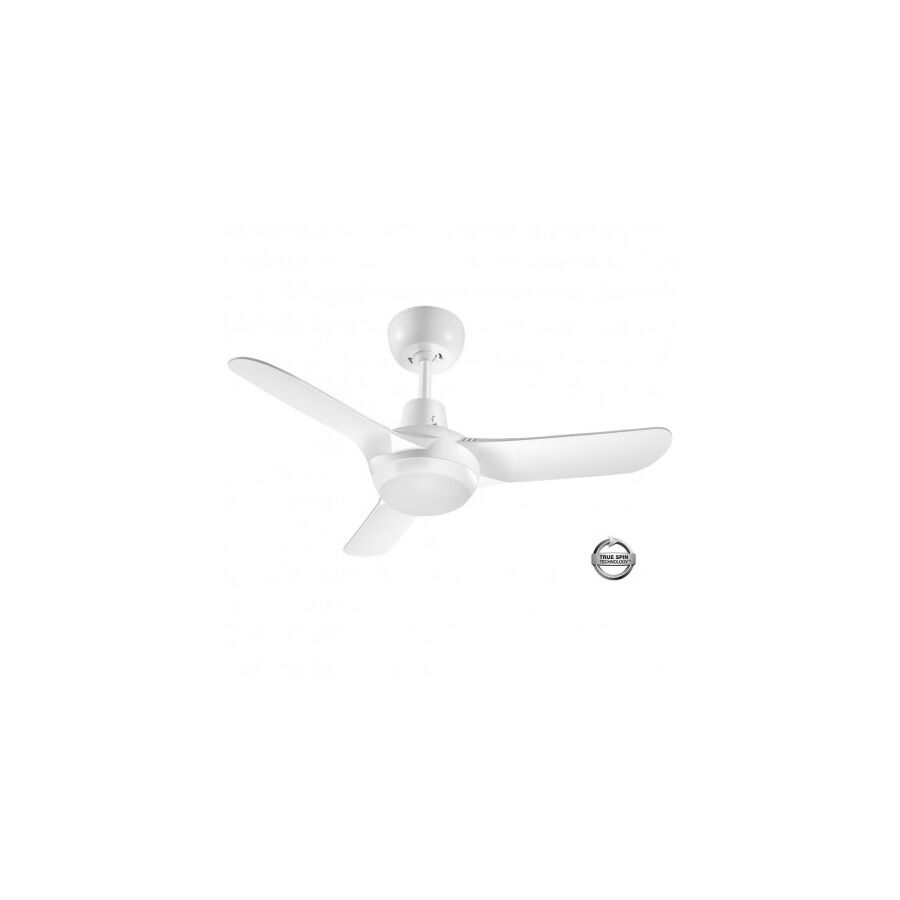
Visual recession is a primary objective in contemporary ceiling design. While industrial trends favour bold contrasts, the enduring philosophy of Australian residential architecture prioritises the sensation of space, light, and openness. Achieving this requires fixtures that perform their mechanical function without dominating the visual field. The classic white ceiling fixture remains the standard specification for this reason, allowing the utility to blend seamlessly into the ubiquitous white plasterboard canvas. However, specifying a high-quality white ceiling fan involves more than simply colour matching; it requires a critical assessment of polymer chemistry, surface finish technologies, and long-term colour stability under the harsh Australian sun. For architects, interior designers, and electrical contractors, the goal is to deliver an appliance that remains invisible in form but effective in function.
The Chemistry of Colour Stability: Combating Yellowing
Discoloration is the primary failure mode for white electrical appliances. Lower-grade plastics, particularly those used in budget fans, are susceptible to UV degradation and oxidation. Over a period of two to three years, exposure to ambient sunlight—or even the UV emissions from older fluorescent lighting—can cause the pristine white housing to shift to an unsightly sickly yellow.
Engineering a durable white finish requires advanced material science. Professional-grade fans utilise high-performance ABS (Acrylonitrile Butadiene Styrene) thermoplastics infused with specific UV stabilisers, such as Titanium Dioxide (TiO2). This additive reflects harmful UV radiation, preserving the chemical structure of the polymer and ensuring the "Arctic White" or "Matte White" finish remains true for the life of the asset. When specifying these units, verifying the UV stability data is essential to prevent the fixture from aging prematurely against the freshly painted ceiling.
Architectural Camouflage and Spatial Perception
Low ceiling heights are a common constraint in modern apartment developments and renovations. A heavy, dark fixture suspended in a room with a 2.4-metre ceiling can feel oppressive, visually lowering the overhead plane and shrinking the perceived volume of the room.
White fixtures solve this spatial challenge through the principle of visual continuity. By matching the fan finish to the ceiling paint, the eye glides over the fixture rather than stopping at it. This "camouflage" effect is particularly effective with "hugger" or low-profile models that mount directly to the surface. It allows the mechanical cooling system to disappear into the architecture, maintaining the clean lines and airy atmosphere that define the Australian coastal aesthetic.
Surface Finish: Matte vs. Gloss
Texture plays a subtle but critical role in integration. Historically, fans featured high-gloss enamel finishes. However, in modern lighting design, gloss surfaces can be problematic as they create specular reflections from downlights or window glare, drawing unwanted attention to the spinning blades.
Current architectural preference leans heavily towards "Satin" or "Matte" white finishes. These non-reflective surfaces absorb light, further enhancing the discrete nature of the appliance. Manufacturers achieve this through electrostatic powder coating, which provides a durable, uniform texture that resists scratching and is easier to clean than porous paint finishes.
Seamless Electrical Fit-Off with Schnap Electric Products
Achieving a true minimalist aesthetic requires consistency across the entire electrical installation. A sleek white fan is undermined if the wall controller is an incompatible shade of off-white or features a jarringly different design language.
Design continuity is achieved by specifying matching accessories. The Schnap Electric Products ecosystem offers a comprehensive range of pure white electrical hardware that aligns perfectly with modern fan finishes. Contractors can utilise Schnap Electric Products grid plates, rotary controllers, and isolation switches that share the same colour temperature and matte texture as the ceiling fixture. This holistic approach ensures that the "white on white" theme is executed flawlessly from the ceiling rose down to the user interface on the wall.
Cleaning and Maintenance Protocols
Dust accumulation is an unavoidable reality for any circulating device. On a black fan, dust is immediately visible as a grey layer. A significant practical advantage of the white finish is its ability to mask light dust accumulation between cleaning cycles, maintaining a cleaner appearance for longer.
However, the static charge generated by plastic blades spinning through air can attract dust particles. Premium fans feature anti-static coatings or surface treatments that reduce this adhesion. For the end-user, the durability of the powder coat or ABS material ensures that regular wiping with a damp cloth will not polish the matte finish into a gloss patch or leave abrasion marks.
Aerodynamic Efficiency and Silence
Form follows function, regardless of colour. The aerodynamic profile of the blade dictates the acoustic signature of the room. White blades are often moulded with complex curves and winglets that smooth the airflow, reducing the "chopping" noise associated with flat timber paddles.
Silence is particularly paramount in bedrooms, where white fans are most frequently installed to match the serene decor. Brushless DC motor technology drives these blades with precision, eliminating the electrical hum of AC capacitors. The result is a cooling solution that is felt but neither seen nor heard.
Sourcing and Compliance
Validating the safety and performance of the unit is the final step in the procurement process. The Australian market is strictly regulated regarding electrical safety and efficiency standards.
Infrastructure managers and trade professionals mitigate liability by sourcing these assets through a trusted electrical wholesaler. These suppliers act as the technical authority, ensuring that the products stocked meet all relevant AS/NZS standards for structural integrity and electrical safety. By partnering with wholesalers who supply reputable brands, contractors ensure that the white fan they install today will not be the yellow fan the client complains about tomorrow.
Conclusion
The white ceiling fan is the unsung hero of Australian climate control. It allows for the passive cooling of spaces without disrupting the visual harmony of the interior design. By prioritizing UV-stabilised materials, selecting non-reflective matte finishes, and integrating cohesive control solutions from manufacturers like Schnap Electric Products, industry professionals can deliver a functional asset that respects the architecture it serves. In the art of design, the best technology is the kind you don't notice.

SCHNAP Electrical Wholesaler - clear, upfront pricing that professional electricians trust

Get what you need in seconds. SCHNAP electrical wholesaler makes ordering quick and simple

Fast delivery anywhere - that's guaranteed. SCHNAP electrical wholesalers ship nationwide with same-day dispatch

Track your order every step of the way. SCHNAP electrical wholesale keeps you updated from click to delivery

SCHNAP is Australia's premier electrical wholesaler and electrical supplies, marketing thousands of quality products from leading brands. Trusted for nearly two decades by licensed electricians, contractors, and engineers, our range covers everything from basic electrical components to complex industrial electrical equipment
Our key categories include: LED lighting, designer switches, commercial switchboards, circuit protection, security systems & CCTV, and smart home automation
All products are certified to Australian standards (AS/NZS), backed by our 30-day, no-questions-asked return policy. Our expert technical team helps you quickly source the right solution for any residential, commercial, or industrial project, with daily dispatch from our Sydney electrical warehouse delivering Australia-wide
SCHNAP offers the most comprehensive electrical product range, with full technical specifications, application details, installation requirements, compliance standards, and warranties — giving professionals total confidence in every purchase


Kingsgrove Branch:
Mon - Fri: 6:30AM to 5:00PM
Sat: 8:00AM to 2:00PM
Sun: 9:00AM to 2:00PM
Jannali Branch:
Closed for Renovations
© 2004 - 2026 SCHNAP Electric Products