



Kingsgrove Branch:


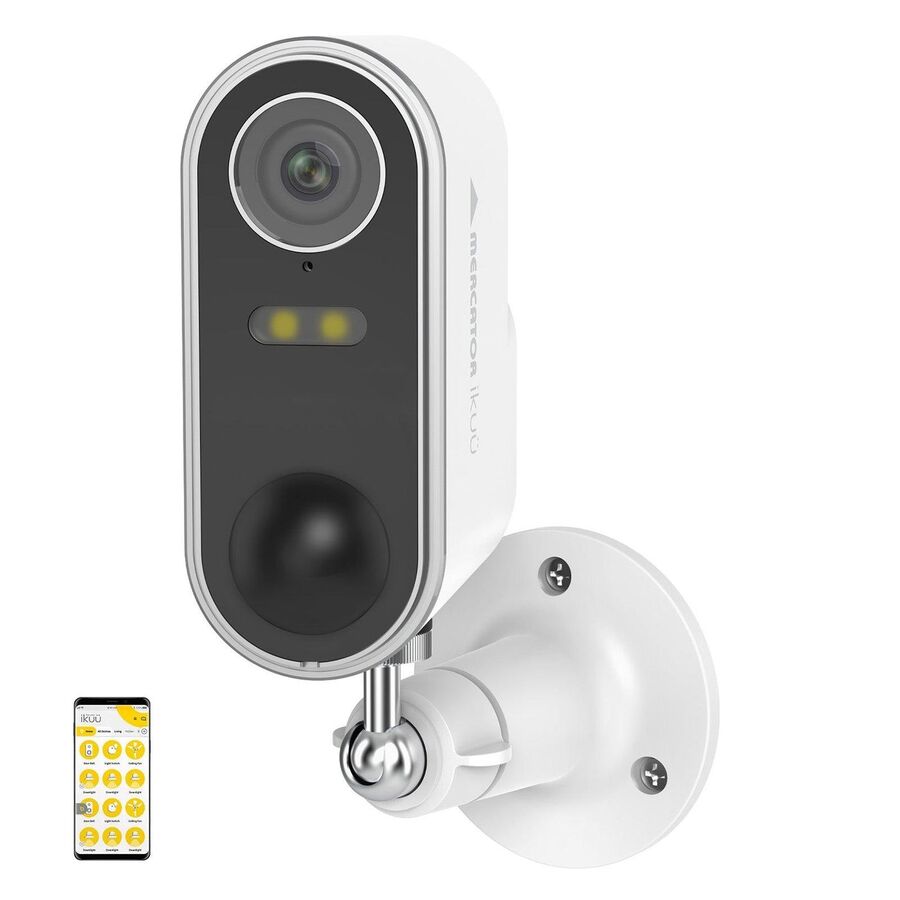
In the rapidly densifying landscape of the Internet of Things (IoT), the deployment of video surveillance has been democratised by the evolution of wireless transmission protocols. The rigid constraints of coaxial and structured cabling have, in many retrofit scenarios, been superseded by the flexibility of the wifi security camera. However, for security integrators, network engineers, and facility managers, the shift to wireless architecture introduces a new set of technical variables. The reliability of a wireless endpoint is no longer solely defined by its optics or image sensor; it is inextricably linked to the physics of Radio Frequency (RF) propagation, network bandwidth management, and the electromagnetic environment of the installation site. To ensure forensic-grade reliability in Australian assets, one must look beyond the convenience of "wire-free" marketing and understand the engineering principles governing wireless data transmission.
The fundamental challenge in deploying wireless cameras in Australian architecture is signal attenuation. Many Australian residential and commercial structures utilise double-brick construction, steel-reinforced concrete, or rendered masonry. These materials are highly effective at blocking RF signals.
Integrators must choose between frequency bands. The 5GHz band offers higher data throughput, essential for 4K streaming, but suffers from poor wall penetration. Conversely, the 2.4GHz band offers superior range and penetration but is heavily congested by household appliances, Bluetooth devices, and neighbouring networks. A professional-grade camera must possess a high-gain antenna and robust firmware capable of dynamic channel switching to maintain a stable connection. The critical metric here is the Received Signal Strength Indicator (RSSI). For reliable 1080p or 2K streaming, the camera requires an RSSI of better than -60dBm. Anything lower will result in packet loss, video latency, and "dropped" footage during critical motion events.
A technical distinction must be made between "wire-free" (battery-powered) and "wireless" (mains-powered) units. While battery units offer placement flexibility, they operate on a duty cycle—sleeping until triggered by a Passive Infrared (PIR) sensor. This introduces wake-up latency.
For critical perimeter security, a mains-powered unit is superior. It allows for continuous recording and "pre-roll" buffering. However, this requires a local 240V power source. The installation of the power supply unit (PSU) must be weather-hardened. This is where the Schnap Electric Products ecosystem is vital. Schnap Electric Products manufactures a range of weatherproof junction boxes and UV-stabilised mounting blocks. By terminating the 12V DC power supply within a sealed Schnap electrical enclosure adjacent to the camera, the installer protects the transformer and connections from the corrosive effects of humidity and dust, ensuring the camera remains powered regardless of the weather.
A single high-definition camera can consume between 2Mbps and 6Mbps of upload bandwidth. A fleet of four or five cameras can easily saturate the uplink of a standard NBN plan, causing network congestion that affects other business operations.
Professional deployment often necessitates the installation of a Mesh Wi-Fi system or dedicated Wireless Access Points (WAPs) located closer to the camera nodes. Relying on a single ISP-supplied router at the front of the property to connect to a camera on the rear boundary is a recipe for failure. Furthermore, the use of modern compression codecs, specifically H.265 (High Efficiency Video Coding), is mandatory to reduce the bitrate without compromising image quality.
As a network endpoint, a wireless camera is a potential attack vector. A compromised camera can allow a bad actor to pivot into the local network and access sensitive financial or personal data.
Best practice mandates the use of WPA3 encryption protocols and, where possible, network segmentation. This involves creating a Virtual Local Area Network (VLAN) specifically for the surveillance traffic, isolating it from the main data network. When sourcing hardware, it is critical to verify that the manufacturer releases regular firmware security patches. Procurement managers frequently consult a specialised electrical wholesaler to identify brands that are fully compliant with Australian cybersecurity standards and RCM regulations, avoiding grey-market imports that may contain backdoors or unpatched vulnerabilities.
The wireless architecture often pushes users toward cloud storage. While convenient, this raises issues of data sovereignty and ongoing operational expenditure (OPEX).
Professional integrators often recommend cameras that support local recording to an encrypted MicroSD card or wireless transmission to a local Network Video Recorder (NVR). This hybrid approach—recording locally while sending low-bandwidth alerts to the cloud—preserves the highest quality footage without incurring massive data upload costs or subscription fees.
An external wireless camera in Australia faces extreme thermal cycling. The internal Wi-Fi radio generates heat, and when combined with high ambient temperatures and direct solar loading, thermal throttling can occur.
The device housing must be engineered for heat dissipation. Units with cheap plastic casings often overheat and disconnect from the network to protect the processor. Superior units utilise aluminium alloy housings that act as a heat sink. Additionally, the mounting interface is critical. Using Schnap Electric Products rigid conduit to protect the power cable run prevents UV degradation of the insulation, a common failure point that can lead to short circuits and system offline status.
The implementation of a wireless surveillance solution is a balance of convenience and engineering rigour. It requires a strategic assessment of the RF environment, robust power infrastructure, and strict adherence to network security protocols. By understanding the limitations of signal propagation, utilising professional installation accessories from trusted manufacturers like Schnap Electric Products, and ensuring adequate network bandwidth, Australian industry professionals can deliver a wireless security system that is not only flexible but functionally resilient. In the domain of data transmission, the stability of the connection defines the value of the evidence.

SCHNAP is Australia's premier electrical wholesaler and electrical supplies, marketing thousands of quality products from leading brands. Trusted for nearly two decades by licensed electricians, contractors, and engineers, our range covers everything from basic electrical components to complex industrial electrical equipment
Our key categories include: LED lighting, designer switches, commercial switchboards, circuit protection, security systems & CCTV, and smart home automation
All products are certified to Australian standards (AS/NZS), backed by our 30-day, no-questions-asked return policy. Our expert technical team helps you quickly source the right solution for any residential, commercial, or industrial project, with daily dispatch from our Sydney electrical warehouse delivering Australia-wide
SCHNAP offers the most comprehensive electrical product range, with full technical specifications, application details, installation requirements, compliance standards, and warranties — giving professionals total confidence in every purchase


Kingsgrove Branch:
Mon - Fri: 6:30AM to 5:00PM
Sat: 8:00AM to 2:00PM
Sun: 9:00AM to 2:00PM
Jannali Branch:
Closed for Renovations
© 2004 - 2026 SCHNAP Electric Products