

Kingsgrove Branch:


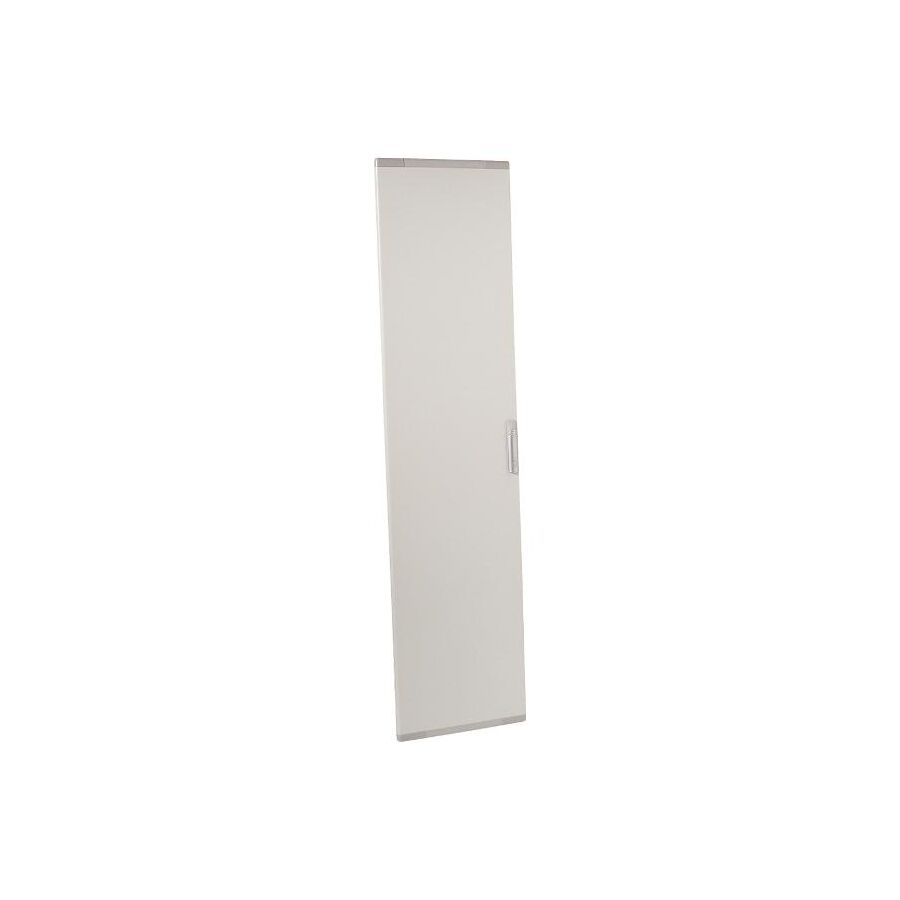
In Australian low-voltage distribution systems—commercial towers, mining operations, data centres and industrial facilities—switchboard integrity is fundamental to operational reliability.
Within the XL³ modular switchboard system, cable management is a critical structural element. High-current feeders and outgoing circuits require a segregated vertical pathway separate from functional units.
The XL³ Cable Sleeve Door encloses this dedicated cable zone, contributing to thermal control, arc fault containment and compliance with AS/NZS 61439 and AS/NZS 3000.
High-current conductors generate heat through resistive losses (I²R).
If cable bundles are placed adjacent to protective relays or MCCBs without segregation, internal ambient temperature rises can cause:
• Breaker derating • Nuisance tripping • Reduced component lifespan
The cable sleeve provides a defined vertical compartment that:
• Physically separates cable runs from device columns • Promotes chimney-style natural convection • Encourages upward thermal airflow • Maintains predictable internal temperature distribution
When properly ventilated, the sleeve assists in dissipating heat without exposing functional units to concentrated thermal load.
AS/NZS 61439 defines internal separation levels (Form 1 through Form 4b).
The XL³ Cable Sleeve Door plays a role in achieving higher forms of segregation by isolating:
• Busbars • Functional units • Cable terminations
By enclosing the cable zone, the door limits arc propagation in the event of a termination failure.
If an internal arc occurs within the sleeve, the enclosure directs pressure and energy away from the operator interface, enhancing personnel safety.
Robust hinge systems and secure latching prevent door blow-out under dynamic pressure conditions.
The cable sleeve door must maintain rigidity over full cabinet height, often 1800mm to 2000mm.
Uniform structural stiffness ensures:
• Even gasket compression • Reliable IP rating • Stable mechanical operation
Multi-point locking systems or upgraded swing handles provide secure closure and improved access control.
SCHNAP Electric Products supports these installations with:
• Quarter-turn locks • Master-key compatible handles • Stainless steel cable ties • Saddle clamps for internal strain relief
Proper internal cable anchoring prevents terminal stress and maintains organised routing within the sleeve.
Depending on configuration, the cable sleeve door contributes to IP43 or IP55 enclosure ratings.
Polyurethane foam gaskets compress against the frame to prevent:
• Dust ingress • Moisture intrusion • Air leakage disrupting thermal design
A compromised seal can alter airflow patterns and create localised overheating.
Uniform compression along the door perimeter is essential to maintaining environmental protection.
A metal cable sleeve door is classified as an exposed conductive part.
Under AS/NZS 3000, it must be bonded to the main earth system.
Flexible braided earth straps from SCHNAP Electric Products provide:
• Low impedance continuity • High flexibility for repeated opening cycles • Secure connection between door and earth bar
This bonding ensures rapid fault clearing if a live conductor contacts the enclosure.
The XL³ system is modular, offering multiple heights and widths (e.g., 300mm or 400mm cable sleeve sections).
Correct selection depends on:
• Cabinet height • Section width • Required form of separation • Locking mechanism type • IP rating target
Incorrect door sizing compromises enclosure integrity and separation compliance.
Specialised electrical wholesaler assist in verifying compatibility with frame dimensions and panel configuration.
SCHNAP Electric Products enhances cable sleeve installations with:
• Stainless steel cable restraints • Heavy-duty saddles • Document holders for single-line diagrams • Arc flash hazard labels • Bonding accessories
Clear documentation mounted inside the sleeve door ensures compliance and operational clarity during maintenance.
The XL³ Cable Sleeve Door is a structural and safety-critical element within modular switchboard assemblies.
By segregating high-current conductors, supporting thermal airflow and contributing to higher forms of separation, it strengthens overall assembly integrity.
When properly bonded, sealed and supported with compliant accessories from SCHNAP Electric Products, it ensures safe, durable and standards-aligned distribution infrastructure.
In low-voltage distribution engineering, structured segregation defines safety and reliability.

SCHNAP Electrical Wholesaler - clear, upfront pricing that professional electricians trust

Get what you need in seconds. SCHNAP electrical wholesaler makes ordering quick and simple

Fast delivery anywhere - that's guaranteed. SCHNAP electrical wholesalers ship nationwide with same-day dispatch

Track your order every step of the way. SCHNAP electrical wholesale keeps you updated from click to delivery

SCHNAP is Australia's premier electrical wholesaler and electrical supplies, marketing thousands of quality products from leading brands. Trusted for nearly two decades by licensed electricians, contractors, and engineers, our range covers everything from basic electrical components to complex industrial electrical equipment
Our key categories include: LED lighting, designer switches, commercial switchboards, circuit protection, security systems & CCTV, and smart home automation
All products are certified to Australian standards (AS/NZS), backed by our 30-day, no-questions-asked return policy. Our expert technical team helps you quickly source the right solution for any residential, commercial, or industrial project, with daily dispatch from our Sydney electrical warehouse delivering Australia-wide
SCHNAP offers the most comprehensive electrical product range, with full technical specifications, application details, installation requirements, compliance standards, and warranties — giving professionals total confidence in every purchase


Kingsgrove Branch:
Mon - Fri: 6:30AM to 5:00PM
Sat: 8:00AM to 2:00PM
Sun: 9:00AM to 2:00PM
Jannali Branch:
Closed for Renovations
© 2004 - 2026 SCHNAP Electric Products