



Kingsgrove Branch:


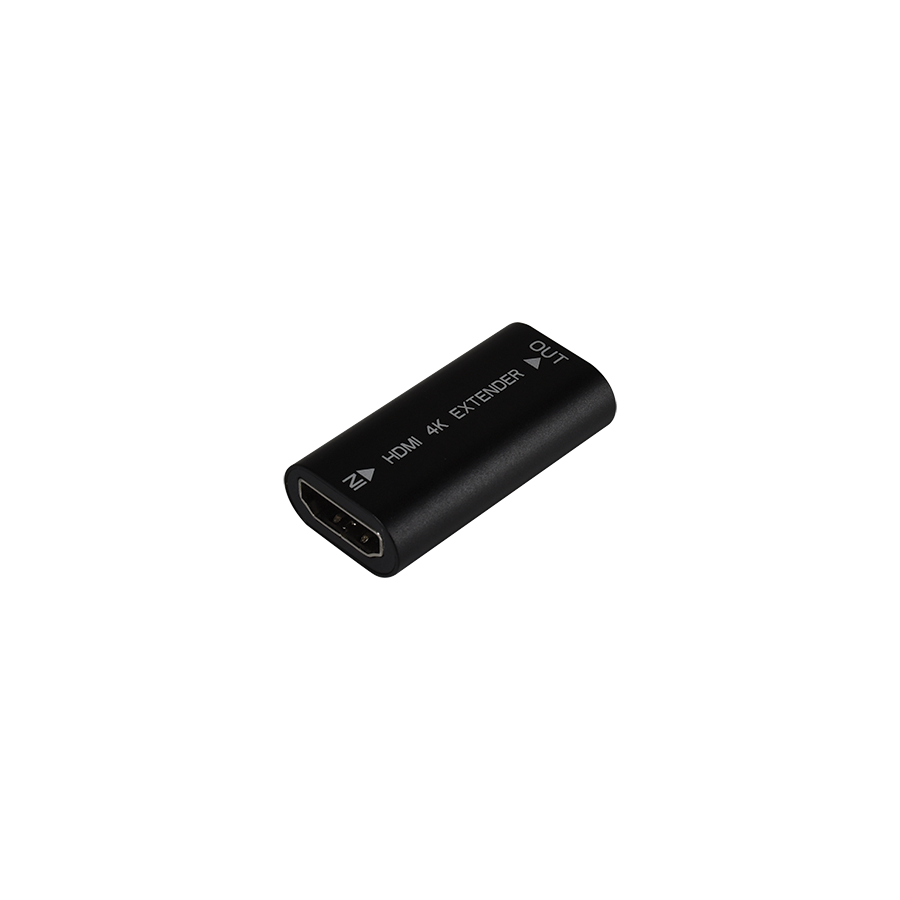
In the contemporary Australian commercial audiovisual environment, the move from Full HD to Ultra High Definition has transformed expectations while simultaneously exposing the physical limits of copper-based signal transmission. From corporate boardrooms and university lecture halls to medical imaging suites and high-impact digital signage, 4K resolution is now considered a baseline requirement rather than a premium feature. This uplift in image quality, however, demands exponentially more bandwidth. A 4K signal at 60Hz with full 4:4:4 chroma subsampling requires up to 18Gbps of continuous data throughput. At these frequencies, standard HDMI cabling encounters severe attenuation, timing distortion, and voltage loss.
As a result, even high-quality passive HDMI cables frequently fail beyond 5 to 7 metres, producing the familiar symptoms of pixel drop-out, flicker, or total loss of sync. Where HDBaseT or fibre optic systems are unnecessary or cost-prohibitive, the professional engineering solution is the 4K HDMI Repeater. This compact yet sophisticated device actively regenerates the HDMI signal, restoring integrity and extending usable cable distance without compression or latency.
HDMI transmission relies on Transition Minimized Differential Signaling. TMDS is designed to reduce electromagnetic emissions and improve noise immunity, but it is still subject to the fundamental laws of electrical transmission. As signal frequency increases, copper conductors exhibit greater resistance and dielectric loss. Over distance, this causes amplitude reduction and timing instability, commonly referred to as jitter.
In an ideal system, digital data appears as a clean square wave. Over long cable runs, the sharp transitions between logical states become rounded, narrowing the “eye diagram” at the receiver. When the eye closes beyond tolerance, the display can no longer reliably distinguish between binary states. A passive coupler merely adds resistance and capacitance, accelerating failure.
A 4K HDMI repeater actively intervenes in this process. It samples the degraded TMDS stream, equalises high-frequency losses, and re-clocks the data using an internal timing reference. This regeneration process restores full signal amplitude and timing accuracy before transmitting a new, clean output signal. In practical terms, the repeater resets the transmission distance, allowing two long cable segments to behave like two independent short runs.
Beyond data, HDMI includes a 5V power line used to support EDID communication and display detection. Over extended cable lengths, voltage drop becomes significant, particularly when using compact source devices with limited power output. If the voltage at the display falls below operational threshold, the HDMI handshake fails and the screen remains blank.
Professional 4K HDMI repeaters address this weakness through external power injection. Typically supplied via a micro-USB or DC input, this auxiliary power source stabilises the 5V rail independently of the source device. This design is especially important in modern installations where laptops, tablets, or USB-C docks act as HDMI sources. The repeater isolates the system from weak source power and ensures consistent device recognition.
Modern 4K content delivery is governed by HDCP 2.2 encryption. This protocol requires continuous authentication between the source, any intermediate devices, and the display. A repeater functions as an active node within this encrypted chain. If it fails to manage authentication correctly, the source will deliberately block video output.
Professional repeaters are engineered with dedicated HDCP engines that manage upstream and downstream authentication simultaneously. They maintain key exchange stability, prevent handshake timeouts, and ensure encrypted content passes transparently without added latency. This capability is critical for commercial signage, broadcast feeds, and protected media playback where content failure is unacceptable.
Not all 4K signals are equal. Many low-cost devices advertise “4K support” while only handling HDMI 1.4 bandwidth, limited to 4K at 30Hz. Modern AV systems routinely require HDMI 2.0 performance, delivering 18Gbps throughput to support 4K60, HDR10, and extended colour depth.
A properly specified 4K HDMI repeater must explicitly support 18Gbps data rates. This bandwidth ensures that High Dynamic Range metadata, expanded colour space, and fast refresh rates are preserved end-to-end. Under-rated repeaters often down-sample chroma or strip HDR data, producing dull images that undermine the purpose of a 4K deployment.
Repeaters are commonly installed in ceiling cavities, floor boxes, lecterns, or wall recesses. These environments expose devices to vibration, temperature variation, and mechanical strain from long cable runs. Without proper support, the weight of HDMI cables can stress connector ports, leading to intermittent failures.
This is where installation infrastructure becomes as important as electronics. High-quality cabling and mounting accessories ensure the repeater remains mechanically stable. The use of robust HDMI cables with thicker copper conductors is essential, as the repeater cannot recover a signal that has already collapsed due to poor cable quality.
This is also where Schnap Electric Products commonly integrates into commercial AV systems. Their high-speed HDMI cables, mounting accessories, and cable management solutions are designed to maintain signal integrity while providing physical protection. Proper strain relief, secure mounting, and controlled bend radius all contribute to long-term reliability.
In a typical deployment, a 4K HDMI repeater allows two 10-metre or two 15-metre HDMI cables to be joined reliably, extending total distance to 20 or 30 metres depending on cable quality and signal format. This approach is ideal for boardrooms, classrooms, and signage where the source rack must remain centralised while displays are distributed across large spaces.
The repeater introduces no compression and no perceptible latency, making it suitable for real-time applications such as medical imaging, live presentations, and interactive systems.
The market contains many low-cost HDMI boosters that lack proper equalisation, external power options, or HDCP stability. These devices often work briefly during testing but fail under continuous operation, leading to costly call-backs and reputational damage.
Professional AV integrators procure repeaters through electrical wholesaler who validate compliance with Australian safety standards and confirm true 18Gbps capability. These suppliers also provide compatible power supplies, mounting hardware, and supporting cabling, enabling complete and dependable system delivery.
The 4K HDMI repeater is a critical enabler of modern high-resolution AV design. It overcomes the physical limitations of copper transmission by actively regenerating the TMDS signal, stabilising voltage delivery, and preserving content security. When combined with correctly specified cabling, external power support, and quality installation hardware from manufacturers such as Schnap Electric Products, it allows Australian industry professionals to deliver flawless 4K experiences well beyond the reach of passive HDMI cables. In the science of digital transmission, regeneration is what transforms distance from a limitation into a design choice.

SCHNAP is Australia's premier electrical wholesaler and electrical supplies, marketing thousands of quality products from leading brands. Trusted for nearly two decades by licensed electricians, contractors, and engineers, our range covers everything from basic electrical components to complex industrial electrical equipment
Our key categories include: LED lighting, designer switches, commercial switchboards, circuit protection, security systems & CCTV, and smart home automation
All products are certified to Australian standards (AS/NZS), backed by our 30-day, no-questions-asked return policy. Our expert technical team helps you quickly source the right solution for any residential, commercial, or industrial project, with daily dispatch from our Sydney electrical warehouse delivering Australia-wide
SCHNAP offers the most comprehensive electrical product range, with full technical specifications, application details, installation requirements, compliance standards, and warranties — giving professionals total confidence in every purchase


Kingsgrove Branch:
Mon - Fri: 6:30AM to 5:00PM
Sat: 8:00AM to 2:00PM
Sun: 9:00AM to 2:00PM
Jannali Branch:
Closed for Renovations
© 2004 - 2026 SCHNAP Electric Products