

Kingsgrove Branch:


Send us a photo and our team will help identify it.

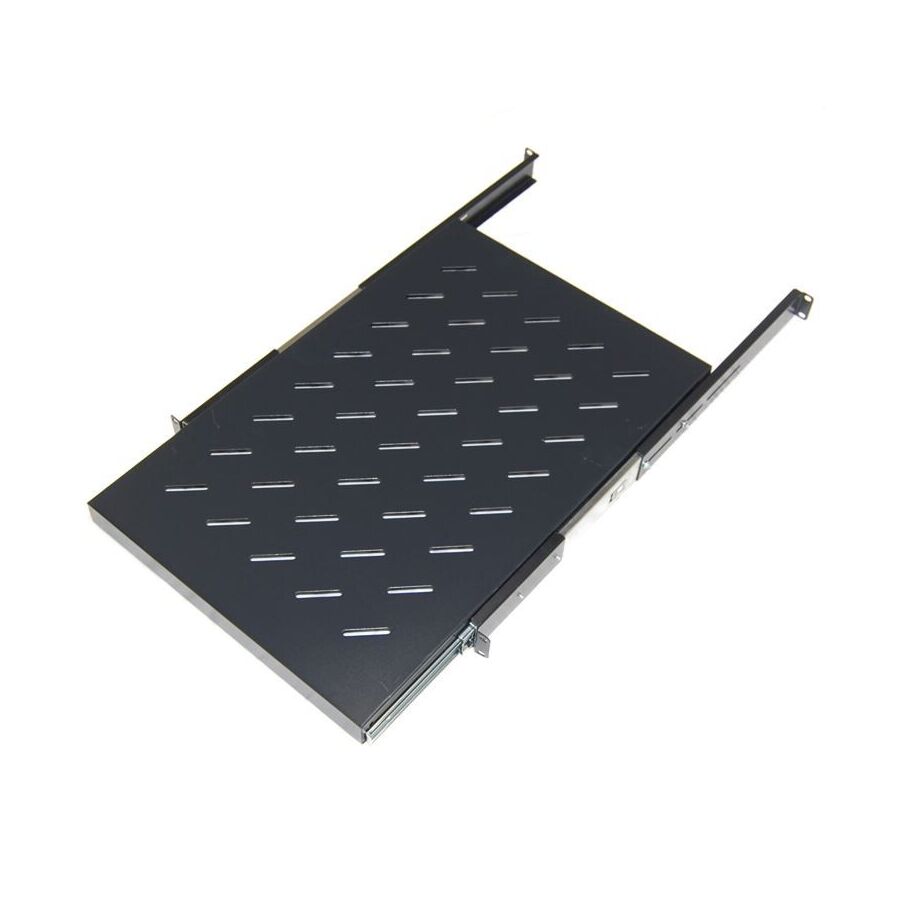
Across Australia’s digital infrastructure landscape, the 19 inch server rack is the universal standard. From hyperscale data centres in Sydney to mining telemetry huts in regional Western Australia, equipment is organised vertically using defined rack units or “U” space.
Most enterprise hardware is designed with rack-mount ears. Servers, switches, UPS units and patch panels bolt directly to front rails. However, not every device fits this format. Diagnostic laptops, test instruments, modems, AV equipment and local consoles require a secure horizontal platform.
The sliding rack shelf is the engineering solution that integrates non-rack-mount equipment into a structured cabinet environment. It provides a stable surface that can extend outward for access, while preserving rack integrity, airflow, and safety compliance.
This is not simply a tray. It is a mechanical system designed to support dynamic loads and technician interaction in confined environments.
The key difference between a fixed shelf and a sliding rack shelf lies in load behaviour. A fixed shelf supports static weight within the rack footprint. A sliding shelf must support weight while extended beyond the front rails.
When a technician pulls the shelf forward, the centre of gravity shifts outward. This creates a bending moment on the mounting rails. Poorly designed shelves sag, twist, or bind under load.
Professional sliding rack shelves use heavy duty ball bearing telescopic slides made from cold rolled steel. These slides are engineered for smooth travel under load. The ball bearings reduce friction while maintaining lateral stability.
Load ratings typically range from 45 kilograms to over 100 kilograms depending on design. Verified load capacity is critical, especially when supporting industrial PCs or heavy diagnostic tools.
High quality shelves also include a lock-out or detent mechanism. When fully extended, the shelf locks in position. This prevents unintended retraction while typing, configuring equipment, or terminating cables.
This feature improves technician safety and reduces strain, aligning with workplace ergonomic standards.
Server racks rely on controlled airflow. Introducing a solid horizontal plate can obstruct vertical cooling paths.
To address this, professional sliding shelves are perforated. Slots or hexagonal cut-outs are machined into the base. This maintains structural strength while allowing air to pass through.
Perforation patterns are carefully designed. Too many openings weaken the tray. Too few restrict airflow. The goal is balance.
In passive cooled devices such as routers or AV equipment, maintaining airflow is essential to prevent overheating. In hot Australian climates, thermal management becomes even more critical.
Perforated sliding rack shelves support cabinet airflow strategies without compromising equipment stability.
The mechanical movement of a sliding shelf introduces a new challenge. Equipment on the tray requires power and data cables. If unmanaged, these cables can snag, stretch, or disconnect during extension.
This is why cable management arms are strongly recommended. A cable management arm, or CMA, attaches to the rear of the sliding shelf. It guides cables in a controlled arc as the shelf moves in and out.
The articulated arm prevents excessive bend radius on Cat6 or fibre leads. It also protects power cords from abrasion against metal rails.
Installation often incorporates accessories from Schnap Electric Products. Hook and loop cable ties secure cable bundles to the arm. Braided sleeving or spiral wrap protects moving cables from wear.
Effective cable management ensures operational reliability while preserving port integrity on sensitive networking hardware.
Adjustable Mounting and 4 Post Stability
Sliding rack shelves differ from cantilever shelves in one important way. They must be mounted to both front and rear rails.
Because the shelf extends outward, relying on front rails alone would compromise stability. The rear brackets absorb the leverage created during extension.
Australian rack depths typically range from 600mm to 1200mm. Adjustable rear mounting brackets allow the shelf to fit different cabinet depths. Telescopic bracket ears extend to match the rack dimension.
Accurate alignment is critical. Even minor discrepancies between front and rear rail spacing can cause binding in the ball bearing slides. Proper installation ensures smooth travel and long service life.
Four-post mounting distributes load evenly and protects the rack structure from distortion.
In IT environments, electrostatic discharge poses a risk to sensitive electronics. A moving metal component such as a sliding rack shelf can accumulate static charge.
To mitigate this, quality shelves include a dedicated earthing stud. This stud is bonded to the rack earth bar using a flexible braided earth strap.
The braid accommodates movement without stressing the connection. Star washers are used to ensure proper metal-to-metal contact.
Maintaining earth continuity complies with AS/NZS 3000 and reduces ESD risk within data cabinets.
Not all sliding rack shelves are built for industrial use. Light duty consumer units may be suitable for AV cupboards but are not designed for enterprise environments.
Heavy gauge steel construction improves rigidity. Reinforced slide rails reduce flex under load. Powder coated finishes protect against corrosion in humid environments.
Verified load testing and compliance with EIA-310 mounting standards ensure compatibility with standard 19 inch racks.
Choosing a properly rated sliding rack shelf prevents structural failure and extends equipment lifespan.
The market includes many shelves labelled as “server grade” without verified load ratings. Selecting the correct product is essential.
Specialised electrical provide shelves designed for telecommunications and data environments. They ensure compatibility with cage nut systems and standard rail spacing.
Installers often combine shelves with blanking panels to maintain airflow pressure within the cabinet. This supports efficient cooling and rack thermal balance.
Sourcing through professional channels ensures product quality, correct fitment, and compliance with infrastructure standards.
The sliding rack shelf transforms a static cabinet into a functional workspace. It allows technicians to access, configure, and maintain equipment safely within a structured rack environment.
By focusing on heavy duty ball bearing slides, proper load distribution, airflow management, and disciplined cable routing, it supports both operational efficiency and safety.
In Australian data centres, mining telemetry cabinets, and communications rooms, controlled access is essential. A well specified sliding rack shelf delivers stability, ergonomics, and long term reliability.
In the science of infrastructure, accessibility is not a luxury. It is a requirement.

SCHNAP Electrical Wholesaler - clear, upfront pricing that professional electricians trust

Get what you need in seconds. SCHNAP electrical wholesaler makes ordering quick and simple

Fast delivery anywhere - that's guaranteed. SCHNAP electrical wholesalers ship nationwide with same-day dispatch

Track your order every step of the way. SCHNAP electrical wholesale keeps you updated from click to delivery

SCHNAP is Australia's premier electrical wholesaler and electrical supplies, marketing thousands of quality products from leading brands. Trusted for nearly two decades by licensed electricians, contractors, and engineers, our range covers everything from basic electrical components to complex industrial electrical equipment
Our key categories include: LED lighting, designer switches, commercial switchboards, circuit protection, security systems & CCTV, and smart home automation
All products are certified to Australian standards (AS/NZS), backed by our 30-day, no-questions-asked return policy. Our expert technical team helps you quickly source the right solution for any residential, commercial, or industrial project, with daily dispatch from our Sydney electrical warehouse delivering Australia-wide
SCHNAP offers the most comprehensive electrical product range, with full technical specifications, application details, installation requirements, compliance standards, and warranties — giving professionals total confidence in every purchase


Kingsgrove Branch:
Opening hours:
Mon - Fri: 6:30 AM to 5 PM
Saturday: 8:00 AM to 2:00 PM
Sunday: 9:00 AM to 2:00 PM
Closed on public holidays
Jannali Branch:
Closed for Renovations
© 2004 - 2026 SCHNAP Electric Products