

Kingsgrove Branch:


Send us a photo and our team will help identify it.

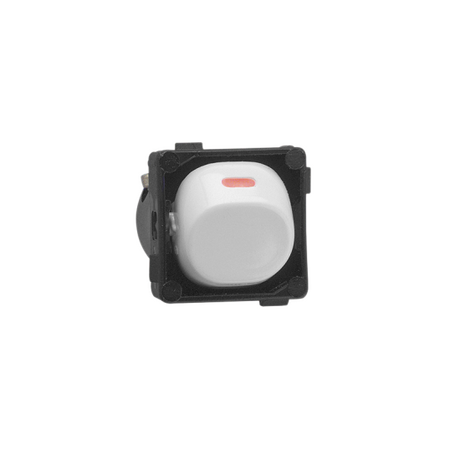
A hallway light switch that's gone stiff, sparky, or stopped clicking properly isn't always a job for a whole new plate — nine times out of ten it's just the mechanism underneath that's died, and the plate on the wall is perfectly fine to keep. The tricky part isn't the swap itself. It's working out which replacement mechanism actually fits the plate that's already screwed into the wall.
Before pulling a mechanism out, it's worth ruling out the obvious impostor. A switch that buzzes, flickers the light, or only half-works on dimmer circuits often gets blamed on the switch mechanism when the real fault is an incompatible dimmer controller — worth a quick check against picking the right controller for flickering LED dimmers before you assume the mechanism itself is the problem. If the switch is a straight on/off (not a dimmer) and it's gone loose in the toggle, doesn't click positively, or has visibly darkened/melted terminals, that's a genuine mechanism failure and it's time to replace it.
[!] Before you isolate anything: switching out a light switch mechanism is fixed wiring work. In most Australian states this needs to be done, or at minimum signed off, by a licensed electrician — it's not a DIY job for an unlicensed homeowner, regardless of how simple the swap looks.
This is where most replacement jobs go sideways. Switch mechs aren't universal — each plate series is built around a specific mechanism footprint, and mixing brands is hit and miss even when the mechanism looks close enough by eye. A Clipsal 30 Series plate takes a Clipsal 30 Series mechanism (snap-in, rectangular base). Legrand runs three separate plate families — Como, Excel and Vivo — and a mechanism from one doesn't drop into another despite looking superficially similar. HPM's 770 module system uses its own mounting pattern entirely, and Hager's Allure and Rotoloc ranges are their own thing again.
| Plate Series | What to Look For | Compatible Mechanism |
|---|---|---|
| Clipsal 30 Series | Rectangular snap-in mechanism, moulded plastic clips on the back | Clipsal 30 Series mechanisms only |
| Legrand Como / Excel / Vivo | Check which of the three families is stamped or moulded on the mechanism back — they're not interchangeable with each other | Same family only (Como to Como, Excel to Excel, Vivo to Vivo) |
| HPM 770 module | Wide, flat rocker module design distinct from Clipsal/Legrand mechanisms | HPM 770 series modules only |
| Hager Allure / Rotoloc | Flush-mount mechanism with Hager's own clip system | Hager Allure/Rotoloc mechanisms only |
If there's no visible brand marking on the old mechanism, the plate itself is usually the giveaway — check the fixing screw spacing and the shape of the mounting lugs, since these are what actually determine fit, not just brand name recognition.
Related Reading
Once the right mechanism is confirmed, the swap itself is straightforward. Isolate the circuit at the switchboard and confirm dead with a voltage tester before touching anything — don't rely on the light being off as proof the circuit is de-energised. Remove the two fixing screws holding the plate to the wall box, gently ease the mechanism out, and take a photo of the terminal wiring before disturbing it. Most single-gang switches only have two or three conductors (active in, active out, sometimes a loop for 2-way circuits), but getting them mixed up on reassembly is the single most common mistake on this job. Loosen the terminal screws, transfer each conductor to the matching terminal on the new mechanism, and torque the screws down firmly — a loose terminal here is what causes the buzzing and heat damage that brings people back to this job a second time.
Screw the new mechanism back into the existing plate, check it seats flush without gaps, then restore power and test before closing everything up. If the switch turns out to be part of a multi-point circuit rather than a straightforward single-pole setup, the wiring at the terminals will look different from what's described above and needs its own approach.
Buying by plate colour instead of mechanism series. A white Clipsal plate and a white Legrand plate look nearly identical on the wall, but the mechanisms behind them aren't interchangeable — colour tells you nothing about fit.
Assuming a higher amp rating always fits. A 16A mechanism isn't automatically a drop-in replacement for a 10A one from the same brand — physical footprint can differ between rating tiers within the same series.
Not checking the pole count before buying. A single-pole mechanism and a 2-way mechanism can look almost identical from the front, but wiring them into the wrong circuit either won't work or will leave a terminal live when it shouldn't be.
Skipping the terminal torque check. A mechanism that's mechanically fine but loosely terminated will run warm, discolour the terminal housing, and eventually fail again within months — it's a common callback cause.
Reusing a damaged plate on a new mechanism. If the old plate's mounting lugs are cracked or the fixing screw holes have stripped out, the new mechanism won't seat properly no matter how good the mechanism itself is.
Can I replace just the switch mechanism without buying a new plate?
Yes, in most cases — as long as the plate itself isn't cracked or damaged and you buy a mechanism from the same series, for example a 10A Clipsal 30 Series mechanism for an existing Clipsal 30 Series plate.
Why does a new switch mechanism feel stiffer than the old one?
Brand new mechanisms typically have a firmer, more positive click than a switch that's been operated thousands of times — this usually settles in within the first few weeks of normal use and isn't a fault.
Can I mix brands, like putting a Legrand mechanism into a Clipsal 30 Series plate?
Not reliably. The mounting lugs, fixing screw spacing and mechanism footprint differ enough between brands that a cross-brand fit is generally not possible, even when the mechanisms look visually similar.
What mechanism fits an HPM 770 module plate?
HPM 770 module plates need a mechanism from the same 770 range, such as the HPM 770 series rocker switch mechanism — the module footprint doesn't match Clipsal or Legrand mounting systems.
Do I need a licensed electrician to replace a switch mechanism in NSW?
Yes. Replacing a switch mechanism involves working on fixed wiring, which in NSW and most other Australian states requires the work to be carried out or supervised by a licensed electrician — it's not classed as a general DIY task.
Is a 2-way switch mechanism the same as an intermediate switch?
No — a 2-way mechanism like this Connected Switchgear slimline unit controls a light from two points, while an intermediate switch sits between two 2-way switches to add a third (or more) control point — they're wired differently and aren't interchangeable in a circuit.
Related Reading
Trade pricing on switch mechs across all the major plate series, dispatched same day from Kingsgrove NSW.
Find the full switch replacement mechanism range at Schnap — trade pricing and same-day dispatch from Kingsgrove NSW.

SCHNAP Electrical Wholesaler - clear, upfront pricing that professional electricians trust

Get what you need in seconds. SCHNAP electrical wholesaler makes ordering quick and simple

Fast delivery anywhere - that's guaranteed. SCHNAP electrical wholesalers ship nationwide with same-day dispatch

Track your order every step of the way. SCHNAP electrical wholesale keeps you updated from click to delivery

SCHNAP is Australia's premier electrical wholesaler and electrical supplies, marketing thousands of quality products from leading brands. Trusted for nearly two decades by licensed electricians, contractors, and engineers, our range covers everything from basic electrical components to complex industrial electrical equipment
Our key categories include: LED lighting, designer switches, commercial switchboards, circuit protection, security systems & CCTV, and smart home automation
All products are certified to Australian standards (AS/NZS), backed by our 30-day, no-questions-asked return policy. Our expert technical team helps you quickly source the right solution for any residential, commercial, or industrial project, with daily dispatch from our Sydney electrical warehouse delivering Australia-wide
SCHNAP offers the most comprehensive electrical product range, with full technical specifications, application details, installation requirements, compliance standards, and warranties — giving professionals total confidence in every purchase


Kingsgrove Branch:
Opening hours:
Mon - Fri: 6:30 AM to 5 PM
Saturday: 8:00 AM to 2:00 PM
Sunday: 9:00 AM to 2:00 PM
Closed on public holidays
Jannali Branch:
Closed for Renovations
© 2004 - 2026 SCHNAP Electric Products