

Kingsgrove Branch:


Send us a photo and our team will help identify it.

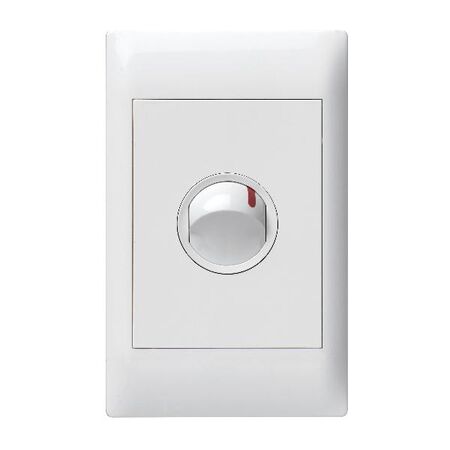
Halfway through wiring a new instantaneous electric hot water circuit for a kitchen reno, a sparky reaches into the van for the usual 10A switch mechanism -- the one that goes in nine jobs out of ten. Then the appliance data plate says otherwise, and it's back to the supplier for something with a bit more headroom.
A switch mechanism isn't just a rocker in a plate -- it's a rated component with a maximum continuous current it can safely make and break, over and over, without the contacts arcing, welding, or degrading early. Fit a mechanism rated below what the circuit actually draws and, in practice, you're looking at premature contact wear, overheating at the terminals, or a switch that simply doesn't survive the load it's asked to control. For general lighting and standard power points this rarely comes up because most stock mechanisms comfortably cover it. It becomes a real decision the moment the circuit is feeding something heavier -- an instantaneous hot water unit, a ducted air conditioner compressor, a workshop machine, or anything else pulling meaningfully more than a light fitting.
The load itself usually isn't hard to find -- it's on the appliance data plate, the circuit design, or the switchboard schedule. The part that trips people up is translating that number into the right switch mechanism off the shelf, especially when the job is moving fast and the habit is to grab whatever's in the kit.
Most switch mechanisms sold for general use in Australia sit somewhere across a fairly predictable spread of ratings, and each one tends to map to a familiar type of circuit. As a general rule, the table below reflects how these ratings are typically applied on the tools -- always cross-check against the actual appliance data plate and circuit design rather than relying on rating alone.
| Rating | Typically Used For |
|---|---|
| 10A | General lighting circuits, low-draw fixtures |
| 15A -- 16A | Heavier lighting loads, small fixed appliances |
| 20A | Standard power circuits, mid-size fixed appliances |
| 32A | Instantaneous hot water units, single-phase workshop equipment |
| 40A | Isolator-tier duty -- ducted AC compressors, larger fixed loads |
Double pole mechanisms are worth calling out separately here too -- double pole isn't a higher rating, it's a different function (breaking both active and neutral rather than just active). A double pole 10A switch mechanism is still a 10A mechanism; it just isolates more completely. Don't assume "double pole" automatically means "handles more current."
Back to the hot water circuit -- once the data plate confirms the higher draw, the fix is simply moving up to a mechanism built for it, like a 32A single-way switch mechanism or, for genuinely heavier fixed loads such as a ducted AC compressor, a 40A isolator-tier mechanism. If the isolation itself needs to break both active and neutral, a double pole bi-lock mechanism covers that at the 16A tier. None of this changes how the mechanism gets fitted -- safely replacing the switch mechanism itself is the same process whether it's a 10A or a 40A unit, the rating is just what you confirm before you start.
Standard power circuits sit comfortably at 20A, covered well by something like a 20A switch mechanism, and for socket-style outlets rather than a switch action, a 10A socket mechanism runs the same rating logic in a different form factor. Every switch mechs range at Schnap covers this full spread, so it's rarely a stock issue -- it's a matter of confirming the number before ordering.
Grabbing whatever's in the kit. The 10A switch mechanism is the default in most vans because it covers the majority of jobs -- but "majority" isn't "all", and a hot water or AC circuit is exactly where that habit catches people out.
Treating double pole as a higher rating. Double pole changes what gets isolated, not how much current the mechanism can carry. A 10A double pole mechanism still needs upgrading if the load calls for 32A.
Ignoring starting current on motor-driven loads. Pool pumps and AC compressors draw meaningfully more on startup than their running current suggests. A mechanism sized purely to the running load, with no allowance for that, is cutting it fine.
Reading the switchboard schedule instead of the actual appliance. Schedules get updated when appliances change; the data plate on the unit in front of you is the number that matters right now.
Skipping the isolation requirement altogether. Fitting a standard switch mechanism where an approved isolator is actually required under AS/NZS 3000 is an easy oversight on a job running to time -- and one that shows up at inspection.
Related Reading
What amp switch do I need for a standard light circuit?
A 10A switch mechanism typically covers standard lighting circuits without issue -- it's the rating fitted in most general lighting applications.
Can I use a 20A switch mechanism for a hot water circuit?
Not usually -- instantaneous electric hot water units commonly draw close to or above what a 20A switch mechanism is rated for. Check the unit's data plate; most installations of this type call for a 32A mechanism.
Do I need a licensed electrician to install a higher-rated isolator switch in NSW?
Yes -- fitting or replacing a switch mechanism on fixed wiring is electrical work and requires a licensed electrician in NSW, regardless of the mechanism's rating.
What rating do I need for a 40A isolator switch mechanism?
A 40A switch mechanism is generally used at the isolator-tier end of the spectrum -- larger fixed loads like ducted air conditioning compressors, where the running and starting current together call for that extra headroom.
For the full range of switch amp rating options and related fittings, see the shop section below.
Related Reading
Trade pricing across every rating below, dispatched same day from Kingsgrove NSW.
Find the full switch amp rating range at Schnap -- trade pricing and same-day dispatch from Kingsgrove NSW.

SCHNAP Electrical Wholesaler - clear, upfront pricing that professional electricians trust

Get what you need in seconds. SCHNAP electrical wholesaler makes ordering quick and simple

Fast delivery anywhere - that's guaranteed. SCHNAP electrical wholesalers ship nationwide with same-day dispatch

Track your order every step of the way. SCHNAP electrical wholesale keeps you updated from click to delivery

SCHNAP is Australia's premier electrical wholesaler and electrical supplies, marketing thousands of quality products from leading brands. Trusted for nearly two decades by licensed electricians, contractors, and engineers, our range covers everything from basic electrical components to complex industrial electrical equipment
Our key categories include: LED lighting, designer switches, commercial switchboards, circuit protection, security systems & CCTV, and smart home automation
All products are certified to Australian standards (AS/NZS), backed by our 30-day, no-questions-asked return policy. Our expert technical team helps you quickly source the right solution for any residential, commercial, or industrial project, with daily dispatch from our Sydney electrical warehouse delivering Australia-wide
SCHNAP offers the most comprehensive electrical product range, with full technical specifications, application details, installation requirements, compliance standards, and warranties — giving professionals total confidence in every purchase


Kingsgrove Branch:
Opening hours:
Mon - Fri: 6:30 AM to 5 PM
Saturday: 8:00 AM to 2:00 PM
Sunday: 9:00 AM to 2:00 PM
Closed on public holidays
Jannali Branch:
Closed for Renovations
© 2004 - 2026 SCHNAP Electric Products