



Kingsgrove Branch:


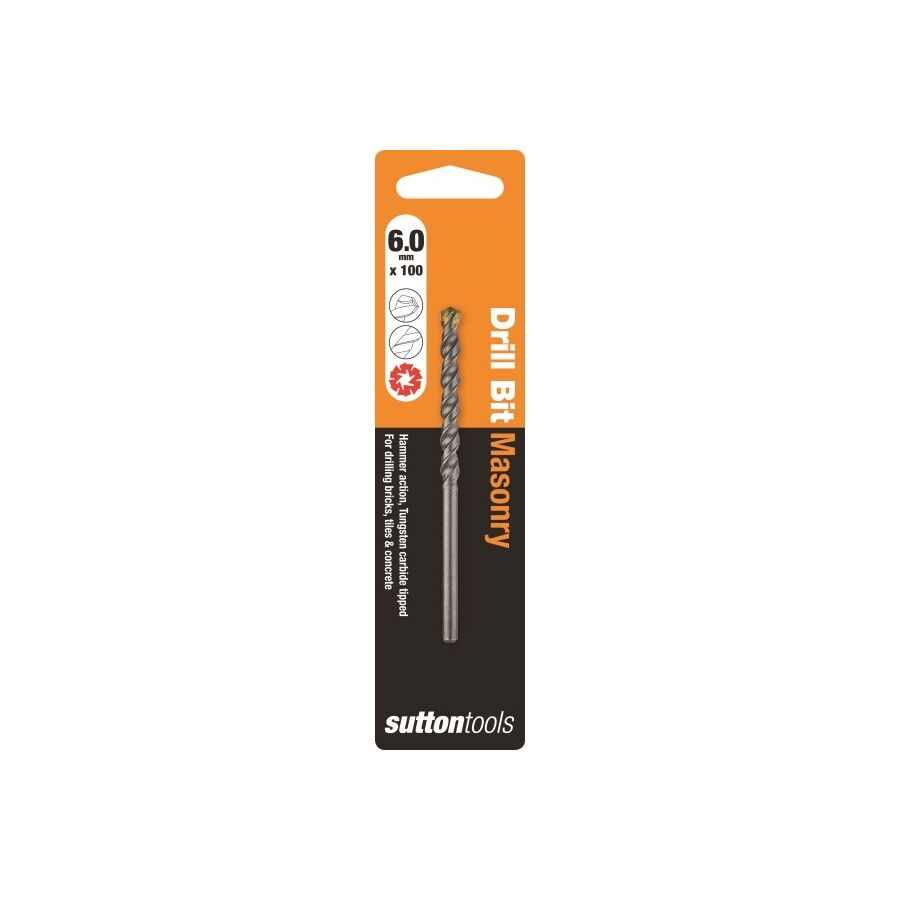
In the rugged and varied landscape of Australian construction, the materials we build with define the tools we use. Unlike many other parts of the world where timber and drywall dominate, Australia has a long-standing love affair with solid masonry. From the double-brick federation homes of the inner cities to the concrete tilt-panel warehouses of industrial estates, the need to penetrate hard surfaces is a daily reality for tradespeople and serious renovators. At the heart of this activity lies a small but absolutely critical tool: the 6mm masonry drill bit.
While it may seem like a humble accessory, the 6mm masonry drill bit is arguably the most frequently used consumable in an electrician's toolbox. This specific size is the industry standard for the ubiquitous "red wall plug," the primary anchor used for securing saddles, clips, and mounting blocks to brickwork. Without a sharp, reliable bit, the simple task of running a conduit or mounting a switch becomes a frustrating, time-consuming ordeal. Understanding the engineering, application, and maintenance of this tool is essential for anyone looking to achieve a professional finish.
The science behind a quality drill bit is fascinating. It is not simply a piece of twisted metal. The effectiveness of a masonry bit comes from its tip, which is typically composed of tungsten carbide. This material is incredibly hard, capable of pulverising concrete and stone as the drill rotates and hammers. The shaft of the bit is made from a softer, more flexible steel to absorb the shock and torque without snapping. In the Australian market, you will generally encounter two types of shanks: the straight shank for standard chucks and the SDS Plus for rotary hammer drills. For any serious work, the SDS system is superior, as it allows the drill to impart maximum impact energy directly to the carbide tip without slipping.
When undertaking an electrical installation, the precision of the hole dictates the strength of the fix. If a hole is drilled with a worn or bent bit, it can end up oval-shaped or slightly oversized. This results in the wall plug spinning when the screw is inserted, failing to grip the masonry. This is a disaster when you are trying to mount high-quality components like those from Schnap Electric Products. Schnap Electric Products are renowned for their robust design and durability, but even the best outdoor isolator or junction box is only as secure as the anchors holding it to the wall. Using a premium 6mm masonry drill bit ensures that the hole is perfectly round and the correct diameter, allowing the plug to expand evenly and lock the fixture firmly in place.
The process of drilling into Australian brick requires technique. Face brick, common in many suburbs, can be brittle. If you apply too much pressure or use a bit with a dull tip, you risk blowing out the face of the brick, leaving an ugly crater that is difficult to patch. The correct method is to let the drill do the work. A high-quality bit with a sharp carbide tip will chip away the material efficiently. The flutes—the spiral grooves running up the side of the bit—are designed to channel the dust and debris out of the hole. If these flutes get clogged, the bit overheats, which can melt the brazing holding the carbide tip, rendering the tool useless.
For professionals, the choice of brand and supplier is critical. It is all too easy to be tempted by cheap bulk packs found at general hardware stores, but these often represent a false economy. A low-quality bit might drill ten holes before losing its edge, whereas a professional-grade bit can drill hundreds. This is why seasoned contractors invariably visit their local electrical wholesaler to stock up on consumables. A wholesaler understands the specific demands of the trade. They stock bits with reinforced cores and multi-cutter heads that can cope with the reinforced concrete often found in modern apartment blocks. Furthermore, while you are at the wholesaler, you can source the correct gauge screws and wall plugs to match your Schnap Electric Products fittings, ensuring a compatible system from start to finish.
One of the most common applications for the 6mm masonry drill bit is the installation of conduit. In situations where cables cannot be run inside a wall cavity, surface-mounted rigid conduit is the standard solution. To keep this conduit straight and secure, it is held in place by saddles, typically spaced every 600mm to one metre. Each saddle requires a drilled hole and a plug. On a long run, this could mean drilling dozens of holes. A premium bit makes this repetitive task manageable, cutting through the substrate quickly and reducing fatigue for the installer. When the conduit is holding protectively around cables leading to Schnap Electric Products switchgear, the neatness and security of those saddles are paramount for compliance and safety.
Safety is another aspect that cannot be overlooked when discussing masonry drilling. In Australia, awareness regarding silica dust has grown significantly. Drilling into concrete, brick, or sandstone creates fine dust that is hazardous if inhaled. Professional drill bits are often designed to maximise dust removal from the hole, but this must be paired with safe working practices. Using a vacuum attachment or a dust extraction system is highly recommended. Additionally, the vibration caused by hammer drilling can lead to nerve damage over time. High-quality bits cut smoother and faster, reducing the amount of time the operator is exposed to these vibrations.
The versatility of the 6mm masonry drill bit extends beyond just simple wall plugs. It is often used as a pilot bit for larger holes. If you need to drill a 20mm hole through a thick wall to pass a cable through, trying to push a large bit through immediately can be difficult and inaccurate. By starting with a 6mm pilot hole, you guide the larger bit, ensuring it follows the correct path and reducing the load on the drill motor. This technique is particularly useful when drilling through double brick walls where the cavity can cause a larger bit to wander off course.
Troubleshooting is a skill that comes with experience. Occasionally, whilst drilling, you may hit a piece of aggregate or, worse, a steel reinforcing bar (reo). A standard masonry bit will often stop dead or scream when it hits steel. If you force it, you will burn the tip. In these instances, specialised bits with four-cutter heads are available from your electrical wholesaler which are designed to gnaw through reo without catastrophic failure. Knowing when to back off and change your approach is what separates a professional outcome from a botched job.
In the context of outdoor lighting, the 6mm bit is indispensable. Garden walls, retaining walls, and concrete paths are common mounting points for lighting fixtures. Unlike indoor plasterboard, these surfaces do not forgive mistakes. If you are installing a series of Schnap Electric Products outdoor lights, you want the mounting holes to be precise so that the fittings line up perfectly. A wandering drill bit can result in lights that are slightly askew, ruining the aesthetic of the landscape design. The precision offered by a high-end drill bit ensures that the mounting points are exactly where you marked them.
Furthermore, the heat generated during drilling is the enemy of longevity. As the tungsten carbide cuts the masonry, friction generates intense heat. If the bit gets too hot, the metal softens. Experienced users know to use a "pecking" motion—withdrawing the bit slightly every few seconds to allow dust to clear and air to circulate around the tip. This simple technique extends the life of the bit significantly. It is also important not to quench a hot bit in water, as the rapid cooling can cause the carbide to crack.
In conclusion, the 6mm masonry drill bit is the unsung hero of the electrical trade. It is the foundation upon which secure, safe, and compliant installations are built. Whether you are fixing a simple power point back box or installing a complex array of industrial switchgear, the quality of the hole determines the quality of the fix. By investing in professional-grade bits, utilising correct drilling techniques, and sourcing your materials from a reputable electrical wholesaler, you ensure that your work stands the test of time. When you pair this reliability with trusted components from Schnap Electric Products, you are delivering a standard of work that is safe, durable, and ready for the harsh Australian conditions. So, next time you reach for your drill, make sure the bit in the chuck is up to the task—because a good anchor starts with a good hole.

SCHNAP is Australia's premier electrical wholesaler and electrical supplies, marketing thousands of quality products from leading brands. Trusted for nearly two decades by licensed electricians, contractors, and engineers, our range covers everything from basic electrical components to complex industrial electrical equipment
Our key categories include: LED lighting, designer switches, commercial switchboards, circuit protection, security systems & CCTV, and smart home automation
All products are certified to Australian standards (AS/NZS), backed by our 30-day, no-questions-asked return policy. Our expert technical team helps you quickly source the right solution for any residential, commercial, or industrial project, with daily dispatch from our Sydney electrical warehouse delivering Australia-wide
SCHNAP offers the most comprehensive electrical product range, with full technical specifications, application details, installation requirements, compliance standards, and warranties — giving professionals total confidence in every purchase


Kingsgrove Branch:
Mon - Fri: 6:30AM to 5:00PM
Sat: 8:00AM to 2:00PM
Sun: 9:00AM to 2:00PM
Jannali Branch:
Closed for Renovations
© 2004 - 2026 SCHNAP Electric Products