



Kingsgrove Branch:


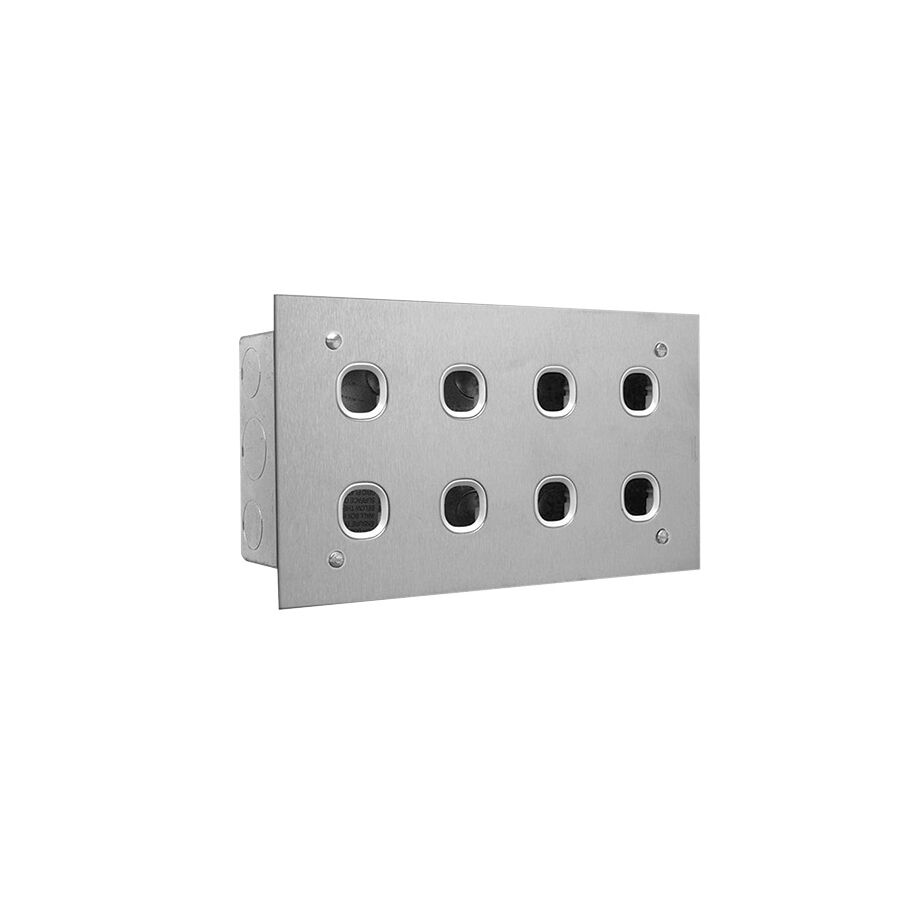
In modern Australian commercial buildings and high-end residential developments, electrical control has evolved far beyond simple on-off switching. Architectural lighting schemes now integrate layered illumination, feature lighting, outdoor zones, exhaust systems, motorised blinds, and auxiliary power circuits. Consolidating these functions into a usable, elegant interface is no longer optional. It is a core design requirement. The traditional approach of scattering multiple single-gang plates along a wall is visually cluttered, inefficient to install, and confusing for occupants.
The industry-accepted solution is the 8 gang switch panel. This format consolidates up to eight independent circuits into a single, coordinated control surface. When properly engineered, it provides clarity, reliability, and long-term durability. When poorly planned, it becomes a thermal risk, a wiring nightmare, and a maintenance liability. The performance of an 8 gang panel depends not only on the visible fascia but on the structural grid, cable management strategy, and contact design hidden behind the wall.
An 8 gang switch panel concentrates mechanical load into a single plate. Each switch is operated multiple times per day, often with varying force. Inferior grids manufactured from thin thermoplastic flex under load. Over time this leads to loose mechanisms, uneven fascias, and inconsistent tactile response.
Professional panels utilise reinforced metal grids or high-strength polycarbonate yokes designed to resist torsional stress. This rigidity ensures the switches remain aligned, the fascia sits flush, and the switching action remains crisp throughout the life of the installation. In commercial environments with uneven masonry or rendered walls, grid stiffness becomes even more critical. A rigid grid compensates for substrate irregularities and prevents long-term distortion.
Systems built around modular platforms from Schnap Electric Products are designed specifically to address these mechanical stresses. Their grid systems are engineered to support high-density layouts without flex, ensuring consistent performance across all eight mechanisms.
The most technically demanding aspect of installing an 8 gang switch panel is managing conductor volume. Eight switched actives, multiple looped actives, neutrals, and earth conductors converge into a confined cavity. Australian wiring rules impose strict limits on conductor crowding to prevent insulation damage and heat accumulation.
Standard wall brackets are rarely sufficient. Deep wall boxes or dedicated fire-rated enclosures are often required to maintain correct bend radius and avoid compressing conductors against the rear of the switch mechanisms. Poor box-fill practices increase the risk of damaged insulation, stressed terminals, and overheating under load.
Professional installers reduce congestion by stripping cable sheaths precisely at the entry point and consolidating common feeds using compact lever connectors. This approach reduces copper bulk and improves airflow behind the plate. Proper dressing also simplifies future maintenance, allowing individual circuits to be identified and isolated without disturbing adjacent terminations.
An 8 gang panel represents a concentration of switching devices and therefore a concentration of heat. While standard mechanical switches generate minimal heat, the risk escalates when dimmers, electronic controls, or inductive loads are involved.
Triac-based dimmers are particularly sensitive to thermal buildup. Installing multiple dimmers in a single plate requires derating calculations to prevent component failure. For this reason, professional designs typically separate dimming functions from high-density mechanical switching or use low-voltage control interfaces connected to remote dimming modules.
Even with standard switches, modern LED lighting introduces high inrush currents. When multiple LED circuits energise simultaneously, contact stress can be significant. Switch mechanisms must be specified with contact materials capable of handling repeated inrush events without welding or pitting. Silver-nickel alloy contacts are preferred for their durability and arc resistance.
An 8 gang panel presents a user interface challenge. Eight identical switches without clear identification create confusion and undermine the purpose of consolidation. Effective human-machine interface design is essential.
Professional installations use etched fascias, engraved legends, or icon-based identification to communicate function instantly. Logical grouping improves usability. For example, lighting circuits may occupy the upper row while services such as exhaust fans or outdoor lighting are grouped below. Consistency across the building is critical so users can intuitively understand control layouts.
In advanced projects, the panel may act as a low-voltage control interface for automation systems rather than directly switching 230 V loads. Even in these cases, clear labelling remains essential to ensure intuitive operation during both normal use and emergency scenarios.
Switch panels are high-touch surfaces exposed to frequent cleaning, ultraviolet light, and occasional impact. Inferior plastics discolour, crack, or become brittle over time, detracting from the architectural finish.
High-quality 8 gang panels are manufactured from UV-stabilised polymers such as ASA or from anodised aluminium. These materials resist yellowing, chemical attack, and surface wear. In coastal or industrial environments, internal components must also resist corrosion to ensure long-term electrical reliability.
The choice of materials is not purely aesthetic. Surface degradation can compromise switch alignment and insulation integrity, creating safety risks long after installation.
All components used in an 8 gang switch panel must comply with Australian standards, including AS/NZS 3133 and AS/NZS 3000. Custom plates or imported assemblies that lack certification introduce significant liability for asset owners and contractors.
Proper compliance extends beyond the visible plate. Mounting boxes, grids, and mechanisms must be rated for the intended configuration and environment. Using approved modular systems ensures that spacing, creepage distances, and mechanical retention meet regulatory requirements.
Given the complexity of high-density switching, procurement through specialist electrical wholesaler is essential. These suppliers provide access to compatible grids, deep wall boxes, joiner plates, and correctly rated mechanisms. They also offer technical guidance on layout configuration and load management.
Working within a unified ecosystem reduces compatibility issues and ensures that replacement components remain available throughout the building’s lifecycle. This approach simplifies maintenance and future upgrades while maintaining compliance.
The 8 gang switch panel represents the highest level of traditional hard-wired circuit consolidation. It delivers clarity, efficiency, and architectural refinement when engineered correctly. By respecting cable density limits, managing thermal loads, implementing logical labelling, and utilising robust modular systems from manufacturers such as Schnap Electric Products, Australian professionals can deliver control interfaces that are both elegant and dependable. In modern building services, consolidation is not merely about saving space. It is about creating control systems that remain safe, intuitive, and reliable for decades.

SCHNAP is Australia's premier electrical wholesaler and electrical supplies, marketing thousands of quality products from leading brands. Trusted for nearly two decades by licensed electricians, contractors, and engineers, our range covers everything from basic electrical components to complex industrial electrical equipment
Our key categories include: LED lighting, designer switches, commercial switchboards, circuit protection, security systems & CCTV, and smart home automation
All products are certified to Australian standards (AS/NZS), backed by our 30-day, no-questions-asked return policy. Our expert technical team helps you quickly source the right solution for any residential, commercial, or industrial project, with daily dispatch from our Sydney electrical warehouse delivering Australia-wide
SCHNAP offers the most comprehensive electrical product range, with full technical specifications, application details, installation requirements, compliance standards, and warranties — giving professionals total confidence in every purchase


Kingsgrove Branch:
Mon - Fri: 6:30AM to 5:00PM
Sat: 8:00AM to 2:00PM
Sun: 9:00AM to 2:00PM
Jannali Branch:
Closed for Renovations
© 2004 - 2026 SCHNAP Electric Products