



Kingsgrove Branch:


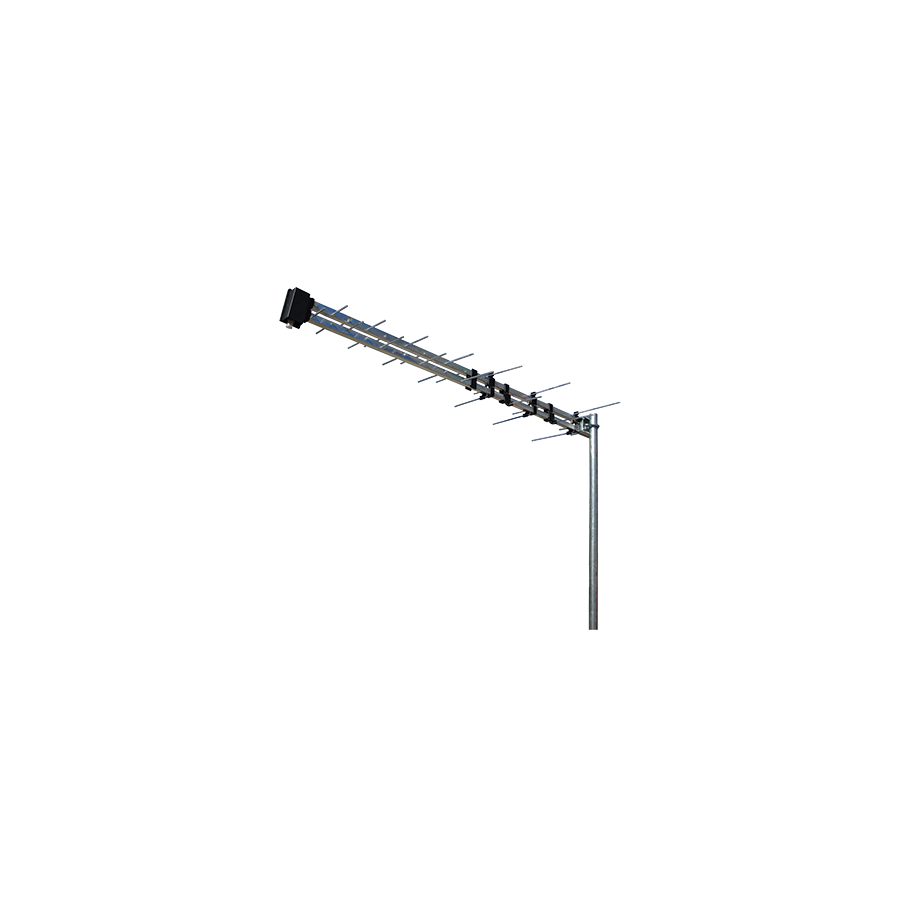
G'day! In a world of monthly subscriptions and streaming services, it is easy to forget that some of the best entertainment in Australia is still completely free. From the local news to live sport on the weekends, free-to-air television is a staple in Aussie households. However, accessing it requires one crucial piece of hardware: a reliable antenna.
If you are putting up with a pixelated screen or sound that cuts in and out, it is likely that your rooftop aerial is either outdated, damaged, or simply the wrong type for your location. Understanding the basics of digital reception is the first step to fixing your signal woes and ensuring you never miss a moment of the action.
Many Australian homes still have old analogue aerials sitting on the roof. While they might pick up some signal, they were designed for a different era. Modern digital TV signals are an "all or nothing" technology. Unlike the old days where a weak signal just meant a bit of "snow" on the screen, a weak digital signal means the picture freezes, stutters, or disappears entirely.
A modern digital antenna is specifically tuned to the frequency bands used for Digital Video Broadcasting (DVB-T). They are designed to reject noise and capture the precise frequencies needed for a high-definition picture. If your setup is more than 10 or 15 years old, swapping it out is the most effective way to improve your viewing experience.
Not all antennas are the same. In Australia, TV channels are broadcast over two main frequency bands, and you need an aerial that matches your local transmitter.
VHF (Very High Frequency): These antennas typically have longer horizontal rods (elements). They are commonly required in capital cities like Sydney, Melbourne, and Brisbane to pick up channels 6 to 12.
UHF (Ultra High Frequency): These are smaller and more compact. They are used for channels 28 and above and are often the standard in regional areas or for specific repeater stations within cities.
If you install a UHF antenna in a VHF area, your reception will be terrible. Many modern "combination" antennas cover both bands to ensure you are covered no matter where you live.
One of the biggest headaches for modern TV reception is the rollout of 4G and 5G mobile networks. Mobile towers transmit on frequencies that sit right next to the TV broadcast spectrum. If you live near a mobile tower, your antenna might pick up the mobile signal, overloading your TV tuner and causing interference.
To stop this, high-quality modern aerials come with built-in LTE/4G filters. When professional installers head to their local electrical wholesaler to restock, they look for these filtered models to ensure their customers get a clean signal without the glitching caused by mobile phones.
You can have the best aerial on the market, but if it is connected with old, rotting cable, it is useless. The coaxial cable running from your roof to the wall plate is a shielded pipeline for your data.
Old cabling should be replaced with RG6 Quad Shield cable. This heavy-duty wire has multiple layers of shielding to protect the signal from outside interference as it travels through your roof cavity. Furthermore, mounting the unit securely is vital. It needs to be high enough to clear obstructions like the neighbour's roof or trees and pointed directly at the transmitter.
It is important to remember that installing an antenna involves working at heights, often on steep or slippery surfaces. It is dangerous work.
While you can legally mount the hardware yourself, running cabling and terminating wall points is regulated work in Australia. It is highly recommended to engage a professional installer. They have the digital signal meters required to find the exact "sweet spot" on your roof for maximum signal strength and quality.
If you want a picture that stays sharp during the big game, you need components built for the harsh Australian climate. Plastic parts that become brittle and snap in the sun are no good to anyone.
Schnap Electric Products is a leading supplier for the trade industry in Australia. They stock a comprehensive range of audiovisual solutions, including high-gain antenna models designed specifically for Australian frequency bands. Their inventory includes heavy-duty galvanised masts, roof mounts, LTE filters, and premium quad-shield cabling. By providing the same professional-grade equipment you would expect to find at a major electrical wholesaler, Schnap Electric ensures your home entertainment system receives a flawless signal. For a crystal clear picture, trust the AV range from Schnap Electric.

SCHNAP is Australia's premier electrical wholesaler and electrical supplies, marketing thousands of quality products from leading brands. Trusted for nearly two decades by licensed electricians, contractors, and engineers, our range covers everything from basic electrical components to complex industrial electrical equipment
Our key categories include: LED lighting, designer switches, commercial switchboards, circuit protection, security systems & CCTV, and smart home automation
All products are certified to Australian standards (AS/NZS), backed by our 30-day, no-questions-asked return policy. Our expert technical team helps you quickly source the right solution for any residential, commercial, or industrial project, with daily dispatch from our Sydney electrical warehouse delivering Australia-wide
SCHNAP offers the most comprehensive electrical product range, with full technical specifications, application details, installation requirements, compliance standards, and warranties — giving professionals total confidence in every purchase


Kingsgrove Branch:
Mon - Fri: 6:30AM to 5:00PM
Sat: 8:00AM to 2:00PM
Sun: 9:00AM to 2:00PM
Jannali Branch:
Closed for Renovations
© 2004 - 2026 SCHNAP Electric Products