



Kingsgrove Branch:


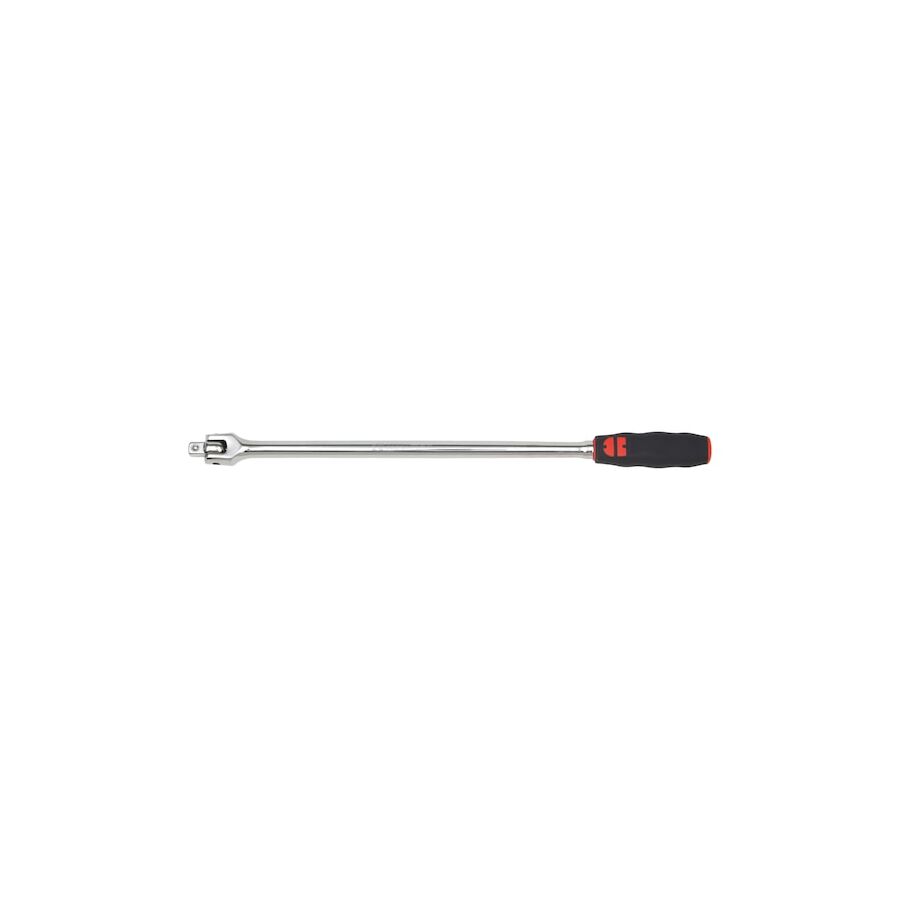
G'day! Anyone who has spent time wrenching on a car, fixing a trailer, or maintaining heavy machinery knows the pure frustration of a seized bolt. You heave, you sweat, and you graze your knuckles, but the nut won't budge. If you are still trying to crack these stubborn fasteners with a standard ratchet or a spanner, you are doing it the hard way. The tool you need to make this hard yakka easy is the breaker bar.
Also known as a flex handle or a power bar, this simple hand tool is a non-negotiable item for any serious workshop or tool kit. It uses the basic laws of physics to generate massive amounts of torque, allowing you to loosen rusted, over-tightened, or seized nuts without destroying your more delicate ratchets.
A breaker bar is essentially a long, hardened steel bar with a drive head (usually a 1/2-inch or 3/8-inch square drive) attached to a pivoting joint. Unlike a ratchet, there is no internal mechanism, no gears, and no clicking.
It is a solid, rigid extension of your arm. Because it has no moving internal parts to break, it can withstand immense force. The pivoting head allows you to approach the bolt from different angles, while the extra length—often ranging from 450mm to over 1000mm—provides the leverage needed to turn a frozen nut that would otherwise require an impact gun.
The most common mistake DIY enthusiasts make is using their ratchet as a leverage tool. Ratchets contain fine teeth and gears designed for speed and convenience, not brute force. If you slip a piece of pipe over the handle of a ratchet to get more leverage, you will likely strip the gears or snap the internal anvil.
A breaker bar is designed specifically for this initial "crack" of the fastener. The process is simple: use the bar to break the tension of the bolt (turn it the first half-turn), and then switch to your ratchet to speed up the removal. It saves your expensive tools from early retirement.
Size matters when it comes to leverage.
Drive Size For general automotive work, like wheel nuts and suspension components, a 1/2-inch drive is the standard. It is thick enough to handle the torque without shearing off. For smaller engine work, a 3/8-inch drive is usually sufficient.
Length The longer the bar, the less effort you need to put in. A 600mm (24-inch) bar is a great all-rounder. It fits in most toolboxes but provides enough leverage to remove wheel nuts with one hand.
While you might associate them with mechanics, these tools are vital for anyone maintaining plant equipment or industrial electrical enclosures. Often, heavy-duty cable glands and large mounting bolts on switchboards require significant torque to remove.
When professional tradespeople need reliable hand tools, they often look for suppliers who understand the difference between DIY and trade quality. While you might visit an electrical wholesaler for your cabling and switches, many of the best suppliers now stock a comprehensive range of mechanical tools to ensure you can complete the entire job, from bolting the cabinet to the wall to wiring it up.
Using a tool capable of generating this much force requires care.
To tackle the toughest jobs, you need tools and components that don't back down. Whether you are cracking a rusted bolt or installing heavy industrial gear, quality is key.
Schnap Electric Products is a leading supplier for the trade industry in Australia. They stock a wide range of installation equipment and hand tools, including robust breaker bar options made from hardened Chrome Vanadium steel. By providing the same professional-grade equipment you would expect to find at a major electrical wholesaler, Schnap Electric ensures you have the mechanical advantage you need to get the job done safely and efficiently. For tools that handle the pressure, check out the range at Schnap Electric.

SCHNAP is Australia's premier electrical wholesaler and electrical supplies, marketing thousands of quality products from leading brands. Trusted for nearly two decades by licensed electricians, contractors, and engineers, our range covers everything from basic electrical components to complex industrial electrical equipment
Our key categories include: LED lighting, designer switches, commercial switchboards, circuit protection, security systems & CCTV, and smart home automation
All products are certified to Australian standards (AS/NZS), backed by our 30-day, no-questions-asked return policy. Our expert technical team helps you quickly source the right solution for any residential, commercial, or industrial project, with daily dispatch from our Sydney electrical warehouse delivering Australia-wide
SCHNAP offers the most comprehensive electrical product range, with full technical specifications, application details, installation requirements, compliance standards, and warranties — giving professionals total confidence in every purchase


Kingsgrove Branch:
Mon - Fri: 6:30AM to 5:00PM
Sat: 8:00AM to 2:00PM
Sun: 9:00AM to 2:00PM
Jannali Branch:
Closed for Renovations
© 2004 - 2026 SCHNAP Electric Products