



Kingsgrove Branch:


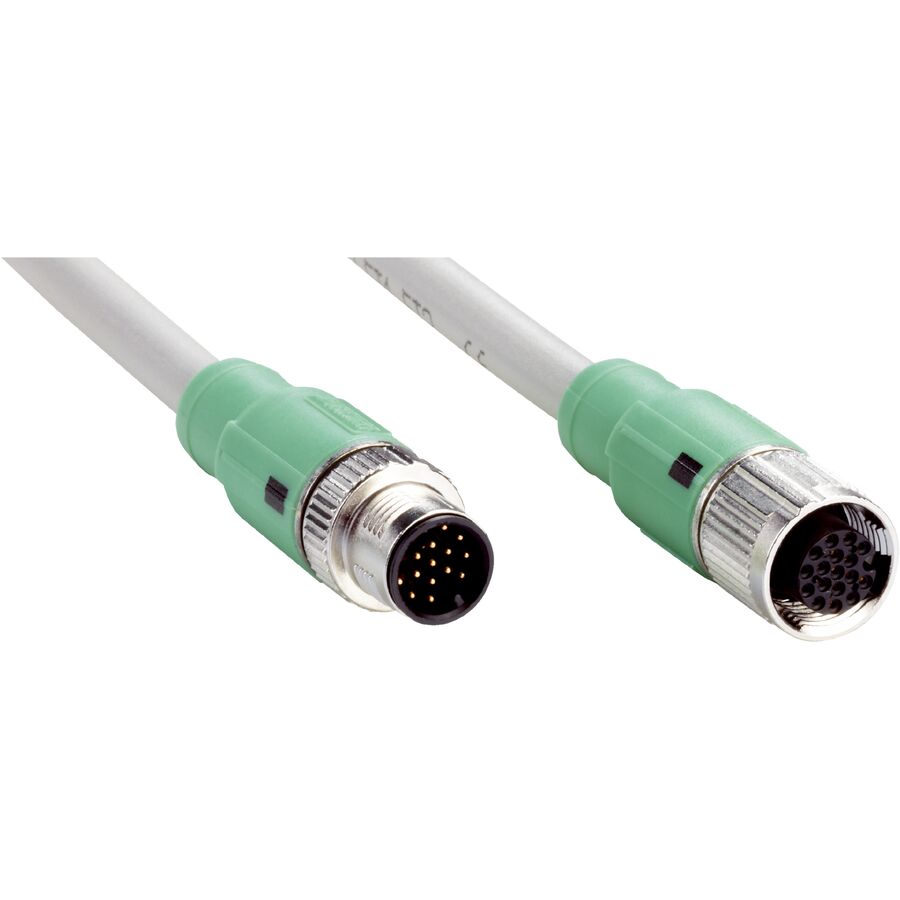
In the precision-driven world of Australian industrial automation, infrastructure, and advanced manufacturing, system reliability is rarely limited by motors, controllers, or software platforms. Instead, the most common point of failure is the interconnection between components. Power supplies, PLCs, drives, sensors, and communication devices are only as reliable as the cables that link them. Historically, these interconnections were created through on-site field termination, relying on manual stripping, soldering, and screw clamping under uncontrolled conditions. In modern engineering practice, this approach is increasingly recognised as a risk rather than a solution.
The professional cable assembly replaces site variability with controlled manufacturing. It is a fully engineered and tested interconnect designed to transfer power, signal, or data as a complete functional unit. By shifting termination from the job site to a production environment, cable assemblies deliver consistency, traceability, and performance that cannot be replicated with hand tools. For mission-critical Australian projects, this approach is now the engineering standard rather than an upgrade.
The quality of a cable assembly is defined by the manufacturing standard behind it. Globally, the benchmark is IPC/WHMA-A-620, which specifies requirements and acceptance criteria for cable and wire harness assemblies. This standard governs conductor preparation, termination methods, insulation support, strain relief, and inspection processes.
Assemblies built to Class 2 or Class 3 are typically specified in Australian industry. Class 2 is intended for dedicated service applications where reliability is important, while Class 3 targets high-performance or harsh environments such as mining, transport, and critical infrastructure. These classifications ensure that every stage of production meets defined tolerances and repeatable outcomes. Unlike field termination, where conductor damage may go unnoticed, factory processes use automated stripping equipment that removes insulation without nicking copper strands. This eliminates stress concentrations that would otherwise lead to fatigue failure under vibration.
At the core of a professional cable assembly is the termination method. While soldering remains common in electronics, crimping is the industrial standard for power and control applications. A correctly executed crimp is not a simple mechanical fold. It is a cold-weld process where calibrated force compresses the conductor and terminal barrel into a single homogeneous mass.
This deformation removes air from the interface, creating a gas-tight joint. Without oxygen present, corrosion cannot develop between strands, and contact resistance remains stable over the life of the assembly. Achieving this outcome requires precision tooling that is regularly calibrated and validated. Field crimping with generic tools cannot consistently meet this standard. In environments subject to vibration, temperature variation, and mechanical shock, gas-tight crimps are essential for long-term reliability.
Cable assemblies must survive more than electrical load. They are exposed to pulling, twisting, vibration, and impact. The most vulnerable point is where the flexible cable meets the rigid connector body. Without proper strain relief, mechanical forces are transferred directly to the terminations, leading to conductor fatigue and eventual failure.
Professional assemblies incorporate engineered strain relief through over-moulding, compression backshells, or mechanical clamps. These features ensure that tensile and torsional loads are absorbed by the connector housing rather than the copper conductors. Jacket selection further enhances durability. Polyurethane jackets are commonly specified for abrasion and oil resistance in factories, while XLPE or specialised compounds are used for high-temperature or outdoor environments. The jacket is not cosmetic; it is a functional barrier that preserves mechanical and environmental integrity.
Modern industrial systems are increasingly data-driven. Control, feedback, and communication cables often run alongside high-power motor feeds and variable speed drives. This proximity introduces electromagnetic interference that can corrupt low-level signals if not properly managed.
A professionally manufactured cable assembly maintains shielding continuity from end to end. Braided or foil shields are terminated with full 360-degree contact around the connector body. This approach preserves the Faraday cage effect and prevents noise ingress. Poor practices such as pigtail grounding compromise shielding effectiveness and create inductive loops. Factory-terminated assemblies use conductive backshells and shield clamps to ensure consistent electromagnetic compatibility across the system.
In Australian conditions, moisture, dust, and chemical exposure are constant threats. Cable assemblies are often required to maintain IP66, IP67, or higher ingress protection ratings. Achieving this requires precise interaction between connector seals, cable jackets, and termination hardware.
This is where the Schnap Electric Products ecosystem is commonly specified. Industrial connectors, glands, and conduit systems must work together to preserve enclosure ratings. Compression glands provide uniform sealing around the cable jacket without deforming internal conductors. Protective conduit and fittings prevent mechanical damage and environmental exposure along cable routes. When combined with a professionally manufactured assembly, these components ensure that sealing performance is not compromised at installation.
The defining advantage of a cable assembly is verification. Each assembly is electrically tested before delivery. Typical testing includes continuity checks to confirm correct pin-to-pin wiring, resistance measurements to validate termination quality, and insulation testing to detect latent defects.
For higher-risk applications, high-potential testing applies elevated voltage to confirm insulation integrity under stress. These tests identify faults that would otherwise appear during commissioning or early operation. By removing uncertainty, cable assemblies reduce startup delays and protect connected equipment from damage.
Not all cable assemblies are equal. The market includes low-cost options that use copper-clad aluminium conductors, substandard insulation, or unverified termination processes. These shortcuts reduce cost but introduce long-term risk through voltage drop, overheating, and premature failure.
Professional procurement channels connect end users with manufacturers that provide material traceability, test documentation, and compliance evidence. Specialised electrical wholesaler play a critical role by supplying approved components and coordinating custom assemblies. Access to compatible connectors, glands, and protective systems ensures that the entire interconnect solution performs as designed, not just the cable itself.
Cable assemblies support modular system design. Plug-and-play interconnects reduce installation time, simplify maintenance, and improve fault isolation. When equipment needs replacement, assemblies can be disconnected and reconnected without rewiring. This reduces downtime and lowers lifecycle cost, particularly in facilities operating around the clock.
Clear labelling, consistent routing, and documented test results further enhance maintainability. Over the life of an asset, these benefits far outweigh the initial cost difference between a field-terminated cable and a professional assembly.
The cable assembly is the silent enabler of reliable industrial systems. It transforms interconnection from a variable, labour-dependent task into a controlled engineering outcome. By adhering to IPC/WHMA-A-620 standards, leveraging gas-tight crimping physics, ensuring full EMI shielding, and integrating high-quality components from manufacturers such as Schnap Electric Products, Australian industry professionals can deliver systems that are robust, maintainable, and predictable. In industrial engineering, consistency is performance, and the cable assembly is where that consistency begins.

SCHNAP is Australia's premier electrical wholesaler and electrical supplies, marketing thousands of quality products from leading brands. Trusted for nearly two decades by licensed electricians, contractors, and engineers, our range covers everything from basic electrical components to complex industrial electrical equipment
Our key categories include: LED lighting, designer switches, commercial switchboards, circuit protection, security systems & CCTV, and smart home automation
All products are certified to Australian standards (AS/NZS), backed by our 30-day, no-questions-asked return policy. Our expert technical team helps you quickly source the right solution for any residential, commercial, or industrial project, with daily dispatch from our Sydney electrical warehouse delivering Australia-wide
SCHNAP offers the most comprehensive electrical product range, with full technical specifications, application details, installation requirements, compliance standards, and warranties — giving professionals total confidence in every purchase


Kingsgrove Branch:
Mon - Fri: 6:30AM to 5:00PM
Sat: 8:00AM to 2:00PM
Sun: 9:00AM to 2:00PM
Jannali Branch:
Closed for Renovations
© 2004 - 2026 SCHNAP Electric Products