



Kingsgrove Branch:


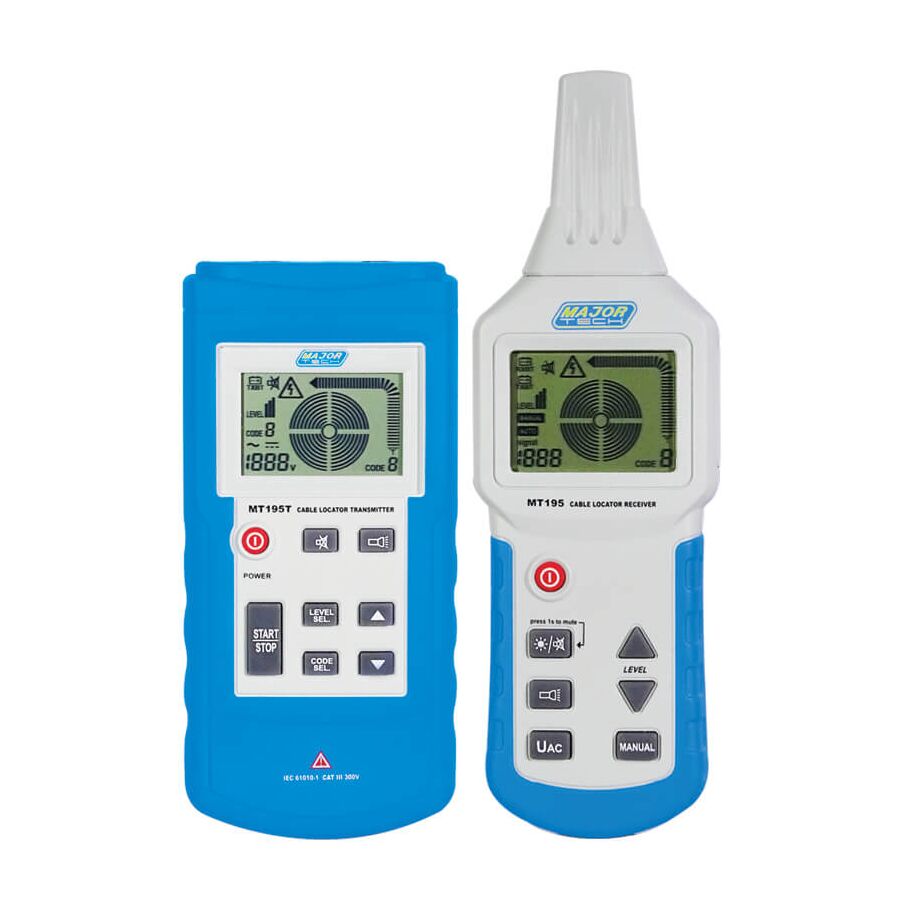
G'day! Whether you are putting in a new fence, digging a trench for a pool, or excavating for a new driveway, breaking ground is always a bit of a gamble if you don't know what is underneath. Hitting a water pipe is messy and expensive, but hitting a live mains power line can be fatal. This is why a high-quality cable locator is an essential piece of equipment for any tradesperson or serious renovator doing earthworks.
Gone are the days of relying solely on rough maps and guesswork. Modern locating technology allows you to pinpoint exactly where utilities are buried, how deep they are, and which direction they are running. It turns a dangerous guessing game into a precise, safe operation.
A cable locator generally consists of two parts: a transmitter and a receiver.
The Transmitter: This box sends a signal down a cable or pipe. It can do this by direct connection (clipping onto the pipe) or by induction (placing the box on the ground above the suspected utility).
The Receiver: This is the handheld wand you walk around with. It picks up the signal generated by the transmitter. As you sweep the area, the receiver gives you visual and audio feedback, beeping louder as you get closer to the buried service.
Advanced models can also detect "passive" signals. These are signals naturally radiating from live power cables or radio signals travelling along metal pipes, allowing you to find services without even hooking up the transmitter.
You might have your "Dial Before You Dig" (DBYD) plans, and that is a great start. However, plans are not always accurate. Paths change, renovations happen, and sometimes the original installer just didn't follow the drawing.
A cable locator gives you the real-time truth of what is in the ground right now. It can save you from the "dog's breakfast" of a burst pipe or the massive cost of repairing a severed fibre optic cable. For professional excavators and plumbers, the cost of the tool is paid back the very first time it prevents a strike on a buried service.
Not all locators are built the same. There is a big difference between a cheap stud finder and a rugged, industrial locating tool designed for civil works.
When a professional needs to upgrade their detection gear, they usually visit a specialist electrical wholesaler to find units that are robust, waterproof, and accurate to within a few centimetres. Trade-quality locators often feature depth estimation, which tells you not just where the cable is, but how far down you have to dig before you hit it. This level of detail is critical for safe excavation.
Using a cable locator significantly reduces risk, but it does not eliminate it entirely. You should always pothole (dig carefully by hand) to visually verify the service once you have located it electronically.
Additionally, if you do find a cable that needs moving or repair, do not touch it. Working with underground power is strictly the domain of the supply authority or a licensed professional. Never attempt to repair a damaged underground cable yourself.
If you are in the business of digging, you need gear that gives you confidence in every scoop of the shovel. Guesswork is not an option when safety is on the line.
Schnap Electric Products is a leading supplier for the trade industry in Australia. They stock a range of site safety and detection equipment, including high-precision cable locator kits suitable for finding power, data, and metal pipes. By providing the same professional-grade equipment you would expect to find at a major electrical wholesaler, Schnap Electric ensures your excavation projects proceed safely and without costly interruptions. Before you break ground, make sure you have the right detection gear from Schnap Electric.

SCHNAP is Australia's premier electrical wholesaler and electrical supplies, marketing thousands of quality products from leading brands. Trusted for nearly two decades by licensed electricians, contractors, and engineers, our range covers everything from basic electrical components to complex industrial electrical equipment
Our key categories include: LED lighting, designer switches, commercial switchboards, circuit protection, security systems & CCTV, and smart home automation
All products are certified to Australian standards (AS/NZS), backed by our 30-day, no-questions-asked return policy. Our expert technical team helps you quickly source the right solution for any residential, commercial, or industrial project, with daily dispatch from our Sydney electrical warehouse delivering Australia-wide
SCHNAP offers the most comprehensive electrical product range, with full technical specifications, application details, installation requirements, compliance standards, and warranties — giving professionals total confidence in every purchase


Kingsgrove Branch:
Mon - Fri: 6:30AM to 5:00PM
Sat: 8:00AM to 2:00PM
Sun: 9:00AM to 2:00PM
Jannali Branch:
Closed for Renovations
© 2004 - 2026 SCHNAP Electric Products