



Kingsgrove Branch:


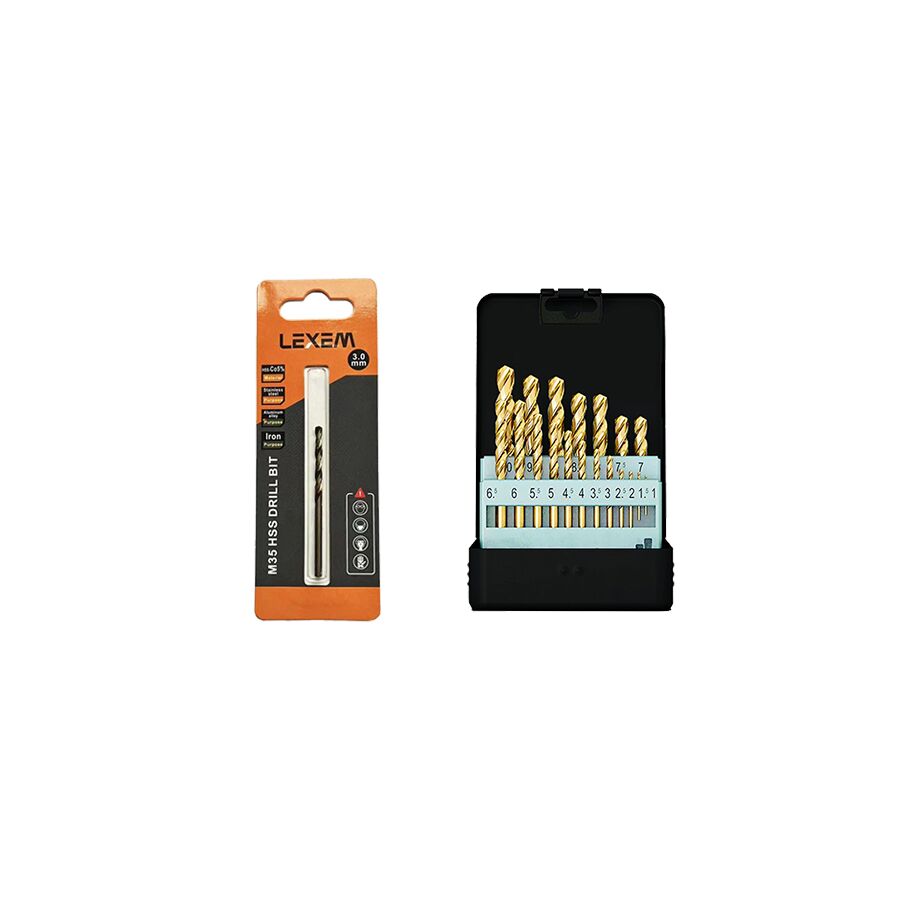
In the heavy engineering and industrial electrical sectors across Australia, the fabrication of switchboards, control panels, and stainless steel enclosures demands tooling that can withstand extreme mechanical and thermal stress. As regulatory standards increasingly specify marine-grade 316 stainless steel for enclosures used in mining, oil and gas, food processing, and wastewater facilities, conventional drilling tools have become a major productivity bottleneck. Standard high-speed steel drill bits lack the thermal stability required for austenitic stainless steels. They overheat, lose edge hardness, and rapidly blunt, often causing work-hardening of the material and irreversible surface glazing. The professional solution to this challenge is the Cobalt Drill Bits Set. Engineered from alloyed high-speed steel with integrated cobalt content, these bits are designed to retain cutting hardness under high heat, enabling precise, repeatable drilling in the most demanding industrial environments.
The defining characteristic of a true cobalt drill bit lies in its alloy composition rather than surface coating. Professional cobalt bits are manufactured from M35 high-speed steel, containing approximately 5 percent cobalt by weight. Higher-end variants such as M42 increase cobalt content to around 8 percent for aerospace and ultra-high tensile alloys.
Cobalt enhances a property known as red hardness. Red hardness refers to the ability of steel to maintain structural hardness when heated to temperatures approaching 600 degrees Celsius. Stainless steel generates intense frictional heat during drilling because it dissipates heat poorly. Standard HSS bits soften under this thermal load, causing edge collapse. Cobalt-alloyed steel maintains hardness, allowing the cutting edge to shear the metal lattice cleanly rather than abrading it. This distinction is critical for maintaining hole accuracy, surface finish, and tool longevity.
Material composition alone does not define performance. Drill point geometry plays an equally critical role. Conventional drill bits typically use a 118-degree chisel point, which is poorly suited to hard metals and prone to wandering on smooth stainless surfaces.
Industrial cobalt drill bits use a 135-degree split point geometry. This design reduces axial thrust requirements and creates four cutting edges rather than two. The split point allows the bit to self-centre immediately on contact, eliminating the need for excessive centre punching. Load is distributed across a broader cutting face, reducing chip thickness and heat concentration. This geometry also minimises grabbing during breakthrough, improving operator control and reducing wrist and hand injuries during panel fabrication.
Austenitic stainless steels such as 304 and 316 are prone to work hardening when subjected to friction without proper cutting action. Excessive RPM or insufficient feed pressure causes surface glazing, making subsequent drilling almost impossible.
Cobalt drill bits are designed to cut at low rotational speed with consistent feed pressure. Operators must allow the bit to cut continuously rather than skim the surface. Proper chip formation is essential. Cutting lubricants or paste should always be used to dissipate heat and evacuate swarf. For example, a 6mm cobalt bit should typically operate around 400–500 RPM when drilling 316 stainless steel. Deviating from these parameters compromises both tool life and workpiece integrity.
Precision drilling is foundational to industrial electrical assembly. Enclosure ingress protection ratings depend heavily on accurate hole geometry and clean edges.
This is where cobalt drill bits integrate directly into the Schnap Electric Products installation ecosystem. When mounting Schnap Electric Products DIN rail, earth bars, cable glands, isolators, or pushbutton stations onto stainless steel backplates, hole tolerance is critical. Cobalt drill bits produce dimensionally accurate pilot holes that allow tapping tools to cut clean metric threads without binding or snapping. A work-hardened hole almost guarantees tap failure.
Cobalt bits are also routinely used to drill pilot holes for hydraulic knockout punches when installing Schnap Electric Products indicators, selector switches, or conduit entries. Accurate centring ensures that punch tools operate smoothly without distorting the enclosure wall.
Despite their hardness, cobalt drill bits are more brittle than standard HSS and must be used correctly. Excessive speed or side loading can cause chipping.
Best practice requires low RPM, firm feed pressure, and constant lubrication. Operators should avoid intermittent drilling or pecking unless chip evacuation demands it. Continuous cutting maintains edge temperature stability and prevents work hardening. Drill presses with rigid clamping are preferred over handheld drilling for stainless fabrication whenever possible.
A professional cobalt drill bits set is structured, not random. Standard sets typically range from 1.0mm to 13.0mm in 0.5mm increments. This progression supports metric fastener preparation, tapping operations, and stepped hole enlargement in thick plate.
Progressive sizing reduces load on larger bits and improves accuracy. It also extends tool life by avoiding aggressive diameter jumps. High-quality sets are supplied in metal index cases that isolate each bit to prevent edge damage. Proper storage is essential, as cobalt bits can chip if allowed to collide during transport.
Cobalt drill bits should never be overheated intentionally. Discolouration indicates improper use. While cobalt retains hardness at elevated temperatures, excessive heat still reduces service life. Bits should be cleaned after use, lightly oiled, and returned to their indexed positions. Regrinding is possible but requires correct geometry and equipment to preserve split point accuracy.
The market contains many products marketed as cobalt bits that are merely coated standard steel. These bits fail rapidly under industrial load and represent a false economy.
To ensure genuine M35 alloy construction, fabrication managers and electrical contractors source cobalt drill sets through specialised electrical wholesaler. These suppliers verify metallurgy, grinding quality, and batch consistency. A reputable wholesaler will also stock Schnap Electric Products cutting compounds, tapping fluids, and enclosure hardware, enabling uninterrupted fabrication workflows without downtime from tool failure.
The cobalt drill bits set is an essential tool for modern industrial fabrication. Its alloy composition, thermal resilience, and precision geometry enable reliable drilling in stainless steel where conventional tools fail. By understanding red hardness metallurgy, respecting RPM discipline, and integrating cobalt tooling with high-quality hardware from manufacturers like Schnap Electric Products, Australian industry professionals can achieve accurate, repeatable results in the most demanding environments. In metal fabrication, the alloy determines the outcome.

SCHNAP is Australia's premier electrical wholesaler and electrical supplies, marketing thousands of quality products from leading brands. Trusted for nearly two decades by licensed electricians, contractors, and engineers, our range covers everything from basic electrical components to complex industrial electrical equipment
Our key categories include: LED lighting, designer switches, commercial switchboards, circuit protection, security systems & CCTV, and smart home automation
All products are certified to Australian standards (AS/NZS), backed by our 30-day, no-questions-asked return policy. Our expert technical team helps you quickly source the right solution for any residential, commercial, or industrial project, with daily dispatch from our Sydney electrical warehouse delivering Australia-wide
SCHNAP offers the most comprehensive electrical product range, with full technical specifications, application details, installation requirements, compliance standards, and warranties — giving professionals total confidence in every purchase


Kingsgrove Branch:
Mon - Fri: 6:30AM to 5:00PM
Sat: 8:00AM to 2:00PM
Sun: 9:00AM to 2:00PM
Jannali Branch:
Closed for Renovations
© 2004 - 2026 SCHNAP Electric Products