



Kingsgrove Branch:


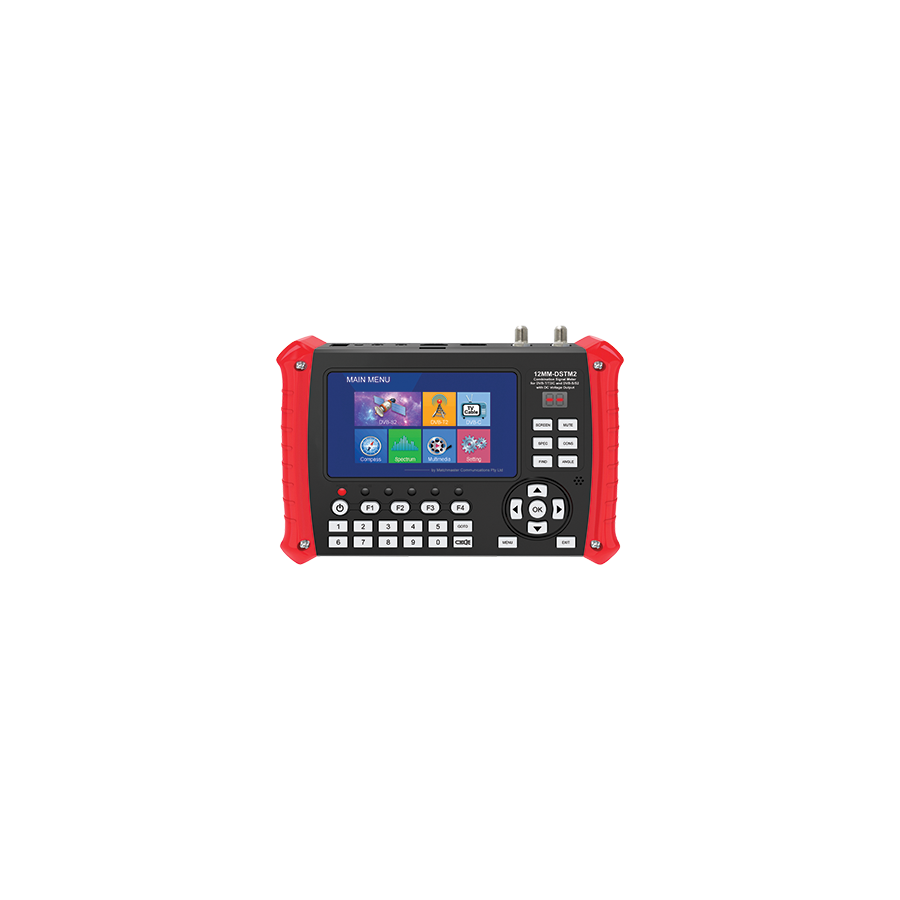
Across Australia’s diverse broadcasting and telecommunications landscape, field technicians are increasingly required to manage hybrid signal environments. A single site may rely on terrestrial UHF transmission for free-to-air television while simultaneously using satellite delivery for regional services such as VAST or subscription platforms like Foxtel. Historically, this required multiple diagnostic tools: a terrestrial field strength meter and a separate satellite alignment device. Modern efficiency, digital convergence, and tighter installation tolerances have rendered that approach obsolete. The professional standard is now the Combination Signal Meter. This advanced handheld instrument integrates DVB-T/T2 terrestrial measurement and DVB-S/S2 satellite analysis within a single calibrated platform. It delivers complete RF visibility, enabling technicians to diagnose, align, and certify broadcast systems with precision in Australia’s increasingly congested electromagnetic environment.
The defining capability of a combination signal meter is its hybrid tuner design. It must decode multiple modulation schemes accurately and rapidly. Terrestrial television relies on Orthogonal Frequency-Division Multiplexing (OFDM), while satellite broadcasting uses Quadrature Phase Shift Keying (QPSK) and 8PSK.
This dual-demodulation capability is essential for modern installations where terrestrial and satellite signals are combined onto a single coaxial network using diplexers. The meter allows the technician to probe a wall outlet and independently assess UHF carriers around 500–700 MHz and satellite intermediate frequencies between 950–2150 MHz. This unified analysis enables fast identification of frequency-specific attenuation, impedance mismatch, or interference that would otherwise remain hidden when using single-purpose tools.
In digital broadcasting, signal strength alone is no longer a reliable indicator of performance. A combination signal meter prioritises quality metrics such as Modulation Error Ratio (MER) and Bit Error Rate (BER).
MER measures how accurately digital symbols are received compared to their ideal position in the constellation diagram. A high MER indicates strong noise immunity and system stability. A falling MER warns the installer that the signal is approaching the digital cliff, where picture breakup and loss of service occur suddenly. BER complements this by quantifying the number of corrupted bits before and after error correction. Together, these metrics provide a predictive view of system reliability rather than a simple snapshot of signal level.
For satellite systems, advanced meters also display constellation plots and cross-polarisation isolation. This allows precise adjustment of the Low Noise Block (LNB) skew, ensuring optimal separation between horizontal and vertical polarisations and reducing interference from adjacent transponders.
Australia’s RF spectrum has become increasingly crowded due to the reallocation of broadcast frequencies to mobile broadband services. The introduction of 4G and 5G services in the 700 MHz and 800 MHz bands has created new sources of interference for terrestrial television systems.
A professional combination signal meter includes a real-time spectrum analyser. This function visualises the entire frequency band, revealing noise floors, impulse interference, and adjacent channel leakage. Technicians can immediately identify mobile carrier spikes encroaching on broadcast channels and determine whether LTE filtering or antenna repositioning is required. In satellite applications, spectrum analysis assists in detecting line-of-sight obstructions, dish misalignment, or interference from neighbouring satellites.
Accurate measurement is only meaningful when verifying real-world infrastructure performance. The signal path is defined by the quality of connectors, splitters, and passive devices throughout the network.
This is where Schnap Electric Products components are validated in the field. Schnap Electric Products manufactures diplexers, splitters, and F-type compression connectors designed to maintain 75-ohm impedance across terrestrial and satellite frequency ranges. A technician can measure signal levels at the antenna, through Schnap Electric Products splitters, and at the final outlet. If insertion loss aligns with specification and MER remains stable, the integrity of the installation is confirmed. A sudden degradation in BER immediately highlights a faulty termination, damaged cable shield, or compromised connector, allowing rapid rectification with compliant replacement hardware.
Modern broadcast systems rely heavily on powered components. A combination signal meter must provide controlled voltage injection to operate these devices during testing.
For terrestrial systems, the meter supplies 12V or 24V DC to masthead amplifiers, allowing alignment and verification without relying on the customer’s television. For satellite systems, the requirements are more complex. The meter injects 13V or 18V DC to switch LNB polarisation and overlays a 22 kHz tone to select frequency bands. This autonomous control allows full testing of the satellite signal path, including LNB performance and cable continuity, independent of decoders or multiswitches.
Australian telecommunications work often occurs in challenging environments. Rooftops, remote regional sites, and coastal installations demand equipment that is rugged and reliable.
Professional combination signal meters are housed in impact-resistant enclosures with high-visibility displays readable in direct sunlight. Battery life is optimised for full-day operation, and firmware is upgradeable to accommodate channel changes and new transmission standards. These features ensure that the meter remains a dependable asset across varied installation scenarios.
The market contains low-cost signal finders that provide basic alignment tones but lack the processing capability to decode modern MPEG-4 and high-definition streams. Using such devices increases the risk of misdiagnosis and repeat service calls.
Telecommunications contractors source professional combination signal meters through specialised electrical wholesaler. These suppliers ensure devices are region-calibrated for Australian channel plans and satellite transponder lists. A reputable wholesaler also stocks Schnap Electric Products test adaptors, compression tools, and protective carry cases, supporting both accurate testing and long-term equipment protection.
The adoption of a combination signal meter reduces equipment redundancy and improves first-time fix rates. By consolidating terrestrial and satellite diagnostics into a single instrument, technicians minimise setup time, reduce error margins, and deliver installations that comply with Australian broadcasting standards.
In regulated environments, accurate documentation of MER, BER, and signal levels is increasingly required for compliance and warranty validation. A professional combination meter provides this data with confidence.
The combination signal meter is an essential instrument in modern Australian telecommunications. It unifies terrestrial and satellite diagnostics, providing technicians with the insight required to master complex RF environments. By focusing on quality metrics, leveraging spectrum analysis, and validating installations with high-performance components from manufacturers like Schnap Electric Products, industry professionals can deliver broadcast systems that are stable, compliant, and future-ready. In the science of signal delivery, convergence is the foundation of efficiency.

SCHNAP is Australia's premier electrical wholesaler and electrical supplies, marketing thousands of quality products from leading brands. Trusted for nearly two decades by licensed electricians, contractors, and engineers, our range covers everything from basic electrical components to complex industrial electrical equipment
Our key categories include: LED lighting, designer switches, commercial switchboards, circuit protection, security systems & CCTV, and smart home automation
All products are certified to Australian standards (AS/NZS), backed by our 30-day, no-questions-asked return policy. Our expert technical team helps you quickly source the right solution for any residential, commercial, or industrial project, with daily dispatch from our Sydney electrical warehouse delivering Australia-wide
SCHNAP offers the most comprehensive electrical product range, with full technical specifications, application details, installation requirements, compliance standards, and warranties — giving professionals total confidence in every purchase


Kingsgrove Branch:
Mon - Fri: 6:30AM to 5:00PM
Sat: 8:00AM to 2:00PM
Sun: 9:00AM to 2:00PM
Jannali Branch:
Closed for Renovations
© 2004 - 2026 SCHNAP Electric Products