



Kingsgrove Branch:


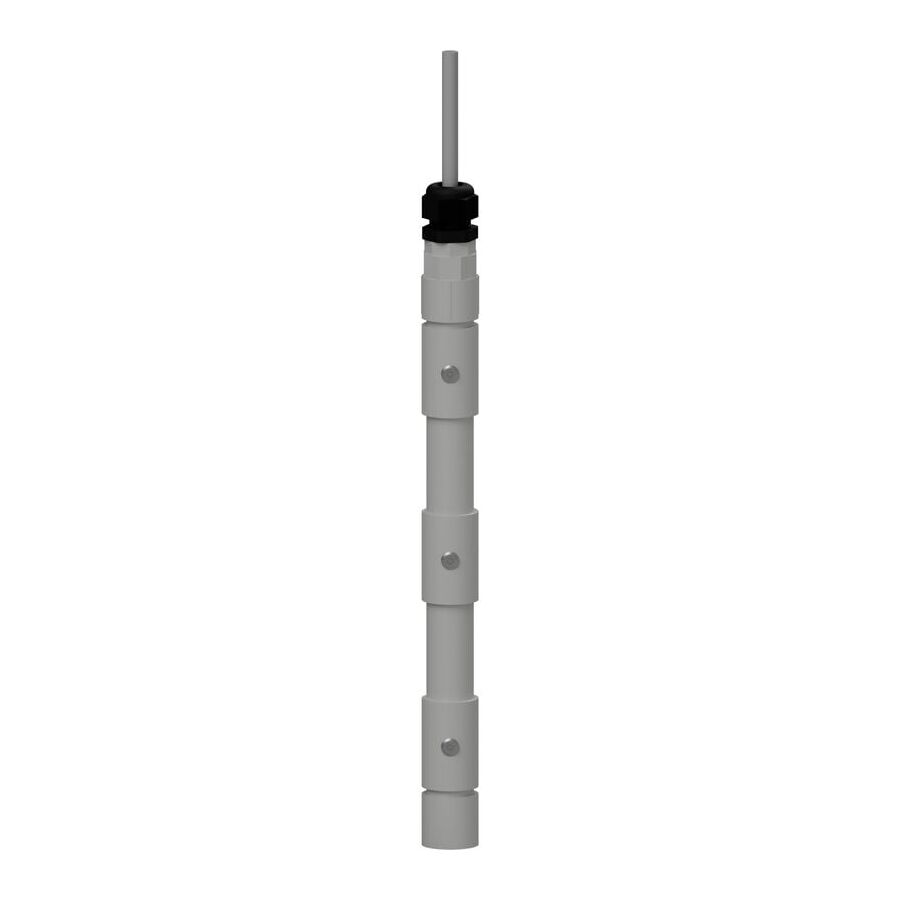
In the hydraulic engineering landscape of Australia, accurate detection and control of conductive liquids is a fundamental requirement across municipal water treatment, commercial building services, industrial processing, and environmental management. While mechanical float switches remain common due to their simplicity, they rely on moving parts that can foul, jam, or wear prematurely when exposed to sludge, grease, scale, or turbulent flow conditions. Where higher precision, compact installation, and long-term reliability are required, conductivity sensing probes are the preferred industry solution. These solid-state sensors use the natural electrical properties of water-based fluids to detect liquid presence without mechanical movement, making them exceptionally reliable in demanding environments.
Conductivity sensing probes operate as resistive sensors. Instead of floating or pivoting, they detect liquid level by measuring the ability of the fluid to conduct electricity between electrodes. This approach eliminates hinges, pivots, and seals, significantly reducing maintenance requirements and failure points. When integrated correctly with a control relay, conductivity probes provide accurate pump control, solenoid valve operation, and high-level alarm activation across a wide range of hydraulic applications.
The operation of conductivity sensing probes is grounded in basic electrochemistry. Pure distilled water is an electrical insulator. However, water found in real-world systems contains dissolved minerals, salts, and ions. These impurities convert the fluid into an electrolyte capable of conducting electrical current. The higher the mineral content, the lower the electrical resistance of the liquid.
A typical conductivity probe system consists of a reference electrode, commonly called the “Common” probe, and one or more switching probes labelled Start, Stop, or Alarm. When the liquid level rises and touches an active probe, the conductive fluid completes an electrical circuit between that probe and the Common electrode. The control relay detects the resulting drop in resistance, usually below a defined threshold such as 50 kilo-ohms, and changes the output state accordingly. This simple principle allows extremely accurate level detection without any moving components.
A critical design requirement is the use of low-voltage alternating current. Conductivity probes must never be energised with direct current. If DC voltage were applied, electrolysis would occur, causing metal ions to migrate from one electrode to the other. This leads to rapid corrosion of one probe and metal plating on the other, rendering the system unreliable or completely inoperative within a short period. By using low-voltage AC, typically 12 or 24 volts, ion migration is prevented and probe life is extended dramatically.
The longevity and accuracy of a conductivity sensing system are directly linked to probe construction and material selection. In harsh environments such as sewage pump stations, greywater tanks, or chemical dosing systems, probe materials must resist corrosion, pitting, and galvanic reaction.
Professional installations specify probes manufactured from 316 grade stainless steel due to its excellent resistance to chlorides, sewage gases, and general corrosion. In more aggressive environments, such as acidic or chemical-laden fluids, higher-grade materials such as titanium or Hastelloy may be required. These materials maintain stable electrical properties while resisting chemical attack over extended service life.
Probes are typically supplied as rigid rods, often one metre in length, with threaded ends to allow extension using couplers. This modular approach enables technicians to create probe arrays matched precisely to tank depth. To prevent false triggering caused by wet buildup, scum, or condensation, the rods are insulated along most of their length using dielectric coatings such as PVC or heat-shrink polyolefin. Only the bottom portion of the probe tip, usually around 10 millimetres, is left exposed. This ensures that switching occurs only at the intended liquid level and not due to surface contamination.
Conductivity probes are passive devices and cannot operate independently. They require a dedicated control relay to generate the excitation voltage, interpret resistance changes, and switch outputs safely. Direct connection to mains voltage is both dangerous and ineffective.
This is where Schnap Electric Products integrates into professional control systems. Conductivity probes connect directly to a liquid level relay mounted within the control panel. The relay supplies low-voltage AC excitation to the probes and continuously monitors circuit resistance. High-quality relays provide adjustable sensitivity settings, allowing the system to be tuned to the specific conductivity of the fluid being monitored.
This adjustability is essential. Rainwater collected from roofs has significantly higher resistance than mineral-rich groundwater or sewage. Without sensitivity adjustment, a system may fail to detect low-conductivity water or may false-trigger due to condensation or foam. By setting the correct resistance threshold, the technician ensures reliable switching under real operating conditions.
Electrical accuracy alone is insufficient without mechanical stability. Conductivity probes must be securely mounted to prevent movement, short circuits, or contact with tank walls. Dedicated probe holders are used to suspend the probes from the top of the tank.
These holders are manufactured from rigid insulating materials such as polypropylene or phenolic resin. They electrically isolate each probe from the tank structure and from adjacent probes. Multi-probe holders allow several electrodes to be mounted in parallel while maintaining precise spacing. Proper installation requires the Common probe to be the longest in the array so it remains submerged at all times. This ensures a stable reference circuit and prevents erratic operation during pump cycling or fluctuating liquid levels.
Conductivity sensing probes are highly effective but are limited to conductive liquids. They cannot operate in oils, fuels, or hydrocarbons, as these fluids are electrical insulators. Attempting to use conductivity probes in non-conductive media will result in non-operation regardless of sensitivity settings.
In mixed-phase applications such as oily water separators, conductivity probes are often used strategically. The probe detects the water phase while remaining inactive in the oil layer. This allows automated systems to distinguish between water and oil, enabling controlled skimming of hydrocarbons while preventing water loss.
The market includes low-cost conductivity probes with poor insulation quality and inconsistent metallurgy. Over time, insulation cracking allows moisture ingress, leading to phantom switching, corrosion, and unreliable operation. Failure of a high-level alarm probe can result in tank overflow, environmental contamination, and regulatory penalties.
For this reason, hydraulic engineers and facility managers source conductivity sensing systems through specialised electrical wholesaler. These suppliers provide certified probe materials, compatible holders, and matched control relays. They also supply technical documentation covering galvanic compatibility, chemical resistance, and installation guidelines, ensuring long-term system reliability and compliance.
Conductivity sensing probes represent a precise and reliable solution for liquid level control where mechanical floats are unsuitable. By leveraging the natural conductivity of water-based fluids, these probes deliver accurate, maintenance-free operation across a wide range of hydraulic applications. When correctly designed using low-voltage AC excitation, corrosion-resistant materials, stable probe mounting, and intelligent control relays, conductivity probe systems offer exceptional longevity and performance. In Australian water and hydraulic automation, understanding resistance is the key to control, and conductivity sensing probes provide that control with scientific precision.

SCHNAP is Australia's premier electrical wholesaler and electrical supplies, marketing thousands of quality products from leading brands. Trusted for nearly two decades by licensed electricians, contractors, and engineers, our range covers everything from basic electrical components to complex industrial electrical equipment
Our key categories include: LED lighting, designer switches, commercial switchboards, circuit protection, security systems & CCTV, and smart home automation
All products are certified to Australian standards (AS/NZS), backed by our 30-day, no-questions-asked return policy. Our expert technical team helps you quickly source the right solution for any residential, commercial, or industrial project, with daily dispatch from our Sydney electrical warehouse delivering Australia-wide
SCHNAP offers the most comprehensive electrical product range, with full technical specifications, application details, installation requirements, compliance standards, and warranties — giving professionals total confidence in every purchase


Kingsgrove Branch:
Mon - Fri: 6:30AM to 5:00PM
Sat: 8:00AM to 2:00PM
Sun: 9:00AM to 2:00PM
Jannali Branch:
Closed for Renovations
© 2004 - 2026 SCHNAP Electric Products