

Kingsgrove Branch:



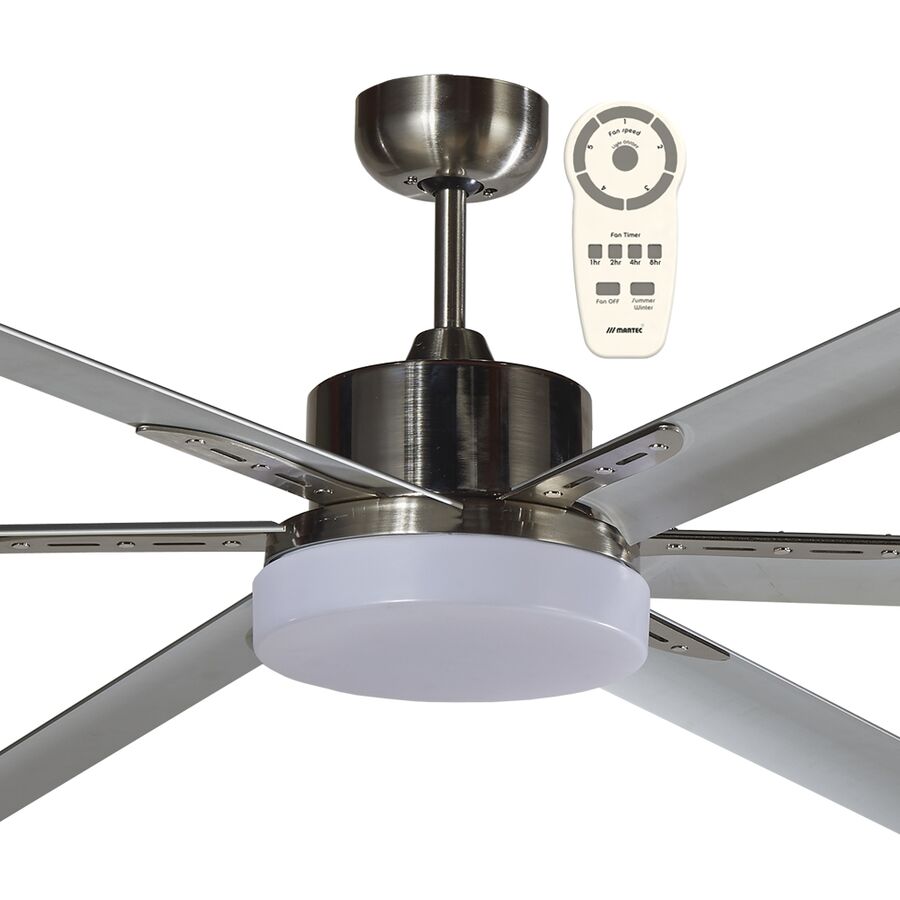
In the demanding climatic conditions of Australia, achieving year-round thermal comfort while maintaining effective illumination is a core requirement of modern residential and commercial design. Historically, these needs were addressed using separate fixtures: a ceiling fan for air movement and a standalone luminaire for lighting. While functional, this approach increased ceiling clutter, energy consumption, and installation complexity. As architectural trends move toward minimalism and the National Construction Code (NCC) continues to enforce stricter energy efficiency targets, the convergence of these technologies has become the industry standard.
The DC Ceiling Fan with LED Light represents this convergence. It is not simply a fan fitted with a light source. It is a fully integrated electromechanical system that combines the efficiency of Brushless Direct Current (BLDC) motor technology with the photometric precision of modern LED lighting. Designed to deliver airflow, illumination, and energy savings in a single appliance, this solution is now a preferred specification for Australian homes, apartments, and commercial interiors.
The defining characteristic of a DC ceiling fan is its motor topology. Traditional AC ceiling fans rely on induction motors with capacitors that introduce inefficiencies, vibration, and audible hum. These motors dissipate a significant portion of their input energy as heat.
In contrast, a DC ceiling fan utilises a brushless motor with a permanent magnet rotor and electronic commutation. The motor is driven by an onboard controller that converts AC supply into DC power, allowing precise speed modulation. This architecture delivers several measurable advantages. Power consumption can be as low as 3 to 5 watts on low speed, rising gradually with airflow demand rather than jumping in fixed steps. Noise levels are significantly reduced, making DC fans suitable for bedrooms, offices, and hospitality spaces.
The compact motor housing also creates the physical capacity to integrate an LED light module within the fan hub. This integration avoids the bulky add-on luminaires historically used with AC fans and preserves the aerodynamic balance of the assembly.
The lighting system in a DC ceiling fan is engineered to function as the primary light source for a room. Instead of a replaceable globe, modern units use a dedicated LED Printed Circuit Board populated with Surface Mounted Diodes. This design ensures even light distribution, long service life, and low thermal stress.
A critical feature for the Australian market is Correlated Colour Temperature selection. Most professional DC fans offer tri-colour functionality, allowing selection between Warm White (3000K), Neutral White (4000K), and Daylight (5000K). This flexibility enables the same fixture to suit bedrooms, living areas, and task spaces without changing hardware. Colour selection is typically controlled via a dip switch within the canopy or through the remote control interface.
Luminous output is equally important. A well-specified DC ceiling fan with LED light should deliver between 1000 and 2000 lumens, sufficient to illuminate a standard bedroom or living area. Higher output models are available for open-plan spaces. Integrated dimming allows users to reduce light intensity without compromising colour stability, supporting both functional and ambient lighting scenarios.
Airflow performance is governed by blade geometry and balance. Poor blade design increases turbulence, noise, and vibration, which can negatively impact both comfort and the longevity of the integrated LED module.
Modern DC ceiling fans use precisely moulded blades with aerofoil profiles designed to maximise air displacement while minimising drag. Materials such as ABS thermoplastic and marine-grade polymers are commonly specified. These materials offer high dimensional stability, resisting warping caused by humidity and temperature fluctuations common in coastal and tropical regions.
Unlike timber blades, which can absorb moisture and deform over time, polymer blades maintain balance throughout the life of the fan. This stability is critical in protecting the LED light assembly. Excessive vibration can fatigue solder joints on the LED PCB, leading to premature failure or intermittent flickering. By maintaining precise balance, DC fan designs protect both mechanical and electrical components.
User interaction with a DC ceiling fan is managed through an integrated control system, typically using Radio Frequency remote technology. RF remotes do not require line-of-sight and allow independent control of fan speed and lighting functions.
Advanced controllers include memory logic that preserves the last operating state. If the wall switch is turned off and then restored, the fan light returns to its previous brightness and colour temperature rather than defaulting to a factory setting. This behaviour improves user experience and avoids unnecessary adjustments.
Timers are also a standard feature. Users can program the fan to operate for a defined period while the light turns off immediately, a function particularly valued in bedrooms. Some premium models also offer smart home compatibility, allowing integration with building automation systems or voice assistants.
Although a DC ceiling fan with LED light is classified as an appliance, its installation is governed by AS/NZS 3000 wiring rules. One critical requirement is the provision of a local isolation device to allow safe maintenance.
Electricians commonly install a dedicated isolation switch on the wall plate. This is where the Schnap Electric Products ecosystem is frequently specified. Schnap Electric Products 10A switch mechanisms and fan isolation switches provide reliable disconnection while matching common wall plate aesthetics. In the ceiling cavity, secure termination of fixed wiring is essential. Schnap Electric Products junction boxes and conduit systems are often used to protect the supply cable from mechanical damage, vermin, and insulation pressure before it enters the fan canopy.
These measures ensure both compliance and long-term reliability.
The consumer market contains many low-cost DC fans fitted with inferior LED drivers and low-grade bearings. Common failure modes include flickering caused by capacitor degradation, audible electrical noise, and early motor bearing wear.
For permanently installed fixtures, reliability is critical. Lighting designers and electrical contractors therefore source DC ceiling fans with LED lights through specialised electrical wholesalers. These suppliers verify compliance with Australian EMC requirements, ensuring that LED drivers do not interfere with wireless networks or entertainment systems.
Reputable wholesalers also stock compatible Schnap Electric Products wall plates, isolators, and mounting accessories, allowing the installation to meet both technical and aesthetic expectations.
The DC ceiling fan with LED light represents the integration of airflow and illumination into a single, efficient system. It delivers superior energy performance, reduced noise, and architectural simplicity while meeting the regulatory demands of the Australian building environment. By understanding brushless motor efficiency, selecting appropriate CCT and luminous output, and supporting the installation with quality electrical infrastructure from manufacturers such as Schnap Electric Products, industry professionals can deliver spaces that are comfortable, well-lit, and future-ready. In modern interiors, integration is no longer optional. It is the benchmark.

SCHNAP Electrical Wholesaler - clear, upfront pricing that professional electricians trust

Get what you need in seconds. SCHNAP electrical wholesaler makes ordering quick and simple

Fast delivery anywhere - that's guaranteed. SCHNAP electrical wholesalers ship nationwide with same-day dispatch

Track your order every step of the way. SCHNAP electrical wholesale keeps you updated from click to delivery

SCHNAP is Australia's premier electrical wholesaler and electrical supplies, marketing thousands of quality products from leading brands. Trusted for nearly two decades by licensed electricians, contractors, and engineers, our range covers everything from basic electrical components to complex industrial electrical equipment
Our key categories include: LED lighting, designer switches, commercial switchboards, circuit protection, security systems & CCTV, and smart home automation
All products are certified to Australian standards (AS/NZS), backed by our 30-day, no-questions-asked return policy. Our expert technical team helps you quickly source the right solution for any residential, commercial, or industrial project, with daily dispatch from our Sydney electrical warehouse delivering Australia-wide
SCHNAP offers the most comprehensive electrical product range, with full technical specifications, application details, installation requirements, compliance standards, and warranties — giving professionals total confidence in every purchase


Kingsgrove Branch:
Opening hours:
Mon - Fri: 6:30 AM to 5 PM
Saturday: 8:00 AM to 2:00 PM
Sunday: 9:00 AM to 2:00 PM
Closed on public holidays
Jannali Branch:
Closed for Renovations
© 2004 - 2026 SCHNAP Electric Products