



Kingsgrove Branch:


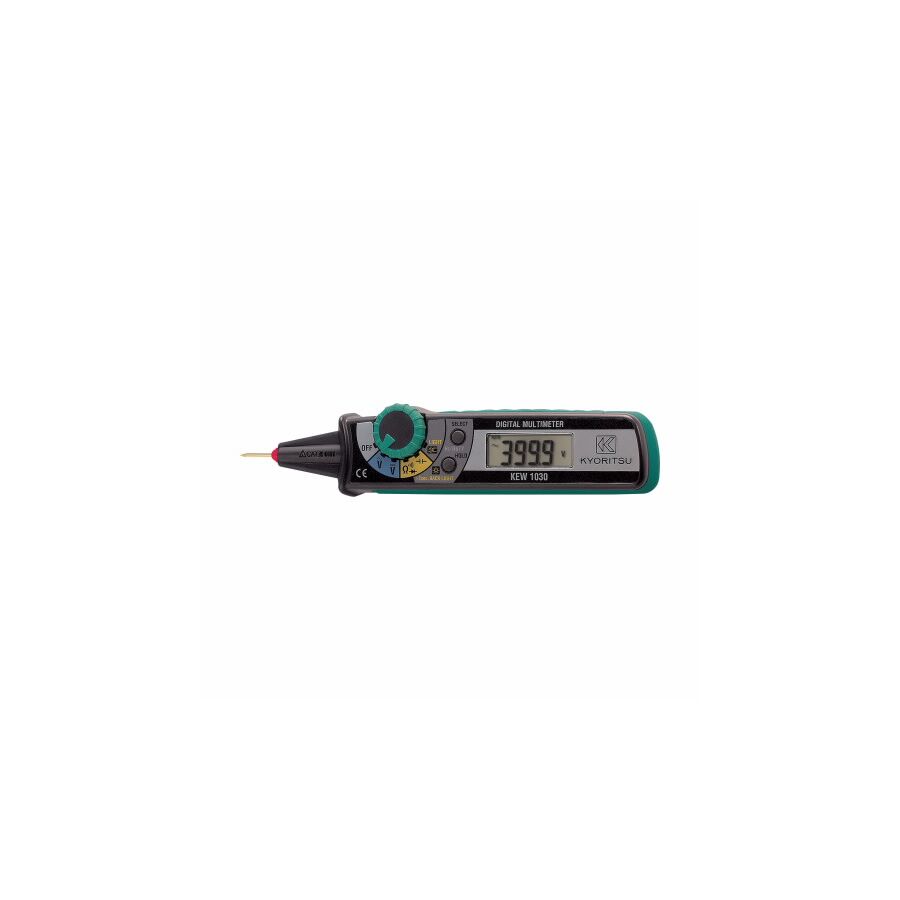
In the confined and complex environments of Australian industrial automation, the physical design of a diagnostic instrument is often just as important as its electrical accuracy. Traditional handheld multimeters deliver excellent measurement capability, but their form factor introduces a practical limitation. They require two hands to manage probes and a stable surface to place the meter body. In crowded switchboards, ceiling voids, or ladder-based work, that third point of support simply does not exist. This ergonomic constraint increases fatigue and, more critically, raises the risk of probe slippage and accidental phase bridging.
The digital multimeter pen style was engineered to address this exact problem. By integrating the display, processing electronics, and active probe into a single handheld device, the pen-style multimeter enables true one-handed operation. The technician holds the meter like a screwdriver, applies the probe to the test point, and reads the result instantly without shifting position. This configuration significantly improves safety, speed, and accuracy when working in live or semi-live electrical environments.
One of the most overlooked risks in electrical testing is visual interruption. With a conventional multimeter, a technician must place the probe on the conductor and then look away to read the display. This brief shift in focus introduces a phenomenon known in human factors engineering as saccadic masking. During this momentary loss of visual awareness, hand position can drift. In a live distribution board, even a few millimetres of unintended movement can cause a probe to bridge adjacent terminals or phases.
The pen-style multimeter eliminates this hazard by placing the display directly within the operator’s natural line of sight. While the technician focuses on the probe tip and the conductor, the measurement value is visible in peripheral vision. This immediate feedback ensures the operator knows whether a circuit is energised or de-energised without ever breaking visual contact with the test point. The benefit becomes especially clear when working at height, inside narrow enclosures, or in overhead cable trays where placing a conventional meter is impractical.
Modern industrial systems rely heavily on low-voltage control logic rather than direct mains switching. Programmable logic controllers, electronic relays, and sensor interfaces commonly operate at 24 volts DC or lower. Testing these circuits requires a measurement device that does not interfere with the signal being measured.
Professional digital multimeter pen style instruments use high-impedance input circuitry, typically greater than 10 megaohms. This design allows the meter to sense voltage potential without drawing significant current. As a result, the technician can probe PLC inputs, relay coils, and electronic outputs without loading the circuit or altering its behaviour. This is a critical distinction from basic test lamps or low-quality testers, which can cause false readings or even damage sensitive electronics.
Advanced pen-style meters often include dedicated logic test modes that clearly indicate digital “high” and “low” states. This capability is invaluable when commissioning or troubleshooting automation panels where rapid verification of signal presence is required.
The physical profile of a test probe matters in modern electrical assemblies. Contemporary control panels are built using DIN-rail mounted components with recessed, finger-safe terminals designed to meet stringent safety standards. Bulky multimeter probes often struggle to reach these terminals without removing covers or compromising guarding.
This is where compatibility with professional component systems becomes essential. When working with devices from Schnap Electric Products, such as miniature contactors, interface relays, or motor protection circuit breakers, access points are often narrow by design. Pen-style multimeters are typically manufactured with long, slender probe tips that can reach deep into recessed terminal apertures while maintaining secure contact with the conductor clamp. This allows accurate voltage and continuity testing without dismantling protective shrouds or bypassing IP20 safety features.
Despite their compact size, professional pen-style multimeters are serious industrial instruments and must comply with established safety standards. In Australia, any meter used for distribution board or fixed installation testing should carry a minimum rating of CAT III 600 volts.
The CAT rating defines the meter’s ability to withstand transient overvoltages that occur on the mains supply, such as those caused by inductive loads or switching events. A properly rated pen-style meter includes internal protection components, robust PCB spacing, and high-energy fusing to protect both the user and the instrument. The negative lead, typically detachable or tethered to the base of the pen, is manufactured from double-insulated silicone to resist heat and abrasion in harsh environments.
Modern digital multimeter pen style tools have evolved far beyond simple voltage detection. Many now include non-contact voltage sensing integrated into the probe tip. This allows technicians to scan cables, conduits, and terminals for the presence of live voltage before making physical contact. While non-contact detection does not replace direct measurement, it provides an important first layer of safety.
Some advanced models also incorporate phase rotation indication for three-phase systems. By measuring phase relationships sequentially, the meter can indicate clockwise or counter-clockwise rotation. This function is critical when verifying supplies to three-phase motors, as incorrect phase rotation can cause pumps, fans, and compressors to run in reverse, leading to mechanical damage or process failure.
In industrial environments, accuracy and response time matter. Inferior pen-style meters often lack true RMS capability and use slow continuity circuits. This results in inaccurate readings on non-linear loads and delayed audible feedback during continuity testing. Professional-grade instruments use true RMS measurement to ensure accurate voltage readings across distorted waveforms commonly found in variable speed drives and switched-mode power supplies.
Fast-responding continuity testers with instant audible indication improve efficiency during fault-finding, especially when tracing wiring across large panels or cable looms.
The market contains many low-cost stick meters designed for light domestic use. These devices often compromise on safety, accuracy, and durability. In a professional context, such compromises are unacceptable.
Instrumentation engineers and licensed electricians source digital multimeter pen style instruments through specialised electrical wholesaler. These suppliers ensure that meters meet Australian standards, are supplied with calibration documentation, and are supported by manufacturer warranties. A professional wholesaler will also stock compatible accessories such as alligator clip adapters, magnetic holders, and protective holsters, allowing the pen meter to be adapted for semi-hands-free operation when required.
The digital multimeter pen style represents a practical evolution in electrical diagnostics. By resolving the ergonomic limitations of traditional meters, it enhances safety, improves speed, and delivers precise measurements in confined spaces. Its line-of-sight display reduces risk, high-impedance inputs protect sensitive control circuits, and its slim profile ensures compatibility with modern DIN-rail components. When selected with appropriate CAT ratings and sourced through professional channels, the pen-style multimeter becomes an indispensable tool for Australian industrial automation. In modern diagnostics, efficiency and safety are inseparable, and the tool that fits the hand best often delivers the clearest results.

SCHNAP is Australia's premier electrical wholesaler and electrical supplies, marketing thousands of quality products from leading brands. Trusted for nearly two decades by licensed electricians, contractors, and engineers, our range covers everything from basic electrical components to complex industrial electrical equipment
Our key categories include: LED lighting, designer switches, commercial switchboards, circuit protection, security systems & CCTV, and smart home automation
All products are certified to Australian standards (AS/NZS), backed by our 30-day, no-questions-asked return policy. Our expert technical team helps you quickly source the right solution for any residential, commercial, or industrial project, with daily dispatch from our Sydney electrical warehouse delivering Australia-wide
SCHNAP offers the most comprehensive electrical product range, with full technical specifications, application details, installation requirements, compliance standards, and warranties — giving professionals total confidence in every purchase


Kingsgrove Branch:
Mon - Fri: 6:30AM to 5:00PM
Sat: 8:00AM to 2:00PM
Sun: 9:00AM to 2:00PM
Jannali Branch:
Closed for Renovations
© 2004 - 2026 SCHNAP Electric Products