



Kingsgrove Branch:


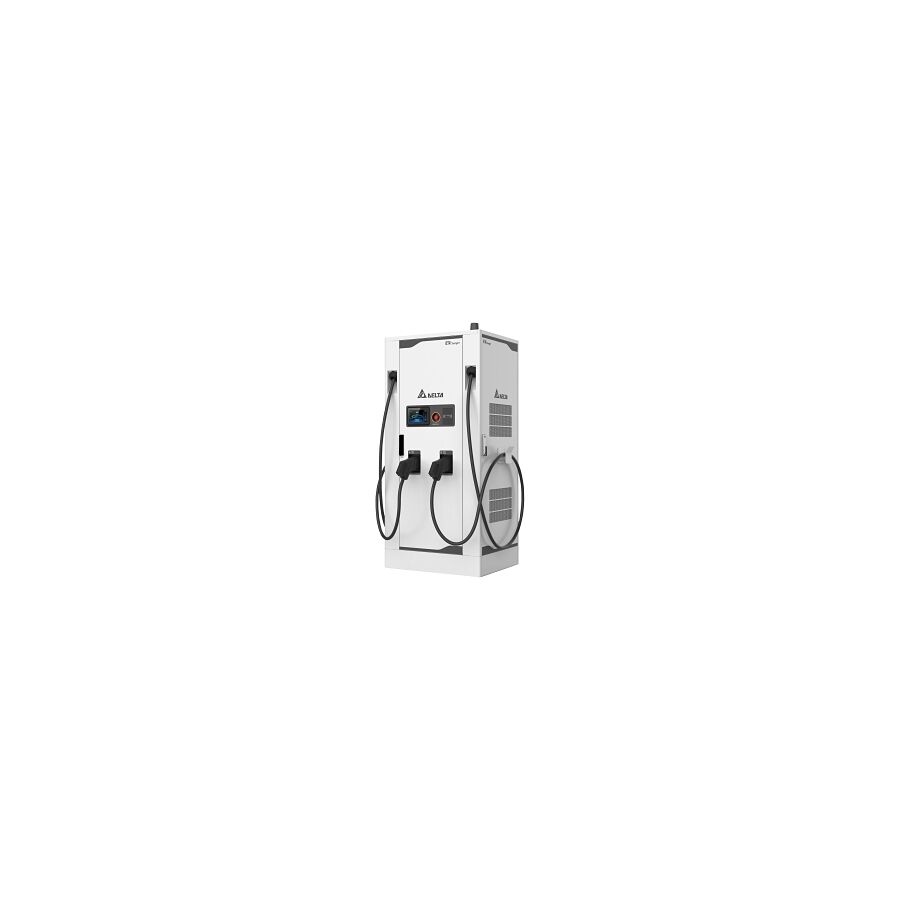
The electrification of Australia’s transport sector depends on speed. Overnight AC charging works for private homes and depot fleets. It does not work for highway corridors, ride-share operators, logistics fleets, or regional travel where time equals revenue. The solution is the Fast EV Charger.
A fast EV charger delivers regulated high-voltage DC directly to the vehicle battery. It bypasses the car’s on-board charger and communicates directly with the Battery Management System. Output ratings typically range from 25kW for entry commercial sites to 350kW and beyond for ultra-rapid highway infrastructure. These systems combine heavy industrial power electronics with intelligent software control. They must comply with AS/NZS 3000, local grid rules, and strict safety standards.
A DC fast charger converts three-phase 400V AC from the grid into controlled DC output. Depending on vehicle design, the output may range from approximately 150V up to 920V DC. This supports both 400V-class and 800V-class EV platforms.
Inside the charger are modular power conversion stages. Modern systems use Silicon Carbide (SiC) MOSFET technology rather than traditional IGBTs. SiC allows higher switching frequency and lower losses. This improves efficiency and reduces heat generation. Smaller magnetics can be used, lowering cabinet size and improving power density.
Most commercial chargers use a modular design. A 150kW unit may contain five 30kW modules operating in parallel. This provides redundancy. If one module fails, the charger continues operating at reduced power rather than shutting down completely. For Charge Point Operators, this reliability is critical. Downtime equals lost revenue and customer dissatisfaction.
As charging speeds increase, current rises. Ultra-rapid charging can exceed 500 Amps. Standard air-cooled cables at this current would be thick and heavy. They would be difficult for customers to handle.
To solve this, high power systems use liquid cooled cable assemblies. A dielectric coolant circulates through the cable jacket. This removes heat from both the copper conductors and the contact pins within the CCS2 connector. The result is a thinner, flexible cable that remains comfortable to use while sustaining continuous high current.
Thermal management also applies inside the charger cabinet. Power modules generate heat during conversion. High-efficiency fans, heat exchangers, and sealed airflow paths are essential. In regional Australia, red dust and extreme heat create additional stress. Filtration systems and sealed enclosures reduce contamination and extend equipment life.
Grid Connection and Harmonic Control
A fast EV charger is a significant electrical load. It draws high power in a non-linear manner due to switching electronics. Without mitigation, this can inject harmonics into the grid. Excessive Total Harmonic Distortion can affect transformers, cables, and nearby equipment.
To meet Australian Distribution Network Service Provider requirements, fast chargers use Active Front End rectifiers or advanced filtering. These systems maintain clean sinusoidal current draw, typically targeting low THDi levels. Power factor correction is integrated to reduce reactive power penalties.
Protection on the DC side is equally important. High-speed DC fuses, DC-rated contactors, and properly designed isolation devices are mandatory. These components must interrupt high fault currents safely. Sub-distribution boards feeding the charger require correct cable sizing, thermal calculation, and mechanical termination integrity.
This is where Schnap Electric Products supports installation infrastructure. High quality DC isolation switches, heavy duty cable lugs, and heat-shrink termination kits ensure secure connections for large supply conductors. For 95mm² or 120mm² cables, proper termination prevents overheating and long-term resistance build-up.
A fast EV charger is not just a power device. It is a networked asset. It communicates upstream to a Charging Station Management System using OCPP. This allows remote monitoring, billing, diagnostics, and load balancing.
Downstream, it communicates with the vehicle using PLC protocols. ISO 15118 enables “Plug and Charge.” In this model, the vehicle identifies itself automatically when connected. Billing and authentication occur without RFID cards or apps. For fleet operators, this simplifies user experience and reduces administrative overhead.
Reliable communication requires stable connectivity. Chargers may use Ethernet, fibre, or 4G/5G backhaul. Shielded data cabling and secure enclosures reduce electromagnetic interference from high power switching circuits. Proper cable management and separation between power and data conductors are essential to prevent signal disruption.
Fast EV chargers are heavy industrial units. Cabinet weight, foundation requirements, and vehicle impact protection must be considered. Bollards, reinforced concrete pads, and cable trenches form part of the total installation.
Ventilation and clearance zones are required for heat rejection and maintenance access. In coastal or high UV regions, corrosion resistance and weather sealing are critical. IP-rated enclosures protect internal electronics from rain, dust, and insects.
Installation must be performed by licensed electrical contractors. Load calculations, transformer capacity checks, and potential network upgrades may be required before deployment.
Fast EV chargers must meet Australian safety and EMC standards. RCM compliance confirms adherence to regulatory requirements. Non-compliant imports risk interference with communication systems and may fail electrical inspection.
AS/NZS 3000 governs wiring practices. Earthing, bonding, and RCD coordination must be designed correctly. Residual current detection on DC circuits requires specific solutions due to the nature of DC fault currents. Standard AC protection alone is not sufficient.
Clear labelling, emergency stop functions, and accessible isolation points are mandatory. Signage and user instructions support safe public use.
Fast EV chargers are long-term infrastructure assets. Procurement decisions must consider spare parts availability, firmware support, and local service networks. Efficiency curves, cooling design, and modular replacement capability affect lifecycle cost.
Sourcing through a specialised electrical wholesaler reduces risk. Professional suppliers verify compliance, support grid application processes, and supply complementary hardware. From cable glands to isolation hardware, correct component selection ensures durability.
Planning must also consider future expansion. Conduit capacity, switchboard space, and transformer sizing should allow for increased charger density as EV adoption grows.
The Fast EV Charger is the engine of high speed electrified transport in Australia. It converts three-phase AC into controlled high voltage DC, delivers rapid energy through liquid cooled CCS2 connectors, and integrates with smart communication networks.
By selecting modular SiC-based systems, ensuring proper harmonic mitigation, and supporting installation with robust infrastructure components, Australian operators can deploy reliable charging hubs. When engineered correctly and installed to standard, fast EV charging reduces dwell time, supports fleet efficiency, and accelerates the national shift toward electric mobility. In modern transport infrastructure, power equals productivity.

SCHNAP is Australia's premier electrical wholesaler and electrical supplies, marketing thousands of quality products from leading brands. Trusted for nearly two decades by licensed electricians, contractors, and engineers, our range covers everything from basic electrical components to complex industrial electrical equipment
Our key categories include: LED lighting, designer switches, commercial switchboards, circuit protection, security systems & CCTV, and smart home automation
All products are certified to Australian standards (AS/NZS), backed by our 30-day, no-questions-asked return policy. Our expert technical team helps you quickly source the right solution for any residential, commercial, or industrial project, with daily dispatch from our Sydney electrical warehouse delivering Australia-wide
SCHNAP offers the most comprehensive electrical product range, with full technical specifications, application details, installation requirements, compliance standards, and warranties — giving professionals total confidence in every purchase


Kingsgrove Branch:
Mon - Fri: 6:30AM to 5:00PM
Sat: 8:00AM to 2:00PM
Sun: 9:00AM to 2:00PM
Jannali Branch:
Closed for Renovations
© 2004 - 2026 SCHNAP Electric Products