



Kingsgrove Branch:


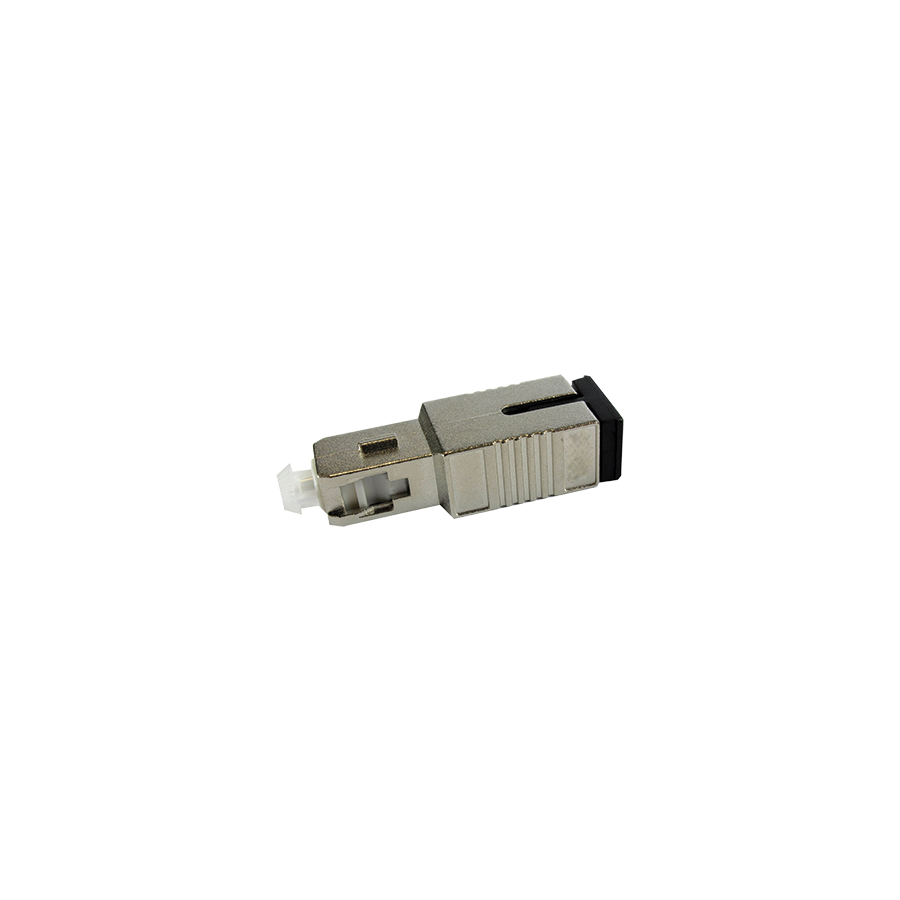
In the engineering of Australian telecommunications infrastructure, particularly within Fibre to the Premises deployments and high-performance commercial data networks, it is often assumed that higher optical power equates to better performance. While insufficient signal power leads to attenuation and data loss, excessive optical power is equally destructive. Modern optical transmitters, including those used in RF Overlay systems and short-haul data links, are capable of delivering light levels well beyond what receiving equipment can safely tolerate.
When an optical signal arrives at a receiver with too much power, the photodiode becomes saturated. This pushes the device outside its linear operating range, resulting in high bit error rates, unstable links, and in severe cases permanent damage to the receiver. The engineering control used to manage this excess power is the fibre attenuators. These passive optical components are designed to reduce signal strength by a precise decibel value, allowing the receiver to operate safely and accurately within specification.
Every optical receiver, whether in an Optical Network Terminal or an SFP transceiver, has two critical limits: sensitivity and overload. Sensitivity defines the minimum optical power required for reliable detection, while overload defines the maximum power the receiver can tolerate before distortion occurs.
Receiver saturation is most common in short fibre runs, such as patch connections within data centres or headend rooms, where fibre loss is minimal. It also occurs when optical amplifiers, such as Erbium-Doped Fibre Amplifiers, are used to support long distribution runs but feed short drop links without compensation. When saturated, the receiver cannot convert photons into electrical signals fast enough, causing waveform clipping. In digital networks this manifests as packet loss and latency, while in RF over fibre systems it causes severe distortion that renders video unusable. Fibre attenuators resolve this by absorbing excess optical energy without altering the signal structure.
Not all fibre attenuators operate in the same way. Early or low-quality devices relied on air gap attenuation, where fibre cores are physically separated to reduce light transfer. While simple, this method introduces high back-reflection, known as poor return loss, which can destabilise laser transmitters and shorten their lifespan.
Professional-grade attenuators used in Australian infrastructure rely on doped-fibre absorption technology. These devices contain a short length of fibre infused with specific ions that absorb light energy in a controlled and predictable manner. The absorbed energy is dissipated as negligible heat, maintaining the integrity of the optical waveform. This method ensures stable attenuation across standard wavelengths such as 1310nm, 1490nm, and 1550nm while preserving high return loss performance.
Fibre attenuators are typically supplied as build-out components, meaning they are installed inline between the patch panel port and the fibre patch lead. As such, connector compatibility is critical. In Passive Optical Networks and RF overlay systems, SC/APC connectors are the industry standard. The angled physical contact design minimises back-reflection by directing reflected light into the fibre cladding rather than back toward the transmitter.
Using an incompatible connector type, such as inserting a UPC attenuator into an APC system, will physically damage the fibre end-face and severely degrade network performance. Equally important is connector cleanliness. Even microscopic contamination can absorb sufficient laser energy to burn onto the glass surface, permanently damaging the attenuator. Strict inspect, clean, and connect procedures must be followed during installation.
Choosing the correct attenuation value is not guesswork. It is the result of a precise link budget calculation. Engineers begin with the transmitter launch power and subtract all known losses, including fibre attenuation, splice loss, and splitter insertion loss. The resulting value represents the expected power at the receiver.
If this value exceeds the receiver’s maximum recommended input, attenuation must be added. For example, if a transmitter launches at +10dBm and total passive losses are only 7dB, the receiver would see +3dBm. If the receiver’s optimal operating range tops out at -8dBm, a 5dB attenuator is required to bring the signal back into range. Correct budgeting ensures stability, repeatability, and compliance with Australian telecommunications standards.
Fibre attenuators extend the physical length of the connector assembly, increasing the risk of strain or accidental impact inside rack cabinets. Without adequate clearance and cable management, patch leads can be bent beyond their minimum radius or dislodged during maintenance.
Schnap Electric Products supplies industrial-grade 19-inch communications cabinets and fibre management systems designed to accommodate extended connector assemblies. Deep-profile enclosures provide sufficient clearance between patch panels and cabinet doors, while vertical cable managers guide patch leads safely. Schnap Electric Products also offers fibre optic cleaning kits and accessory hardware that support best-practice optical installation and maintenance.
One of the most common uses of fibre attenuators is in RF overlay systems within multi-dwelling developments. In these systems, satellite and television signals are transmitted over fibre at high launch powers to support large split ratios. Apartments located close to the headend receive significantly higher optical power than those further away.
Without attenuation, receivers in nearby units can be overloaded, leading to distorted video and unreliable service. Fibre attenuators are used to equalise signal levels across the network, ensuring consistent performance regardless of physical distance from the transmitter. This equalisation is essential for delivering uniform service quality in high-density residential environments.
Fibre attenuators are precision optical components. Poorly manufactured devices may not deliver the stated attenuation value or may vary significantly with temperature changes. Such inconsistencies make troubleshooting difficult and undermine network reliability.
For this reason, professional installers source attenuators through electrical wholesaler with fibre optic expertise. These suppliers ensure products meet spectral flatness and return loss requirements and are suitable for Australian environmental conditions. They also provide access to optical power meters, testing tools, and compatible rack hardware, enabling installers to verify performance during commissioning.
Fibre attenuators play a critical role in modern optical networks by ensuring that signal power remains within safe and optimal limits. They protect receivers from saturation, stabilise RF overlay systems, and enable accurate link budgeting across complex fibre architectures. By selecting doped-fibre attenuators, calculating link budgets correctly, maintaining connector hygiene, and integrating installations within robust infrastructure from suppliers such as Schnap Electric Products, Australian network professionals can build fibre systems that are balanced, reliable, and engineered for long-term performance. In optical networking, control of light is just as important as speed.

SCHNAP is Australia's premier electrical wholesaler and electrical supplies, marketing thousands of quality products from leading brands. Trusted for nearly two decades by licensed electricians, contractors, and engineers, our range covers everything from basic electrical components to complex industrial electrical equipment
Our key categories include: LED lighting, designer switches, commercial switchboards, circuit protection, security systems & CCTV, and smart home automation
All products are certified to Australian standards (AS/NZS), backed by our 30-day, no-questions-asked return policy. Our expert technical team helps you quickly source the right solution for any residential, commercial, or industrial project, with daily dispatch from our Sydney electrical warehouse delivering Australia-wide
SCHNAP offers the most comprehensive electrical product range, with full technical specifications, application details, installation requirements, compliance standards, and warranties — giving professionals total confidence in every purchase


Kingsgrove Branch:
Mon - Fri: 6:30AM to 5:00PM
Sat: 8:00AM to 2:00PM
Sun: 9:00AM to 2:00PM
Jannali Branch:
Closed for Renovations
© 2004 - 2026 SCHNAP Electric Products