



Kingsgrove Branch:


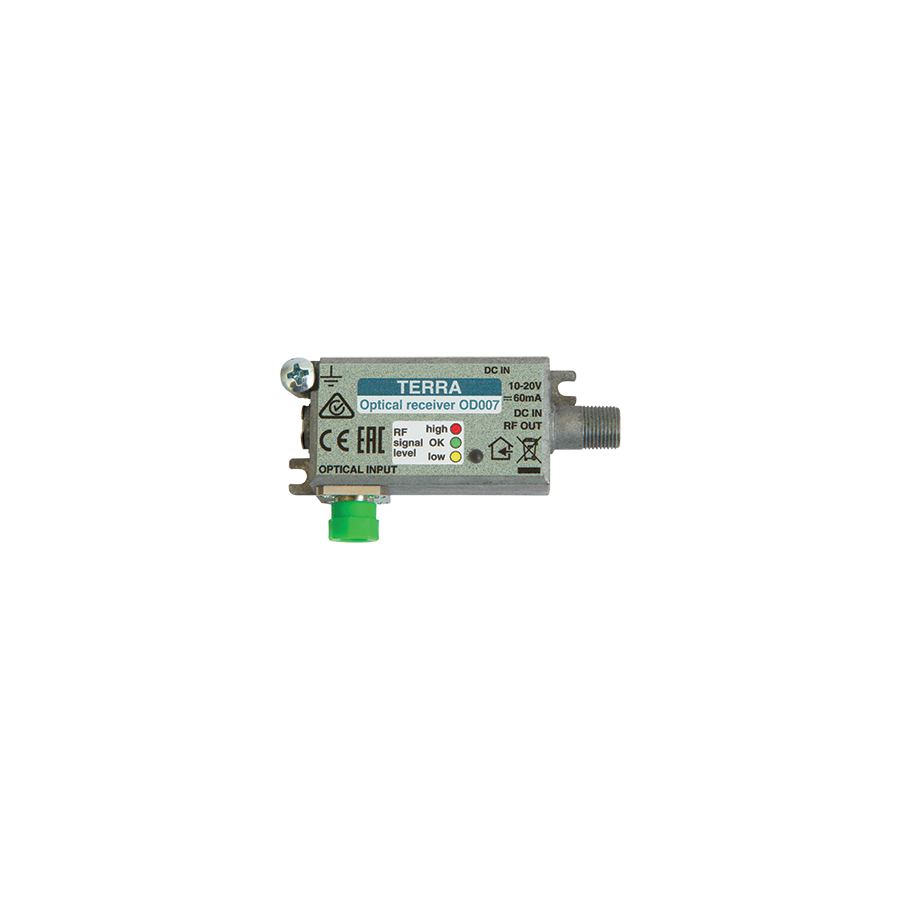
The telecommunications landscape in Australia has changed dramatically with the rollout of Fibre to the Premises and Fibre to the Home. Copper-based distribution systems that once carried both data and television signals are being progressively replaced by optical fibre. Fibre provides enormous bandwidth capacity, immunity to electromagnetic interference, and consistent signal quality over distance. However, despite this shift, consumer display devices such as televisions and set-top boxes still depend on traditional Radio Frequency inputs delivered over coaxial cable.
This mismatch between modern fibre transport and legacy RF consumption is resolved by the fibre mini receiver. This compact optical node converts broadcast signals carried over fibre into standard RF levels suitable for televisions and MATV systems. In high-density residential buildings, gated estates, and commercial campuses, fibre mini receiver form the final interface between advanced fibre infrastructure and everyday viewing equipment. Their performance directly determines picture quality, signal stability, and long-term reliability.
At the heart of the fibre mini receiver is the optical-to-electrical conversion stage. Broadcast television signals, including terrestrial DVB-T and satellite DVB-S, are typically transmitted over fibre using a 1550nm wavelength. This wavelength is chosen to coexist with broadband data wavelengths, commonly 1310nm and 1490nm, without interference.
The receiver accepts the optical input through an SC/APC connector. The angled physical contact design is critical because it minimises back-reflection. Excessive reflection can introduce noise and degrade carrier-to-noise ratio, particularly in analogue RF systems. Inside the receiver, a photodiode converts incoming light into an electrical current. This signal is then amplified and conditioned to produce a coaxial RF output, usually in the range of 75 to 80 dBuV, suitable for direct connection to a television or splitter.
For correct operation, the receiver must be matched to the optical budget of the network. Most fibre mini receivers are designed to operate reliably with optical input levels between approximately -8dBm and +2dBm. Outside this range, distortion or signal loss may occur.
One of the defining features of a professional fibre mini receiver is Automatic Gain Control (AGC). In fibre distribution networks, optical signal levels can vary due to splitter ratios, cable lengths, and temperature changes. Without compensation, these variations would translate directly into fluctuating RF output levels.
AGC circuitry continuously monitors the optical input and dynamically adjusts the amplifier gain. When the input level drops, gain is increased. When the input level rises, gain is reduced. The result is a stable RF output that remains within the optimal operating range of the television tuner. This stability is essential for maintaining modulation error ratio and preventing pixelation, audio dropouts, or complete signal loss during normal network fluctuations.
Fibre mini receivers are designed for discreet installation. They are commonly mounted behind wall-hung televisions, inside apartment communication cupboards, or within structured wiring enclosures. Despite their compact size, these units contain active electronics that generate heat during operation.
Adequate ventilation and mechanical protection are therefore essential. Fibre patch leads connected to the receiver are particularly vulnerable to damage from tight bends or accidental impact. This is where Schnap Electric Products provides practical infrastructure support. Schnap Electric Products supplies structured wiring enclosures and multimedia cabinets that maintain proper bend radius for fibre leads, protect connectors from dust ingress, and allow sufficient airflow to dissipate heat. Housing the receiver in a purpose-designed enclosure significantly improves reliability and service life.
Although some optical nodes operate passively, most fibre mini receivers require an external DC power supply, typically 12 volts, to drive the RF amplification and AGC circuits. Power quality directly affects signal performance. Poor-quality power adapters can introduce hum, noise, or interference that becomes visible as bars or distortion on the television screen.
Professional installations prioritise clean, stable power. Surge protection and electrical isolation are also important, particularly in multi-dwelling buildings where power disturbances are common. Using filtered and surge-protected outlets reduces the risk of damage from transient events and ensures consistent RF output over time.
In many modern FTTx deployments, a single fibre strand is used to deliver multiple services, often referred to as “triple play” networks. These include internet data, voice services, and broadcast television. Fibre mini receivers used in these environments may incorporate internal Wavelength Division Multiplexing filters.
These filters separate the 1550nm RF overlay signal from the broadband data wavelengths. The RF signal is converted to coaxial output for television, while the data wavelengths pass through to an Optical Network Terminal or modem. Effective isolation between wavelengths is critical. Poor filtering can allow strong data signals to interfere with the RF path, degrading picture quality and system stability.
Optical performance is highly sensitive to contamination. Dust or residue on the connector end-face can absorb light, cause heating, and permanently damage optical components. Fibre mini receivers rely on clean SC/APC connections to maintain low reflection and stable operation.
Installers must follow strict inspection and cleaning procedures before connecting fibre leads. This includes inspecting connectors with a microscope, cleaning with approved tools, and avoiding unnecessary reconnections. Maintaining optical hygiene is one of the simplest yet most important practices for ensuring long-term system reliability.
The performance of a fibre mini receiver depends on the quality of its photodiode, internal amplification stages, and optical alignment. Variations in manufacturing tolerances can lead to inconsistent results if unsuitable products are used.
For this reason, professional communications technicians source fibre mini receivers through electrical wholesaler with expertise in fibre and MATV systems. These suppliers ensure that products meet Australian electromagnetic compatibility requirements and are compatible with the optical transmitters used in the network headend. Access to proper accessories, including fibre patch leads, cleaning tools, and enclosures, further reduces installation risk and improves outcomes.
The fibre mini receiver is a critical component in modern broadcast distribution over fibre. It enables high-quality RF services to coexist with broadband data on a shared fibre infrastructure, bridging the gap between optical transport and consumer electronics. By selecting receivers with robust AGC, ensuring clean optical connections, providing adequate housing, and integrating supporting infrastructure from suppliers such as Schnap Electric Products, Australian industry professionals can deliver television services that are stable, scalable, and immune to the interference challenges of legacy systems. In fibre networks, effective conversion is what turns capacity into reliable service.

SCHNAP is Australia's premier electrical wholesaler and electrical supplies, marketing thousands of quality products from leading brands. Trusted for nearly two decades by licensed electricians, contractors, and engineers, our range covers everything from basic electrical components to complex industrial electrical equipment
Our key categories include: LED lighting, designer switches, commercial switchboards, circuit protection, security systems & CCTV, and smart home automation
All products are certified to Australian standards (AS/NZS), backed by our 30-day, no-questions-asked return policy. Our expert technical team helps you quickly source the right solution for any residential, commercial, or industrial project, with daily dispatch from our Sydney electrical warehouse delivering Australia-wide
SCHNAP offers the most comprehensive electrical product range, with full technical specifications, application details, installation requirements, compliance standards, and warranties — giving professionals total confidence in every purchase


Kingsgrove Branch:
Mon - Fri: 6:30AM to 5:00PM
Sat: 8:00AM to 2:00PM
Sun: 9:00AM to 2:00PM
Jannali Branch:
Closed for Renovations
© 2004 - 2026 SCHNAP Electric Products