



Kingsgrove Branch:


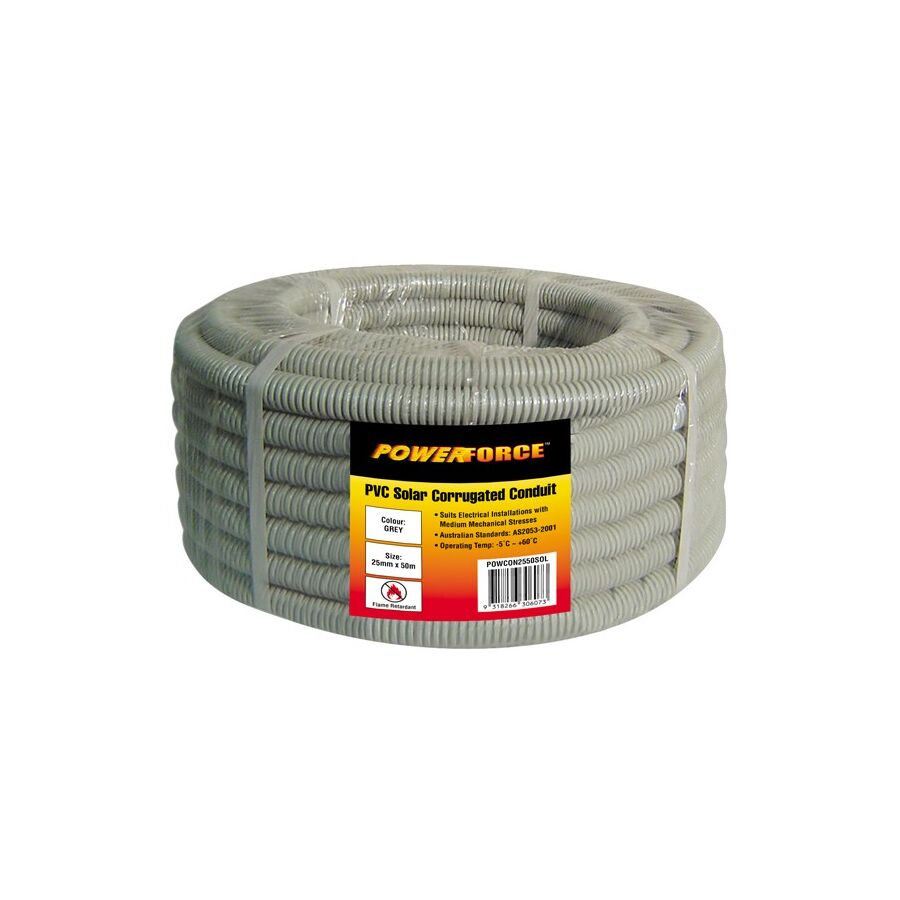
In the Australian electrical industry, cable protection is a foundational safety requirement. Electrical conductors must remain insulated, supported, and shielded from mechanical damage throughout their service life. While rigid PVC conduit is ideal for static installations inside walls, slabs, and ceilings, it is fundamentally unsuitable for environments where movement, vibration, or thermal expansion occurs.
Modern infrastructure increasingly blends fixed structures with dynamic equipment. Air conditioning units vibrate. Motors start and stop. Rooftop solar arrays expand and contract under extreme temperature cycles. In these conditions, rigid conduit transfers stress directly to cable insulation and termination points, leading to cracking, fatigue, and eventual failure.
The engineering solution to this problem is flexible PVC conduit. Far from being a simple sleeve, it is a purpose-designed cable protection system engineered to absorb movement, tolerate environmental stress, and maintain compliance with AS/NZS 2053. When specified and installed correctly, flexible PVC conduit extends cable life and prevents costly faults in demanding Australian conditions.
The defining feature of flexible PVC conduit is its corrugated wall profile. The repeating pattern of ridges and valleys allows the conduit to bend without collapsing or significantly reducing its internal diameter. This geometry distributes mechanical stress across the length of the conduit rather than concentrating it at a single point.
This flexibility is critical where cables connect to vibrating equipment. Instead of transferring movement directly to the conductor or termination, the conduit absorbs and dissipates the motion. The result is reduced strain on cable insulation and gland entries.
However, flexibility has limits. Each conduit size has a minimum bend radius. Exceeding this radius can cause kinking, stress whitening, or permanent deformation. These defects compromise mechanical strength and can reduce ingress protection. High-quality flexible PVC conduit is formulated with elastic memory, allowing it to recover from moderate deformation and maintain a consistent air gap around the conductors.
Respecting bend radius is a matter of both safety and compliance. When conduit is over-flexed, the internal profile can pinch cables, increasing friction and damaging insulation during installation. Tight bends also increase pulling force, raising the risk of conductor damage.
Professional installers plan conduit runs to minimise sharp bends and avoid unnecessary twists. Where tight directional changes are unavoidable, using appropriate fittings or increasing conduit size reduces stress. These practices preserve both the conduit’s mechanical integrity and the cables it protects.
Australia’s ultraviolet radiation levels are among the highest in the world. Unprotected plastics exposed to direct sunlight degrade rapidly. They become brittle, crack, and ultimately disintegrate.
For external installations, flexible PVC conduit must be UV stabilised. This is achieved by incorporating UV inhibitors such as carbon black or titanium dioxide into the PVC compound during manufacturing. These additives absorb or reflect ultraviolet energy, preventing polymer chain breakdown.
In rooftop solar installations, this distinction is critical. Medium-duty or non-UV-rated conduit may appear serviceable at first but will fail within a short period. Heavy-duty, UV-stabilised flexible PVC conduit is essential to ensure the mechanical protection lasts for the full life of the solar system. Using non-compliant conduit in these applications is a common cause of early failure and non-compliance notices.
Flexible PVC conduit is widely used in industrial and commercial environments where exposure to oils, greases, and cleaning agents is common. Manufacturing plants, workshops, and food processing facilities all present chemical challenges that can degrade inferior plastics.
High-grade PVC formulations provide strong resistance to mineral oils, hydraulic fluids, and mild acids. This makes flexible conduit suitable for protecting cables feeding motors, pumps, and conveyors. In food and beverage facilities, where washdown chemicals are routinely used, chemical resistance ensures the conduit maintains its integrity without softening or cracking.
The smooth internal bore of quality conduit also simplifies cable installation. Reduced friction lowers pulling force and minimises the risk of insulation damage during cable draw-in.
Flexible conduit is only as effective as its terminations. An unsealed end allows water, dust, and insects to enter, defeating the purpose of the conduit. Proper termination requires purpose-designed conduit glands that interface securely with the corrugated profile.
Conduit glands designed for flexible PVC systems grip the conduit mechanically by engaging the corrugations when tightened. This prevents pull-out under tension and maintains alignment during movement. Integrated sealing elements preserve the ingress protection rating of the enclosure.
This is where accessories from Schnap Electric Products are commonly specified. Flexible conduit glands, adaptors, and locknuts are engineered to maintain IP ratings while providing high mechanical retention. Using matched components ensures the conduit system performs as a complete, compliant assembly.
Cutting flexible PVC conduit incorrectly is a frequent cause of cable damage. Jagged edges left by side cutters or blunt tools can act like saw teeth when cables are pulled through, stripping insulation or nicking conductors.
Best practice requires a clean, square cut. Burrs should be removed, and the conduit should seat fully into the gland or fitting so that cables never contact the cut edge. Attention to this detail prevents hidden damage that could lead to faults long after installation.
Although flexible conduit is designed to accommodate movement, it still requires proper support. Unsupported spans can sag, trap water, or suffer mechanical damage. Saddles and clips secure the conduit run while allowing controlled movement at termination points.
Correct spacing of supports maintains a professional appearance and ensures compliance with installation standards. It also prevents long-term deformation caused by the weight of the conduit and enclosed cables.
Flexible PVC conduit used in Australian electrical installations must comply with AS/NZS 2053. This standard defines requirements for material properties, wall thickness, impact resistance, and temperature performance.
Non-compliant conduit often has thin walls, inconsistent corrugation, and poor resistance to impact or UV exposure. While cheaper upfront, these products compromise safety and reliability. Specifying compliant conduit ensures predictable performance under real-world conditions.
The electrical market contains a wide range of flexible conduit products of varying quality. Visual inspection alone is insufficient to determine compliance or durability.
Sourcing through reputable electrical wholesalers ensures access to conduit that has been tested for compression strength, impact resistance, and UV stability. These suppliers also provide compatible fittings and accessories, simplifying installation and reducing the risk of mismatched components.
A controlled supply chain supports consistency across projects and reduces callbacks caused by premature conduit failure.
Flexible PVC conduit plays a critical role in modern Australian electrical installations. It bridges the gap between static structures and moving equipment, protecting cables from vibration, environmental exposure, and mechanical stress. When correctly specified for UV resistance, chemical compatibility, and termination integrity, it delivers long-term reliability in solar, HVAC, and industrial applications. Supported by compliant fittings and disciplined installation practices, flexible PVC conduit ensures cable protection keeps pace with the dynamic demands of today’s infrastructure. In environments where movement is unavoidable, flexibility is not optional. It is essential for longevity and safety.

SCHNAP is Australia's premier electrical wholesaler and electrical supplies, marketing thousands of quality products from leading brands. Trusted for nearly two decades by licensed electricians, contractors, and engineers, our range covers everything from basic electrical components to complex industrial electrical equipment
Our key categories include: LED lighting, designer switches, commercial switchboards, circuit protection, security systems & CCTV, and smart home automation
All products are certified to Australian standards (AS/NZS), backed by our 30-day, no-questions-asked return policy. Our expert technical team helps you quickly source the right solution for any residential, commercial, or industrial project, with daily dispatch from our Sydney electrical warehouse delivering Australia-wide
SCHNAP offers the most comprehensive electrical product range, with full technical specifications, application details, installation requirements, compliance standards, and warranties — giving professionals total confidence in every purchase


Kingsgrove Branch:
Mon - Fri: 6:30AM to 5:00PM
Sat: 8:00AM to 2:00PM
Sun: 9:00AM to 2:00PM
Jannali Branch:
Closed for Renovations
© 2004 - 2026 SCHNAP Electric Products