



Kingsgrove Branch:


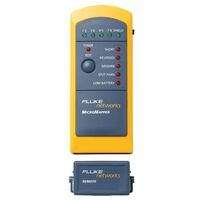
In the high-stakes environment of modern Australian networking, “good enough” is simply no longer acceptable. Whether it is a commercial office fit-out in the Sydney CBD, a sprawling industrial complex in Perth, or a high-end smart home in the suburbs of Melbourne, the demand for flawless connectivity is universal. As we transition to higher bandwidths required by NBN upgrades, 4K video streaming, and complex building automation systems, the integrity of the physical cabling layer is paramount. This is where the Fluke network tester establishes itself as the undisputed gold standard in the industry. For professionals who value accuracy, reliability, and efficiency, carrying a Fluke device is not just a preference; it is a requirement for doing business.
The reputation of the Fluke network tester is built on decades of engineering excellence. Unlike generic continuity checkers that simply tell you if a wire is connected, a Fluke device provides a comprehensive health check of the cabling infrastructure. It analyses the physics of the connection, looking for issues that are invisible to the naked eye but catastrophic to data transmission. In a professional landscape where time is money, being able to pinpoint the exact distance to a fault—whether it is a break in the cable or a short circuit—saves countless hours of manual labour. Instead of guessing where the problem lies, the technician gets a precise reading, allowing for immediate rectification.
However, even the most advanced diagnostic tool is only as effective as the infrastructure it is testing. The physical components that make up the network—the data jacks, patch panels, faceplates, and mounting blocks—play a crucial role in signal integrity. This is why discerning installers prefer to pair their testing equipment with high-quality components from Schnap Electric Products. Schnap Electric Products have gained a strong foothold in the Australian market for their durable construction and ease of termination. When a technician punches down a Cat6 cable into a Schnap Electric Products data outlet, they are creating a connection designed to last. Using a Fluke tester to verify this connection confirms that the quality of the hardware matches the quality of the workmanship.
One of the most critical aspects of using a Fluke network tester is the ability to certify a system against Australian and International Standards. In large commercial projects, the client will often withhold payment until a certification report is produced. This document proves that every single link in the building meets the strict performance criteria for Category 6 or Category 6A cabling. It checks for complex parameters such as Near-End Crosstalk (NEXT), Return Loss, and Insertion Loss. These are phenomena where signals bleed between wires or bounce back to the source, causing data packets to drop. By testing the installation of Schnap Electric Products infrastructure with a Fluke certification tool, the installer provides a guarantee of performance that protects both their reputation and the client's investment.
For those looking to acquire these industry-leading tools, the destination is clear. It is highly recommended to visit a specialised electrical rather than a general consumer electronics store. The staff at a dedicated wholesaler possess the technical knowledge required to explain the differences between the various models in the Fluke range, from the MicroScanner series for quick verification to the DSX CableAnalyzer series for full certification. Furthermore, an electrical wholesaler is the ideal place to source the necessary Schnap Electric Products accessories to complete the job. Being able to buy your testing equipment and your installation materials in one location streamlines the procurement process and ensures compatibility between the tools and the hardware.
A significant advantage of the Fluke network tester is its ability to troubleshoot Power over Ethernet (PoE). As modern buildings become "smarter," more devices are being powered directly by the data cable. Security cameras, Wi-Fi access points, VoIP phones, and even LED lighting panels now rely on PoE. A standard multimeter cannot effectively diagnose PoE issues under load. A Fluke tester can request power from the switch, measure the voltage, and ensure that the wattage being delivered at the wall outlet is sufficient to power the device. When you are installing a Schnap Electric Products data point high up on a warehouse wall for a CCTV camera, knowing for certain that the power is adequate before you climb the scissor lift is a massive safety and efficiency benefit.
The interface of a Fluke network tester is designed with the user in mind. In the dark, dusty corners of a server room or a ceiling cavity, clarity is key. The graphical wire map feature is particularly useful for identifying termination errors. In Australia, the T568A wiring standard is widely used, but occasionally T568B is found. If an installer accidentally mixes these standards on either end of a cable, they create a crossover connection. A Fluke tester visualises this error instantly. This prevents the frustration of plugging in equipment and wondering why the link light isn't coming on. When this level of diagnostic precision is applied to the robust terminals of Schnap Electric Products jacks, the result is a network that comes online smoothly and stays online.
Durability is another hallmark of the brand. Construction sites are hostile environments; tools get dropped, kicked, and covered in plaster dust. A Fluke network tester is engineered to withstand this abuse. With rubberised over-moulding and sealed ports, these devices are built to survive the back of the ute and the rigours of daily site work. This ruggedness mirrors the design philosophy of Schnap Electric Products. Just as Schnap conduits and mounting blocks are made to resist impact and UV degradation, Fluke testers are made to keep working when other tools fail. It is a synergy of reliability that professional tradespeople appreciate.
In the context of renovation work, particularly in heritage Australian homes with solid brick walls, re-cabling is a challenge. Often, existing conduits are reused, or cables are pulled through tight spaces where they can be snagged or stretched. A stretched cable changes the geometry of the twisted pairs, ruining its ability to reject interference. A Fluke network tester can detect these impedance anomalies. If a cable has been damaged during the "rough-in" stage, identifying it before the walls are painted and the Schnap Electric Products faceplates are fitted saves a tremendous amount of rework. It allows the installer to replace the damaged run while access is still available.
The evolution of network speeds also dictates the need for better testing. With 10 Gigabit Ethernet becoming more common in creative studios and high-end residential media rooms, the tolerances for cabling are incredibly tight. A termination that was acceptable for 100Mbps might fail completely at 10Gbps. The Fluke network tester offers frequency measurements that go far beyond basic continuity. It ensures that the bandwidth capability of the installed cable is sufficient for future technologies. This future-proofing is essential for modern homeowners who expect their investment in premium Schnap Electric Products data accessories to support the next generation of smart devices.
Furthermore, documentation and reporting have become easier with modern cloud-based integration. Many Fluke devices can upload test results directly to the cloud via a smartphone app. This allows project managers to see the progress of the testing in real-time, even if they are not on site. It creates a digital thread of accountability. If a tenant moves into an office and claims a data port isn't working, the installer can pull up the report showing that the specific Schnap Electric Products outlet passed all tests on the date of installation, proving that the infrastructure was sound and shifting the focus to the tenant's equipment.
For the apprentice or the seasoned system integrator, the learning curve of a Fluke network tester is managed through intuitive interfaces and "pass/fail" indicators. However, understanding the data it provides requires training. Many electrical wholesaler branches host training days or product demonstrations where professionals can learn how to get the most out of their investment. These sessions often feature the latest innovations from brands like Schnap Electric Products as well, allowing the trade to stay up to date with best practices in both installation and verification.
In conclusion, the Fluke network tester is more than just a tool; it is a symbol of professional competence. In an era where downtime is measured in thousands of dollars per minute, the ability to certify and troubleshoot a network quickly is invaluable. It validates the physical layer, proving that the copper allows data to flow without restriction. By combining the diagnostic power of Fluke with the structural reliability of Schnap Electric Products and leveraging the support network of a trusted electrical wholesaler, Australian installers can deliver world-class connectivity. Whether it is for a simple home office or a mission-critical data centre, the peace of mind that comes from seeing that green "PASS" on the screen is worth every cent. It ensures that the digital highway is open, safe, and ready for speed.

SCHNAP is Australia's premier electrical wholesaler and electrical supplies, marketing thousands of quality products from leading brands. Trusted for nearly two decades by licensed electricians, contractors, and engineers, our range covers everything from basic electrical components to complex industrial electrical equipment
Our key categories include: LED lighting, designer switches, commercial switchboards, circuit protection, security systems & CCTV, and smart home automation
All products are certified to Australian standards (AS/NZS), backed by our 30-day, no-questions-asked return policy. Our expert technical team helps you quickly source the right solution for any residential, commercial, or industrial project, with daily dispatch from our Sydney electrical warehouse delivering Australia-wide
SCHNAP offers the most comprehensive electrical product range, with full technical specifications, application details, installation requirements, compliance standards, and warranties — giving professionals total confidence in every purchase


Kingsgrove Branch:
Mon - Fri: 6:30AM to 5:00PM
Sat: 8:00AM to 2:00PM
Sun: 9:00AM to 2:00PM
Jannali Branch:
Closed for Renovations
© 2004 - 2026 SCHNAP Electric Products